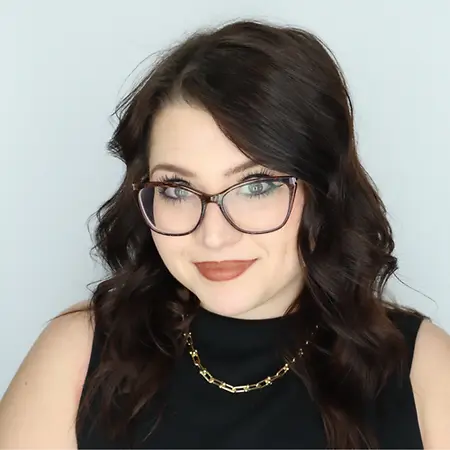
Her Story
About Alexis
I'm the Associate Director of First and Second Year Experience at New York University's College of Arts and Science, where I'm responsible for anything that impacts student success or student experience for first and second year students. For first years, that includes our first-year leadership programs and our college cohort program, which is essentially a first-year seminar course that all first-year students have to take on self-exploration and teaching students the skills they need to succeed in college after their first semester. We have student leaders who help teach that and instructors who teach that. On the second year side, we're just building out a team to start that, and we have our new hire starting in June, so we're going to begin building out some second-year programming for the college. My role also oversees orientation for all new students, essentially getting every student onboarded, admissions events for new students, and really anything that will make a positive impact on the first-year experience and second-year experience at the college. I started in higher education in 2018 working in student activities, doing student government work and working with student organizations. During COVID, I took a role at our nursing school at NYU where I worked in financial aid and admissions and handled predominantly all of our donor scholarships for the nursing students. I came back to the College of Arts and Science in January 2022 and worked as an academic advisor on the new student advising team for quite a few years, working predominantly on transfer student advising but academic advising for all students. Then I moved up to the associate director role, which at that time handled advising and first-year advising practices, and in the past 6 to 8 months or so, my role shifted to student success and out of advising.
Her Interview
Ten minutes with Alexis
01What advice would you give to young women entering your industry?
I would say to never feel like you need to make yourself lesser or quiet your voice about things in spaces where you might have an impact. Obviously, while doing everything professionally and respectfully, definitely always push through that. I think higher education as a landscape was built, foundationally, for white men, and in some ways, being a woman can still be hard in higher education, despite being a large majority of the staff population being women. The biggest thing is to kind of not dim your light for other people, and if you push through, do the work hard, that will definitely pay off, but to always make sure that your voice is heard, especially when it needs to be.
02What are the biggest challenges or opportunities in your field right now?
I think being open-minded to change is really important in being successful in higher education. As we as professionals continue to get older, our students are younger and younger, and kind of far removed in age from us. As I'm growing as a professional, the students that I'm serving are getting into a bigger age gap from myself and even maybe the people who are directly reporting to me. I think it's really important to be open to changing things and being open to really figuring out what maybe is working for the new generation. What has consistently worked might not be working for the new generation. Each generation really has different priorities in how they approach things and how they use technology, even how we're seeing things like AI and ChatGPT. I don't think that it is helpful to be resistant to that change. I think it's really helpful to work with that change to be a successful leader so that you are working with your students rather than against them. We've been having conversations with students just trying to understand how they're using AI in the classroom and outside the classroom in their everyday life. It is informative for us to figure out how we can meet them in the ways that they're using it and either tailor our programs or the way we communicate things to how students might be using it, or teach them how to effectively use those tools since we know that they're going to use them.
03What values are most important to you in your work and personal life?
I always say I always would like to be student-facing in some capacity. The whole reason I got into higher education is because I love helping students and love really making a difference for them on campus. I had a really great experience when I was a student, and I really attribute a lot of the positive experiences and outcomes that I had to some of those mentors that worked at the institution at the time. So I definitely would say continuing to be that figure for the incoming students and new students at whatever institution I'm at at the time. Seeing the students that I made an impact on get to graduation and succeed and go off into the world to make a larger impact, that makes it all worth it. I still have students reach out around graduation, and they're always like, thank you, you've made this impact on me, I'll be grateful for this. Seeing the students that have maybe had a rougher time proceeding to graduation, who maybe had a rougher journey, and when I was the person helping them through that, and then seeing them go to graduation and graduate and be successful, I think that is usually the thing that makes it all worth it.
Join Influential Women and start making an impact. Register now.