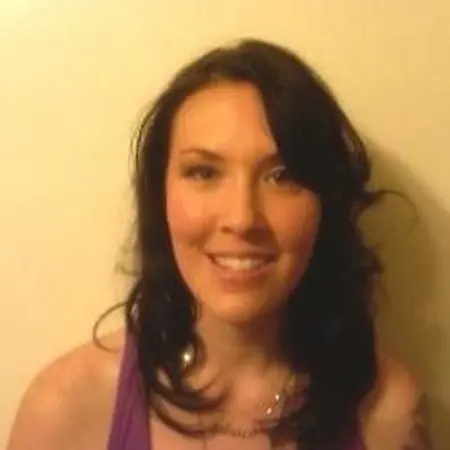
Her Story
About Amber
I started working in nonprofits when I was just 14 years old at an organization where my grandfather was president. I attended their summer camp as a child, and through what I now recognize as nepotism, I got my first job there cleaning walls. After trying college right out of high school and tearing my Achilles tendon playing soccer, I decided to go straight into working and returned to that same nonprofit. I worked my way up through programs and eventually became the camp administrator of the very camp I had attended as a child. About 21-22 years ago, I moved into fundraising, which really changed everything for me. It made sense because half my family are salespeople and the other half are nonprofit people, so fundraising was the perfect blend. At that point I was already a director but didn't have a college degree, so I went back to school, finished my undergraduate degree in liberal arts, and immediately got my master's in nonprofit management. Then I transitioned into healthcare, where I've been for over 10 years now. My expertise is in nonprofit development, large-scale event production, and strategic community growth. Currently, I focus on donor cultivation and stewardship, working on corporate sponsorships, and what I call resource optimization - making sure our community-facing events are seamless and connecting with the right targets. Right now I'm working in the autism community, and I'm looking to pursue a doctorate in community leadership and change if I'm able to afford it.
Her Interview
Ten minutes with Amber
01What do you attribute your success to?
I think I'm actually very, very honest and transparent. I don't have that masking that everybody does where they tell you in school that you have your professional side and your personal side. They overlap a little bit for me, and I'm pretty much the same person whether you meet professional Amber or personal Amber. Maybe my voice changes a little bit and I'm a little bit more polished in professional settings, but other than that, I think I'm just a very honest person, or at least that's what I strive to do. I think that's really contributed to my success because people believe in what I'm selling. And especially in healthcare, I'm not selling anything tangible. Working at cystic fibrosis, I couldn't tell you that money was going directly to finding a cure with a specific timeline. At Autism Speaks, I can't guarantee that we're going to make sure that your child with autism is going to be able to work. So I think it's also about storytelling - being able to coordinate that narrative in a way that resonates with people.
02What advice would you give to young women entering your industry?
I think, for starters, I would say that there is not just one path. As we were talking about my journey, it kind of stopped and started and changed. So I think that's one thing - not to be afraid when you go off the yellow brick road and end up somewhere else. Just looking at my own narrative, I would say that shifting perspectives is really important, and understanding that you make mistakes and that's a part of life. Especially in the workplace, when something happens under your watch, being able to say 'you're right, I didn't do that, my apologies' - taking accountability and ownership, I think is really important. For a young woman navigating the early stages of their career life and their identity, when everything is simultaneously happening, I would say to really just take control of your own life, because it is truly your destiny.
03What are the biggest challenges or opportunities in your field right now?
The biggest challenge is truly where people have their discretionary funds. There are so many opportunities where you can give your money to, and so many missions out there. I would dream for people not to be competing, and there'd be a more collaborative space in the world. It's both a challenge and an opportunity - I wish people would honestly work and collaborate a lot more so we're not constantly fighting over dollars, because every organization has a smaller niche over the next one, but overall the impact and their mission is generally the same. If I just look where I'm at, I could probably come across 20 homeless nonprofits out there. What are they actually doing that's different than anything else? So I think it's about how can we work together - it's more of that 'let's work smarter, not harder' kind of philosophy. I think it's just identifying how we can collaborate together so that we can actually get more money and have a larger impact, because people's discretionary funds are limited. If a family wants to go to Disneyland for a trip or they're deciding to drop $1,000 at a nonprofit, which one do they choose? So the competition is real.
04What values are most important to you in your work and personal life?
I actually think that my core values don't change between personal or professional. I think that my code of ethics is what brings me fulfillment. I try to be kind, I try to continuously learn, and I look at behaviors and try to dictate how to treat others - not based on how I want to be treated, because everybody's different, but based on how that person actually wants to be treated. I'm really a true believer that, honestly, in society we function best when we are equal, even though that is sadly not always the case. We need to have an impact in our social justice. I think culturally it's really important to make sure that we have respect for our elders, and that people are understanding our traditions and those types of things. I also believe strongly in taking extreme ownership of whatever I do. I'm always trying to really honestly have real change. I think real change happens when you have leaders that are adopting a mindset of accountability.
Join Influential Women and start making an impact. Register now.