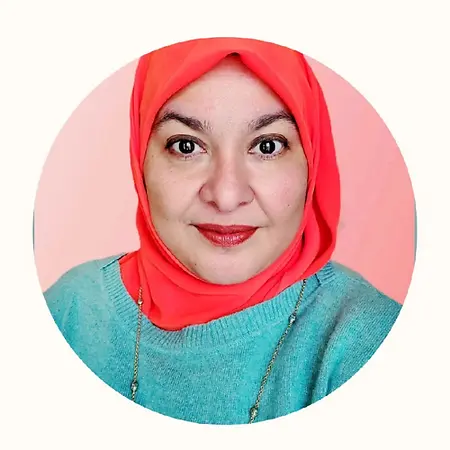
I used to think explaining enough could persuade anyone, but I learned the right people already understand. So, I had to be strategic about where I spent my time.
Anisa Abeytia · In Her Own Words
Her Story
About Anisa
Anisa Abeytia is an AI governance strategist, digital equity advocate, and humanitarian technology consultant who works at the intersection of responsible artificial intelligence, public policy, and social impact. As Founder and Principal Consultant of FourthSpace Solutions, she advises governments, international organizations, nonprofits, and technology companies on the ethical deployment of AI, with a particular focus on humanitarian settings, digital inclusion, and high-risk environments. Her work centers on ensuring that emerging technologies are designed and governed in ways that are equitable, accountable, and responsive to the communities they affect.
Drawing on a multidisciplinary background that spans policy, migration studies, postcolonial and feminist theory, humanitarian fieldwork, and technology governance, Anisa brings a unique perspective to AI strategy and implementation. She has contributed to national and international AI policy initiatives, presented recommendations to the United Nations Independent International Scientific Panel on AI, participated in the UN General Assembly's Digital Compact process, and supported the development of digital equity and AI governance frameworks adopted by public institutions and global organizations. Through FourthSpace Solutions, she provides AI governance consulting, red-teaming, adversarial evaluation, workforce training, and policy development services designed to build trust, reduce bias, and strengthen responsible AI adoption.
Anisa holds a Master's degree in Literary Theory with a focus on Postcolonial and Feminist Thought from Stanford University and a Master of Arts in Migration Studies from the University of San Francisco. A recognized thought leader in AI governance and humanitarian technology, she has published extensively on AI ethics, digital inclusion, crisis response, and emerging technologies in outlets including The New Humanitarian, The Hill, and ReliefWeb. Through her research, consulting, and advocacy, she continues to champion community-centered approaches to AI governance, ensuring that the voices of historically underrepresented communities help shape the future of technology.
Her Interview
Ten minutes with Anisa
01What do you attribute your success to?
I had to decide that no one gets to determine how my life story ends. Only I do.
I had teachers and principals telling me I could not do it. I was too dark. I was a Latina. I was a Muslim. I was Native American. People like me did not end up in those places.
I come from a long line of strong women, and growing up, it was always okay to be a strong woman. That belief carried me through everything else.
At the end of the day, you are alone in your room with your own mind, and no one can motivate you except yourself. For me, so much of that strength comes from faith. I believe I deserve to be happy, and I believe God wants all of us to be happy.
But that happiness does not arrive on its own. Sometimes we have to ask for it, and we have to act on it ourselves. God does not answer prayers. Humans do.
02What’s the best career advice you’ve ever received?
It was life advice more than career advice, but I think the best advice is the kind that applies to multiple parts of your life. Once, when I was struggling with a really difficult situation, a wise friend told me to focus on just one day at a time. I think the same is true for starting your own business. The ability to focus on what needs to be done right now, in order to move toward the future goal, is essential.
A practice I adopted for when I feel overwhelmed is to look at my feet. It reminds me of where I am standing right now on the road to where I want to get. What steps do I need to take now to move further down that road?
03What advice would you give to young women entering your industry?
It's the same advise I'd give to anyone in any field- don't make the mistake of self-rejecting. I know it feels bad to be rejected. You have no idea how many things I applied for and got rejected from, but this is one thing I did get accepted for. So don't make the mistake of self-rejecting. Just try. The worst they can say is no.
I was sitting with a group of young women at a conference, and I had applied for a grant from a community college and gotten it. The younger women at the table asked me how I got it. I said, I applied. It was a table of ten women, and no one had ever said that to them before.
04What are the biggest challenges or opportunities in your field right now?
I'm filling a business and governance gap. Without trust, the public does not want to adopt AI, and there is no enforceable framework right now to build that trust. Through the certification program I'm developing, which is peer-reviewed and which I've tested across different spaces and fields, I'm building in inclusion to reduce bias, and also looking at the actual architecture itself.
The opportunity is building governance in from the very beginning, rather than treating it as an afterthought. I want people to be able to use AI sustainably, with the climate in mind as well. I'm helping build AI that works for everybody.
05What values are most important to you in your work and personal life?
Work-life balance is critical for me, especially for women. There's so much research and data that has shown that we use our brain more, or just the way our brain is wired. You need one hour just to turn it off. I build fun into my day. Joy. I force myself to stop, and I'm like, well, I'm gonna go do something else. Try a new spa. My morning routine is I have a huge beautiful garden, and we have a little mini sculpture garden back there, and that's where I have my breakfast. I look around at all the beautiful things that I've created, and take a breath. That's the reset. I also believe I deserve to be happy. I think God thinks that all of us should be happy. I'm not part of the LGBTQ community, but I volunteer there because I faced so many biases in my life, and they get it. So often, I just show up in a new place, and people discriminate against me because I'm a visibly brown, short Muslim woman. Volunteering there, I feel very seen because they have similar experiences.
Join Influential Women and start making an impact. Register now.