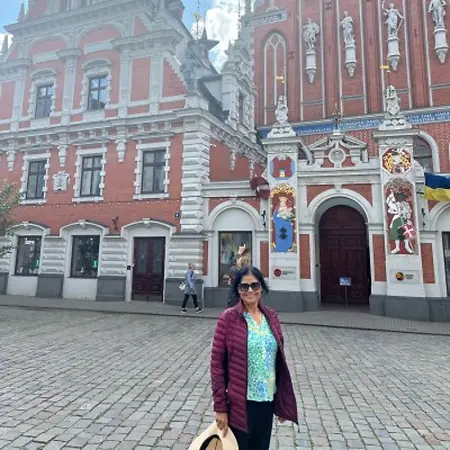
Her Story
About Annapurna
I am a cultural anthropologist and professor at the University of California, where I have been teaching since the mid-1990s. My academic journey began in India in 1981, and I came to the United States in 1989, joining the profession here in 1995. I have been in this field for almost 40 years. My work focuses on cultural anthropology, specifically studying the Indian diaspora and indigenous tribal peoples in India. What makes this field amazing is that it makes us hopefully better human beings, because there is nothing better than studying another human being and appreciating that. By studying cultures and groups of people who are different from you, who may be differently placed with different life experiences, it gives us a broader perspective. It takes one out of their own footprint and allows you to step into others to gauge and make sense of different kinds of lives, the plurality of lives, and the richness. It's a life-transforming experience. I have traveled a great deal all over the world through my research. My greatest challenge and passion is bringing the voices of people who are marginalized, underrepresented, and generally not represented to the limelight. I do both academic writing and public writing, publishing in web journals like AmericanKahani.com and India Currents. This gives me a tremendous sense of gratification, to bring voices that are buried and voices which are never heard. I have worked on issues like Indian adoptees by white parents in the diaspora in America, domestic violence, and issues of the most recent immigrants known as H1B and H4 visa holders. The challenge is how do we bring the voices of the people, how do we represent them and bring their right voice, or bring their actual voice, rather than making up their voice. Besides my professional work, I am a wife, mother, and grandmother, which keeps me completely engaged and very fulfilled.
Her Interview
Ten minutes with Annapurna
01What do you attribute your success to?
I strive to be sensitive about people's life experiences and to be a better listener. I try to be a fly on the wall to hear voices. Better listening, better engaging, and better presenting are what I focus on. It's about truly hearing and understanding the people I work with and study, and then representing their voices authentically.
02What’s the best career advice you’ve ever received?
Do what you are good at.
03What advice would you give to young women entering your industry?
Never lose hope. Do what you are good at, and find a way and get help without being intimidated. Keep a strong-willed heart and mind to ward off all sorts of obstacles. Where there is a will, there is a way.
04What are the biggest challenges or opportunities in your field right now?
The biggest challenge is how do you bring the actual voices of the people who are marginalized, who are underrepresented, and who are generally not represented to the limelight. That's why I do both academic writing and public writing, publishing their voices in web journals like AmericanKahani.com and India Currents. This gives me a tremendous sense of gratification, to bring the voices that are buried and voices which are never heard. I have worked on issues like Indian adoptees by white parents in the diaspora in America, and I also worked on domestic violence and issues of the most recent immigrants known as H1B and H4 visa holders. The challenge is how do we bring the voices of the people, how do we represent them and bring their right voice, or bring their actual voice, rather than making up their voice.
05What values are most important to you in your work and personal life?
The most important values to me are to be empathetic and to be passionate. I value being engaging and being a good listener. I appreciate differences rather than being critical of them. These values guide both my professional work in anthropology and my personal life.
Keep Exploring
More Influential Women · California

Join Influential Women and start making an impact. Register now.