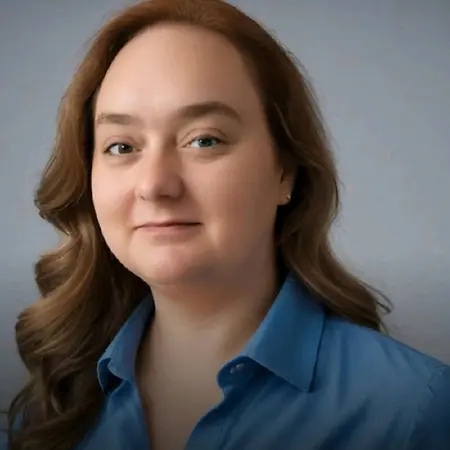
Her Story
About Catlin
I've been working in my field for about 15 years, and my career path has been incredibly diverse. Right out of high school, I started as a private pay caregiver, and I've honestly been caregiving my entire adult life. In the early 2000s, around 2005 to 2010, I moved to Arizona where I became a Seasonal Supervisor for Leslie's Swimming Pool Supplies managing customer service at corporate, and I also worked for U-Haul at the same time doing front counter deals. I moved back to California to help take care of family, and from 2013 to 2016 I worked in outside sales for NAPA for about 3 years. Then I moved up to where I'm currently located, about 2 hours away from home, and I worked for Wells Fargo as a bank teller and did front office work for a large hotel resort here for about 3 years. Around 2018, I fell into a death doula role, helping clients with end-of-life transitional care, both private pay and working with assisted living facilities for about 4 or 5 years. That's when I really stepped into community health advocacy - it kind of went hand-in-hand with the death doula work. If you had asked me 10 years ago if I was going to be in a medically adjacent career field, I would have laughed, because I did not want to do anything remotely near medical. But now I'm here, and I'm not in the medical field - I'm adjacent to it. I deal with clients who have medical issues and I work with the medical industry, but I'm not necessarily a part of it. Currently, I hold a few different positions: I'm a community health advocate, an IHSS provider, and I facilitate the cohort for CoStarters through KITE (Kern Initiative for Talent Entrepreneurship) in Kern County. I've been a community health advocate for the last 5 years, an IHSS worker for 5 years as well, and a CoStarters facilitator for about 3 years now. My main focus with my community health advocacy is harm reduction, crisis stabilization, and administrative services for clients. I've also been doing some lobbying and legislative work, approaching the county with issues at hand. A typical day for me varies greatly - I don't have a 9-to-5 Monday through Friday. Yesterday was pretty typical: I had a board meeting first thing in the morning with the Chamber, then our monthly luncheon, then a meeting with a client and their caregiver, and then I went and looked at some property for a big project I'm working on here in the Valley. If it's a workday, I'm most likely meeting clients to assist them with their doctor's appointments, answering questions, or helping them set up care. If I'm not with clients, I'm usually out volunteering or in a meeting.
Her Interview
Ten minutes with Catlin
01What do you attribute your success to?
I attribute my success to audacity and tenacity. Late last year, someone asked me at an event - everything was rushed, everybody was talking, it was a very loud room - and somebody was like, what do you do? And I was like, I have the audacity. That's what I do. The audacity to just make my mind up on what I'm gonna do, or decide what I'm gonna do, and the audacity to put myself into the rooms where I need to be, in the conversations that I need to be in. Having the audacity and the tenacity - that's what's gotten me to where I'm at.
02What’s the best career advice you’ve ever received?
The best career advice I've received is don't fuss over things, don't overthink it. Keep it simple, stupid - or as I like to say, KISS: keep it simple. Don't fuss over things. That would probably be the biggest piece of advice that's stuck with me.
03What advice would you give to young women entering your industry?
Education is probably one of the most important things you're going to do to benefit yourself in the long run. The certifications and degrees and education path that you choose is going to really lead you to where you're wanting to go. Make sure that you know what you're talking about. Learning the systems, and educating yourself, and always being open and curious and eager to learn about systems and programs. Networking and making those connections would probably be key - don't be afraid to shake hands, and don't be afraid to learn something.
04What are the biggest challenges or opportunities in your field right now?
The biggest challenge I face is the discrimination against being newer in the field. I'm dealing with people that have been with the county or the state in these positions for years, and I'm just coming in. So there's a little bit of doubt or lack of trust on whether or not things are gonna get done. Everybody is so used to someone saying 'I'm gonna do this,' and then a month or two later, you don't ever hear from that person ever again, and that project gets dropped, and nothing gets done. So I deal with a lot of individuals that are guarded and waiting. I've been doing this for about 15 years, but it's really been in the last 5 years that I've been developing relationships with the county, different organizations, and even the state. The biggest hurdle is just finding the right people and building the relationship and the rapport. As for opportunities, I think the biggest one I'm seeing right now is the ability to create job placement and work development programs, jobs, careers, and placements. It's about meshing everything together and creating a space for entrepreneurship. I'm seeing the possibility of creating spaces within the harm reduction, recovery, stabilization, and mental health stabilization areas - either taking individuals from that or incubating and bringing people in and creating jobs around housing developments, counseling, and different services that can be provided. I'm treating things like First Friday as an incubation process - I think 95% of my vendors are brand new, they've never vended, they're just starting their business. We've created a mentorship environment with veteran vendors coming in, and the projects I'm working on will be creating quite a bit of job opportunities and collaboration with all kinds of different organizations in the area.
05What values are most important to you in your work and personal life?
I value non-judgmental behavior - I'm huge on unbiased, non-judgmental decisions. I value making healthy decisions for oneself, because your healthy decisions are not my healthy decisions. Honesty is important to me, as is doing what's right for you and refraining from biased or judgmental behavior. Most importantly, I believe in treating people with dignity and treating humans as humans.
Join Influential Women and start making an impact. Register now.