
Leaps of Faith can lead to Career Milestones
The Career Move That Looked Risky From the Outside
Explore moreAsking questions and taking constructive criticism makes you a better leader. Humility is the most powerful quality a woman in leadership can have.
Destiny Adkins, MAT, LAT, ATC · In Her Own Words
Leaps of Faith can lead to Career Milestones
The Career Move That Looked Risky From the Outside
Explore moreHer Story
Destiny Adkins is a certified athletic trainer (MAT, LAT, ATC) with six years of experience in the sports medicine industry, specializing in secondary school athletics and athlete care. She currently serves as an Athletic Trainer with Terrebonne General Health System, providing outreach services to high school athletes across multiple sports. Her role involves injury evaluations, rehabilitation, treatment planning, emergency response, wound care, concussion testing, injury prevention, and coordinating return-to-play programs to help athletes safely return to the activities they love. Adkins earned her Associates of Arts degree at Lincoln College in Illinois, her Bachelor of Science degree in Pre-Athletic Training from Eureka College in Illinois and her Master’s degree in Athletic Training from Charleston Southern University in South Carolina. She is a Board of Certification (BOC) certified athletic trainer, licensed in Louisiana, and holds certifications in Basic Life Support (BLS), CPR, and first aid instruction. She is an active member of the National Athletic Trainers’ Association (NATA) and the Louisiana Athletic Trainers’ Association (LATA). Her expertise and dedication to sports medicine have also been recognized through her feature in School Health magazine. Passionate about athlete advocacy and healthcare education, Adkins takes pride in being the medical professional responsible for guiding injured athletes through recovery and helping them achieve their goals. She credits her success to the coaches and professors who supported her growth and values integrity, transparency, respect, and building meaningful relationships in her work. Beyond her clinical responsibilities, she contributes to her community through volunteer efforts, including providing first aid and CPR education, supporting local initiatives, and offering free athletic physicals to student-athletes.
Her Interview
01What do you attribute your success to?
I attribute my success to the guidance and support of the coaches who have mentored me throughout my journey, as well as the professors who challenged, encouraged, and helped shape my growth. Their knowledge, feedback, and belief in my potential played an important role in my personal and professional development.
02What’s the best career advice you’ve ever received?
The best career advice I have received is to remain open-minded and committed to continuous growth. Being willing to explore new possibilities, learn from others. Understanding different approaches has helped me expand my knowledge, adapt to change, and continue developing both personally and professionally.
03What advice would you give to young women entering your industry?
Be ready for the challenge - embrace being the underdog, and desiring to be the best medical professional out there, because you are going run into plenty of obstacles.
04What are the biggest challenges or opportunities in your field right now?
Having to explain to others what we do and who we are. Not alot of people know the difference between and athletic trainer versus a personal trainer. We are still a medical field that often is undermined and not recognized as a professional medical field, requiring a master's degree.
05What values are most important to you in your work and personal life?
The values most important to me are integrity, transparency, and respect. I strive to build genuine relationships by being relatable, trustworthy, and respectful in both my personal and professional interactions.
Her Content Hub
Exploring the critical coach-athletic trainer relationship in sports healthcare. This article examines communication dynamics, safety protocol compliance, professional respect, and how collaboration between coaches and athletic trainers directly impacts athlete safety and team success.
Building Trust and Respect Between Coaches and Athletic Trainers to Prioritize Athlete Safety

A strong working relationship between a coach and athletic trainer is built on communication, trust, and mutual respect. While their responsibilities may differ, both play an important role in supporting the athlete. When rapport is absent, clinical recommendations may be challenged, communication may become fragmented, and professional disagreements can compromise continuity of care. For the athletic trainer, navigating these relationships requires maintaining professional judgment while continuing to advocate for the athlete’s health and safety.
Research in collegiate athletics demonstrates how the relationship between coaches and athletic trainers can influence the delivery of healthcare. A study published in the Journal of Athletic Training examining 434 collegiate athletic trainers found that coaches were among the sources of pressure surrounding medical decision-making, particularly when an athletic trainer determined an athlete was not ready to participate. The National Athletic Trainers’ Association has also reported that, among collegiate athletic trainers who experienced pressure from nonmedical personnel, 57.81% reported being pressured by an administrator, coach, or coaching staff member to make a decision that was not in the best interest of the student-athlete’s health.
The coach–athletic trainer relationship presents similar challenges in secondary schools. A study published in the Journal of Athletic Training surveyed 725 secondary-school athletic trainers and found that 53.9% identified coaches as a source of workplace conflict. Yet the findings also demonstrated the value of positive professional relationships, with 92.56% of athletic trainers either agreeing or strongly agreeing that they felt supported by coaches in their role. The contrast is important. Conflict and collaboration can exist within the same working environment, and a difficult relationship does not necessarily define the relationship between coaches and athletic trainers as a whole. Establishing rapport, maintaining open communication, and recognizing the distinct responsibilities of each profession are essential to ensuring disagreements do not interfere with the care provided to the athlete.
One of the most difficult dynamics for an athletic trainer is working with a coach who is unwilling to follow established safety protocols. Heat and lightning policies are designed to provide objective parameters for when activity should be modified, delayed, or suspended, yet some coaches may view these guidelines as obstacles to practice rather than safeguards for the athlete. When a coach disregards Wet Bulb Globe Temperature (WBGT) recommendations or pressures an athletic trainer to resume activity before lightning protocols have been met, the issue extends beyond a difference in opinion. These decisions place the athletic trainer in the position of having to defend established safety measures while attempting to maintain a professional relationship with the coach. This type of noncompliance not only undermines the purpose of established safety protocols but also places competitive priorities ahead of the athlete’s health and safety.
A significant concern arises when a coach does not recognize the athletic trainer as an integral part of the team. Advocacy extends beyond supporting an athletic trainer in moments of injury or disagreement. It encompasses recognizing the clinical value of athletic training, supporting access to appropriate facilities, equipment, and supplies, and contributing to an environment in which the athletic trainer can effectively perform their role. It may also involve reinforcing the importance of medical recommendations, supporting decisions related to athlete health and safety, and communicating confidence in the expertise of the athletic trainer. When an athletic trainer is viewed as an essential component of the program rather than an ancillary resource, the relationship between coaching and sports medicine becomes more cohesive and better positioned to serve the athlete.
A clear boundary is crossed when a coach assumes authority over areas of care that fall outside the coaching role. Rather than involving the athletic trainer in the evaluation and management of an athlete, the coach independently recommends outside providers, initiates referrals, or seeks treatment options without communicating with the healthcare professional responsible for the athlete’s care. In some cases, the coach attempts to interpret symptoms or determine the nature of an injury through online searches, effectively positioning personal research as a substitute for clinical assessment. When a coach assumes responsibility for decisions outside their professional role, the athlete ultimately pays the price.
For the athletic trainer, working with a difficult coach can create an environment where professional credibility feels as though it must be continually established. Clinical decisions may be met with skepticism, requiring the athletic trainer to repeatedly explain assessments, recommendations, and the rationale behind medical decisions. Over time, this expectation can take a significant mental and emotional toll, contributing to frustration, self-doubt, and professional fatigue. The constant need to defend clinical judgment can shift the focus away from athlete care and toward proving professional competence. An athletic trainer should be able to perform their role without feeling as though their education, expertise, and clinical judgment are continually on trial.
A common challenge arises when a coach recognizes the value of an athletic trainer without respecting the profession. An athletic trainer cannot be appreciated only for what they provide while their education, expertise, and professional judgment are dismissed. Respect for athletic training requires recognizing the profession as an essential component of athlete healthcare and supporting the role with the same clinical regard afforded to other healthcare disciplines.
Ultimately, the greatest breakdown occurs when winning becomes more important than the athlete’s health and safety. Competition should never come at the expense of an athlete’s long-term well-being. Coaches and athletic trainers may have different responsibilities, but they share a common goal: the health and success of the athlete. When both professions respect their roles, communicate effectively, and work together, everyone wins. The strongest teams are not built on competition between coaching and healthcare, but on collaboration between the two. Be the coach who values the team, respects the sports medicine profession, and puts the athlete first—because when athlete safety comes second, everyone loses.
Athletic trainers serve as essential connectors in sports medicine, bridging the gap between athletes, coaches, physicians, and specialists. This article explores their unique clinical perspective, collaborative responsibilities, and the critical importance of professional teamwork in athlete care.
Bridging the Gap: How Athletic Trainers Connect Coordinated Sports Medicine Care
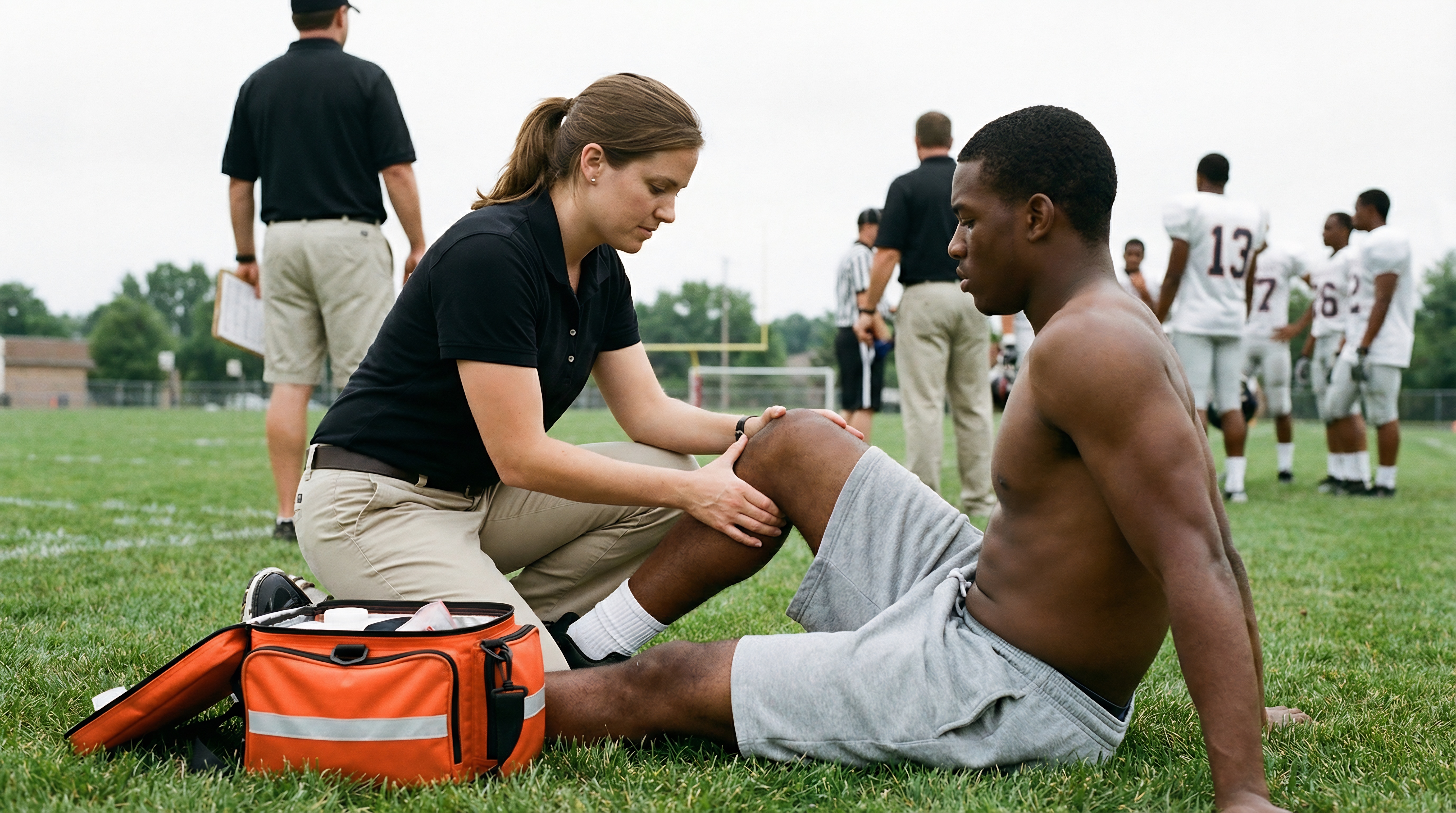
Athletic trainers occupy a unique position within sports medicine because our involvement extends beyond the examination room. We cover practices and competitions and interact with athletes consistently, often on a daily basis. That continuity allows us to develop a familiarity with the athlete that cannot be established through an isolated clinical encounter. Over time, we become attuned to an athlete's baseline, including how they move, communicate, perform, and carry themselves, allowing us to recognize subtle changes when something seems off. That insight provides valuable context when evaluating concerns and communicating with other healthcare professionals.
Athletes frequently seek the athletic trainer as their initial point of contact when an injury or concern arises. We evaluate the presentation, determine the appropriate course of action within our scope, and recognize when further evaluation or intervention is warranted. When referral is necessary, our role does not end with directing the athlete elsewhere. We remain connected to the athlete and the broader sports medicine team, providing consistency of care as treatment progresses.
When specialized expertise is needed, collaboration allows each healthcare professional to contribute within their respective area of expertise. Physicians, physical therapists, chiropractors, and specialists each contribute their knowledge, while the athletic trainer provides the ongoing context that connects those perspectives to the athlete's daily sporting environment. Effective sports medicine care is strengthened when those approaches are connected rather than functioning independently.
The athletic trainer frequently serves as the central connection point between the people involved in an athlete's care. When an injury or significant issue occurs, the parent or guardian is typically among the first people notified. We communicate the initial concern, explain when further evaluation is warranted, and help guide the family through the next steps. When referral is necessary, we facilitate the athlete's transition to the designated orthopedic provider or specialist while providing relevant information from our evaluation and maintaining communication between the athletic and clinical environments.
From there, the network of care can extend to a physical therapist, chiropractor, dentist, mental health professional, or another specialist, depending on the athlete's needs. This can include specialists practicing under the direction or referral of an MD, DO, or primary care provider. The athletic trainer helps connect the necessary professionals while maintaining communication across disciplines. Each provider contributes within their respective skill set, but the value of that expertise is strengthened when the professionals involved understand how their role fits within the broader care of the athlete.
Once the involved medical providers and family are engaged and a plan of care is established, the athletic trainer communicates pertinent information to the coach. Coaches need to understand participation restrictions and expectations without being placed in the position of making medical decisions. Communication should also follow HIPAA standards, providing the coach with what is necessary to support the athlete while protecting confidential medical information. The athletic trainer serves as the plug connecting each outlet, but effective collaboration requires every professional to know their lane and respect the expertise of others.
Every healthcare profession has its own education, training, competencies, and professional responsibilities. NATA identifies athletic trainers as healthcare professionals who collaborate with physicians and practice according to their education, training, and state statutes, rules, and regulations. Athletic trainers are educated to examine patients, establish a clinical diagnosis within their scope, provide care, recognize when consultation is warranted, and facilitate referral when necessary.
Knowing your lane does not mean practicing in isolation. It means understanding your own responsibilities while recognizing the expertise and scope of the professionals around you. An athletic trainer does not walk into a chiropractic office and begin performing adjustments. In the same way, another healthcare professional should not assume responsibilities that fall outside their own training or scope. NATA's educational competencies specifically call for athletic trainers to recognize the unique skills of other healthcare professionals, understand their scopes of practice, and work collaboratively toward positive patient outcomes.
Physician collaboration is an important component of athletic training practice, but collaboration does not erase the athletic trainer's professional role. NATA's guidance on team physician relationships describes a collaborative relationship between the physician and athletic trainer while emphasizing that physician agreements should not prevent an athletic trainer from practicing to the full scope permitted by the applicable state practice act. The same principle applies across the healthcare team. Different clinical opinions can strengthen care when communicated professionally; problems arise when a provider disregards another professional's scope, expertise, or involvement.
The athlete should never be placed between healthcare professionals or expected to determine whose recommendations to follow. Clinical disagreements should be addressed directly between providers rather than through the athlete. When conflicting guidance reaches the athlete, uncertainty can replace confidence and trust at a time when clarity is essential to recovery.
Professional rapport extends beyond the provider-athlete relationship. It also shapes how healthcare professionals work with one another. Mutual respect allows providers to exchange relevant information, address concerns, and appreciate the clinical context behind another provider's decisions. When professional relationships turn adversarial, teamwork suffers, creating unnecessary barriers to care.
When coordination fails, care becomes fragmented. Recommendations made without consideration of the athlete's history, current treatment, or sporting demands can create conflicting expectations. Parents and coaches may receive inconsistent guidance, leaving the athlete to navigate a system that should function as a unified team.
The consequences ultimately reach the athlete. A disconnect among providers can affect confidence, trust, rehabilitation, and return to participation. Clinical expertise is valuable, but expertise alone does not create effective care. Healthcare professionals do not have to agree on every clinical decision. They do have a responsibility to respect one another's roles and remain focused on the athlete's well-being. When professional pride takes precedence over teamwork, the athlete is the one who pays the price.
Sports medicine works best when professionals recognize that no single provider can meet every need of an athlete. Athletic trainers connect the people, knowledge, and care surrounding the athlete, but an effective system depends on each professional respecting their role and the contributions of those around them.
Stay in your lane, because the athlete deserves a coordinated team—not competing providers.
Athletic trainers are highly qualified healthcare professionals who provide comprehensive care for athletes, extending far beyond basic training. Discover the multifaceted role of athletic trainers in injury prevention, emergency response, rehabilitation, and athlete advocacy.
Understanding the comprehensive role of athletic trainers as essential healthcare professionals in sports medicine and athlete wellness.

Destiny: “Hi, I’m Destiny. I’m an athletic trainer.”
Bystander: “Oh, you train athletes? What type of training do you do?”
Does this conversation sound familiar? The title “athletic trainer” can create a misleading picture of the profession and leave many people with an incomplete understanding of what we actually do. So, who are athletic trainers?
According to the National Athletic Trainers’ Association, athletic trainers are highly qualified, multi-skilled healthcare professionals who provide care across the continuum of injury and illness. Their scope of practice encompasses prevention, examination and clinical diagnosis, emergency care, treatment and rehabilitation, as well as wellness promotion and education. While the profession has deep roots in sports, athletic trainers are healthcare providers whose expertise extends well beyond the playing field.
Providing this level of healthcare requires extensive clinical preparation. Becoming an athletic trainer involves earning a master’s degree, completing multiple clinical rotations, and successfully passing the Board of Certification examination before becoming a certified and licensed athletic trainer.
Athletic training is a multifaceted profession that requires us to wear several hats throughout the day. Much of our work begins before the first athlete arrives and continues long after the last one leaves. We monitor conditions such as Wet Bulb Globe Temperature (WBGT) and lightning to help determine whether participation is safe. We also guide athletes through rehabilitation and evaluate their readiness to return to activity following an injury or concussion. Much of this work happens beyond the view of the stands, but it remains essential to an athlete’s safety and recovery.
Athletic trainers often become trusted professionals beyond the scope of physical care because of the consistent relationships we build with athletes. Seeing them regularly allows us to recognize changes in their behavior, concerns, or readiness to return that might otherwise go unnoticed. We advocate when an athlete’s needs are overlooked and connect them with appropriate resources when additional support is needed. Our responsibility extends beyond the injury itself; we recognize the individual and the challenges that can accompany recovery.
The sideline provides more than a view of the game; it provides a place where immediate healthcare is available when athletes need it most. We are trained to respond to medical emergencies such as cervical spine injuries, cardiac emergencies, heat stroke, open fractures, and dislocations. Our role, however, extends far beyond emergency response. We are sports medicine professionals, and our presence on the sideline provides athletes with immediate access to healthcare when every second can matter.
The next time you hear the word “trainer,” remember that there is much more behind the title than you might think.
We are healthcare providers, advocates, educators, and sports medicine professionals who care for athletes beyond the game.
When you see us on the sideline, know that you are seeing healthcare in action.
Join Influential Women and start making an impact. Register now.