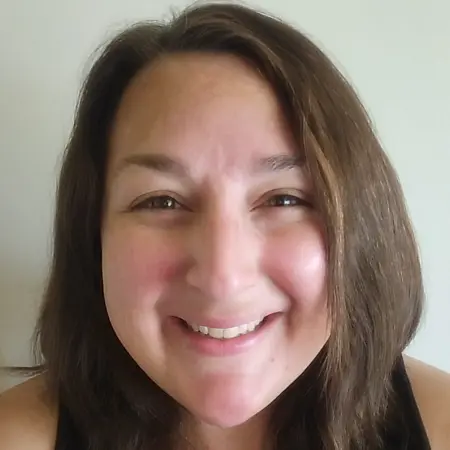
Her Story
About Gina
Gina Hooper is a licensed funeral service practitioner with approximately 15 years of experience, recognized for her leadership in operations, education, and workforce development. She is the Founder of Hooper Legacy Services, a company dedicated to providing comprehensive support to funeral homes through training, compliance, and workforce development initiatives that strengthen how professionals serve their communities.
Holding multiple California licenses (including Funeral Director, Embalmer, Crematory Manager, and Preneed Sales Agent), Gina has worked across nearly every role in funeral service. She has managed both small and large-scale operations, from firms serving approximately 400 families annually to organizations serving up to 6,000 families with teams of nearly 30 staff members. Her expertise is rooted in operational leadership, team development, and building well-trained, supported professionals.
Through Hooper Legacy Services, Gina has transitioned her work from a part-time endeavor into a full-time commitment focused on addressing critical gaps in the funeral service profession. Her work centers on workforce development, education, and compliance support, including conducting compliance assessments aligned with Cemetery and Funeral Bureau regulations, OSHA standards, and the FTC Funeral Rule.
Her most current initiative is the development of a Funeral Service Assistant Certificate Program in partnership with an adult education institution in San Mateo County. This program is designed to serve the broader community by creating accessible entry points into the profession while better preparing individuals for the emotional and practical realities of the work. It focuses on building stronger workforce pipelines, increasing community awareness of funeral service careers, and providing foundational training that supports both new professionals and the funeral homes that serve their communities.
In addition to her business leadership, Gina is actively engaged in professional and community-building efforts. She leads a local chapter of the Death Care Collective, hosting monthly virtual meetings and quarterly in-person gatherings that bring professionals together for connection, education, and collaboration. These events feature speakers and conversations on evolving areas of the profession, including green burial, alkaline hydrolysis, natural organic reduction, and death care support services.
Gina holds a Master’s degree in Thanatology, a Bachelor’s degree in Funeral Service Science, and an Associate’s degree in Psychology and Sociology. Her work is grounded in both academic knowledge and hands-on experience, and her day-to-day responsibilities can include embalming, cremation operations, family arrangements, compliance consulting, teaching, and expert witness support.
Her motivation for entering the field is deeply personal, shaped by early experiences with loss and a desire to improve the level of care families receive. She is especially proud of the professional community she has helped build, emphasizing mentorship, collaboration, and accessible education.
As a single mother, Gina values balance, resilience, and purpose-driven work. Her philosophy centers on community, shared knowledge, and emotional support, grounded in the belief that professionals should commit to a mission, not just a company, and should never carry the emotional weight of this work alone.
Her Interview
Ten minutes with Gina
01What do you attribute your success to?
II attribute my success to the mentors and community that have supported me throughout my career. This is a profession where no one succeeds alone, and I am deeply grateful to the individuals who have taken the time to share their knowledge, answer late-night phone calls, and offer guidance when it mattered most. Their willingness to invest in me has shaped not only my skill set, but also how I show up for others in this work. I firmly believe that no one knows everything- it’s about knowing your resources, building strong relationships, and continuing to learn. It is my community that has built me.
My foundation is rooted in hands-on experience, strong operational leadership, and a deep commitment to serving families while supporting fellow professionals in the funeral service profession. Having worked across nearly every role and managed both small and large operations, I’ve developed a comprehensive understanding of team development, training, and effective service delivery.
A significant part of my work has been identifying gaps in workforce development and community support, which led me to focus on education, compliance, and creating stronger pathways for new professionals through Hooper Legacy Services. I am driven by improving systems, reducing turnover, and better preparing individuals for the realities of this work.
At the core, my success is built on community, collaboration, and purpose, with a continued focus on supporting others and strengthening the future of the profession.
02What’s the best career advice you’ve ever received?
The best personal advice I’ve ever received came from a friend’s grandmother, Rose, who became like family to me. We shared the same birthday, and she would always say, “Gina, you have to laugh at everything. One day it will be funny, so find a way to laugh at it now so you don’t waste time waiting for it to be funny.” That perspective has stayed with me throughout my life and career. It reminds me to find lightness, even in heavy moments, and to keep moving forward without getting stuck in them.
Professionally, I’ve learned that the emotional weight of this work is not meant to be carried alone. I remember a particularly difficult week where we had multiple young deaths that needed to be embalmed. Instead of working independently, my coworker and I stayed together and completed each embalming side by side, sharing the weight and heaviness that comes with caring for such profound loss. In that moment, he reminded me "we are not meant to carry this alone." That experience has stayed with me ever since.
If someone feels like they don’t have support, I want to be the person who helps share that burden. There is real strength and beauty in our community when we show up for one another, lean on each other, and carry that weight together.
03What advice would you give to young women entering your industry?
Build your community early and stay connected to it. This profession is not meant to be done alone- find mentors, ask questions, and don’t be afraid to pick up the phone. The people around you will be one of your greatest resources, and knowing who to turn to matters just as much as what you know.
Get as much hands-on experience as you can. Every role teaches you something different, and understanding the full scope of the work will make you stronger, more confident, and more effective in serving families and supporting your team.
Learn the operational and compliance side of the profession, not just the service aspect. Understanding regulations, systems, and risk management will set you apart and give you the tools to lead, not just participate.
Trust your voice. You belong in this space. There will be moments where you may feel underestimated- don’t shrink yourself to fit expectations. Lead with integrity, stay grounded in your purpose, and let your work speak for itself.
Lastly, take care of yourself. This work is meaningful, but it can also be heavy. Creating boundaries and sustainable habits will allow you to show up fully- for the families you serve and for yourself.
04What are the biggest challenges or opportunities in your field right now?
The funeral service profession in California is in a unique position right now. While broader national trends apply, many of the challenges here are shaped by gaps in education, workforce development, and the realities of operating within such a large and diverse state.
One of the biggest challenges is workforce sustainability. There are not enough people entering the profession to meet demand, and the high cost of living in California makes recruitment and retention even more difficult. This often leads to burnout, with professionals carrying heavy workloads over long periods of time.
Another key challenge is the lack of structured continuing education. California does not require continuing education for license renewal, which creates inconsistency in training and professional development across the field. Much of what professionals learn comes from hands-on experience, which is valuable, but can also lead to gaps depending on the environment they were trained in.
Operating costs also remain a significant pressure. From facilities to staffing, running a funeral home in California is expensive, while families are increasingly cost-conscious and seeking simpler, more flexible options.
At the same time, expectations from families are evolving. Families are seeking more transparency, flexibility, and personalization. While we often know the communities we directly serve, “community” looks very different across California. The Central Valley, Los Angeles County, the Bay Area, Sacramento, San Diego, and coastal regions all have distinct needs, expectations, and cultural norms. Cultural competency isn’t just a concept, it’s shaped by exposure. Someone who spends their entire career in one city may not fully understand what service looks like in another part of the state.
That perspective expands even further when looking at regional differences across the country. West Coast services often differ from East Coast practices in terms of traditions, pacing, family expectations, and approaches to memorialization. Without broader exposure, it can be easy to assume one way of serving is standard, when in reality, it is highly regional.
These challenges also create meaningful opportunities. There is a strong need for workforce development, accessible training programs, and clearer entry pathways into the profession. There is also an opportunity to strengthen internal systems, standard operating procedures, and mentorship to create more consistency and support within funeral homes.
Ultimately, one of the greatest opportunities lies in expanding perspective, learning beyond your immediate environment, sharing knowledge across regions, and building a stronger, more connected professional community.
05What values are most important to you in your work and personal life?
In both my work and personal life, I value community, connection, and purpose-driven work. I believe that meaningful relationships and shared knowledge are the foundation of both personal growth and professional success.
Professionally, I prioritize integrity, education, accessibility, and compassion. My work is centered on supporting families while also strengthening the funeral service profession through training, mentorship, and collaboration. I’m especially passionate about creating clearer pathways into the profession and making education more accessible so people feel prepared and supported in the work they’re stepping into.
Personally, I value family and friendships above all else (especially my four-year-old daughter and my dogs). They keep me grounded and remind me why balance matters. I’m most at peace when I’m outdoors, whether that’s recurve archery, fishing, camping, or taking road trips and exploring new places. I also value creativity and expression through music, and enjoy playing the trumpet as a way to reset and reconnect with myself.
At the core, everything I value comes back to living with intention, staying connected to the people around me, and building a life and career that feels both meaningful and sustainable.
Join Influential Women and start making an impact. Register now.