Her Story
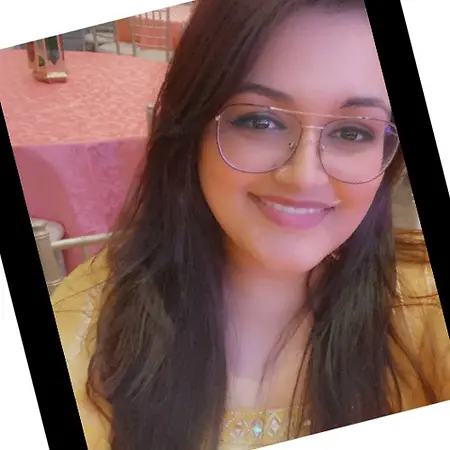
About Isha
I've dedicated the past 10 years to human resources, building my entire professional foundation in Canada before relocating to Pennsylvania about a year ago. My career has taken me through diverse, male-dominated industries including tech consulting and logistics, where I've consistently been told that I'm different from other HR professionals - that people see me as someone they can genuinely connect with rather than just the HR police. That feedback has become one of my most valued professional achievements because it reflects my core approach: I'm deeply empathetic, I connect closely with people, and I feel all their feelings. I'm extremely passionate about HR work, though I'll admit that right before my sabbatical, I was getting caught up in the day-to-day demands and forgetting why I got into this field in the first place. Now, as I'm on parental leave with my baby, I'm taking this time to rediscover myself, reconnect with people's stories on platforms like LinkedIn, and recalibrate. I'm reflecting on what my career looked like previously and what I want to do moving forward, being intentional about my return to the corporate world. Throughout my journey, I've focused on being someone employees can relate to and empathize with, working on everything from employee engagement and conflict resolution to performance management and compensation analysis. I believe HR is crucial even though we're often not seen as a profitable team, and I'm committed to being that go-to person who provides people with the important skills, tools, and resources they need to be successful.
Her Interview
Ten minutes with Isha
01What do you attribute your success to?
I think good mentorship has always been crucial to my success. I'm somebody who is always finding someone I can talk to and learn from, and that might not necessarily be my boss or somebody in the same department as I am - it's someone I can learn something from. It might be somebody from another department that's been at the company for multiple years and has all the ins and outs of the job or the company, and I really try to dig into finding that information and seeing how I can relate to it and be successful in the role I'm in. I think another big attribute is being curious. Even though something might not have anything to do with your role, if you are curious enough, you learn enough about the job, about the organization, enough about the leaders, enough about the people that are running the company. You will be successful, and you will find a way to get a seat at the table and be able to relate to people and be successful.
02What’s the best career advice you’ve ever received?
I think one of the best career advice I've ever gotten is not to take things personally. I am somebody who is very empathetic, and I connect very closely with people, and I feel all their feelings. I think that's really important in my role, but sometimes when people have a bad day or when people are going through something, they need somebody to vent to or take it out on, and unfortunately, we become those people. Part of that is because we have to execute decisions that we may not have made, but that's our role to execute. So sometimes we become that outlet. The best advice I've gotten is not to take things personally, not to take those things home, and not to internalize them and feel like you are a bad person or a bad professional or the issue or the problem. We need to understand that people are dealing with the feelings they're dealing with, and we are doing the job that we're doing, but we need to do the job the best that we can. I think that is probably one of the biggest pieces of advice, because sometimes I feel like we do forget that we're not the source of their anger or their frustration. We are just kind of an outlet, and that's okay.
03What advice would you give to young women entering your industry?
I say this from a person who is a person of color and someone who has mostly been in industries that are male-dominated. I used to work at a tech consulting agency where the majority were men in software engineering roles, and I also worked in logistics, which is again male-dominated. You're always expected to be in these rooms where senior leadership is full of men. While HR is more female-dominated, we are going to be working for organizations that are male-dominated, and you're not going to see a lot of women, especially women of color, in leadership roles. What I would say is try to figure out how to find a seat at the table and make sure that your voice is being heard. I know that a lot of women, especially women of color, tend to try to tone themselves down a little bit so they're not seen as aggressive or as somebody who is outspoken in a bad way. But you need to find a way to get that seat at that table, regardless of how you're seen. It's really important to have representation, and you are going to be that leader that that organization needs. You are going to be that role model for employees who are in these male-dominated fields, who are of color, and they don't have that representation, they don't have that role model. I think it's really important that you be that for them. You need to break into those positions, regardless of how intimidated you might be when you sit in that room of men.
04What are the biggest challenges or opportunities in your field right now?
I think the biggest challenge, and this is a recurring theme, is not being taken seriously as a team. I know that there are a lot of senior leaders who see HR as not a profitable team. We don't bring profit into the company, we're not bringing in tangible results, things that you can hold onto. But we are very important because we are working on employee engagement, we're working on solving conflict within teams, we're working on other employee relations issues. We are the go-to team for performance management, compensation analysis, and payroll. I think when companies are looking at which of their departments are important, HR is not on that list, and that is really difficult to tackle because it feels like we are kind of brushed aside, even though we have really great ideas and really great perspectives on how to improve employee engagement, improve the experiences of the employee, and help to make them successful. Whether it is teaching them, guiding them, providing them with training and development, providing them with tools and resources, and being that go-to department to provide them with those important skills.
05What values are most important to you in your work and personal life?
I think integrity is a very big one. It's very important to continue to uphold integrity, regardless of whether it's professional or personal. You are going to be faced with lots of different challenges, especially in the role that we're in. We are expected to hold a lot of information that's confidential, that is private, that is sensitive. When I say integrity, I really mean that we need to be true to ourselves and we need to make sure that we are able to hold that information and not divulge information or compromise privacy and things like that. I think that's just a really big one for me. I also think collaboration and teamwork are important. I know that's more traits than values, but I think just being able to be somebody who can be an all-rounder and really work with multiple teams, multiple people, multiple personalities, and be flexible - I think that's a really big thing as well.
Join Influential Women and start making an impact. Register now.