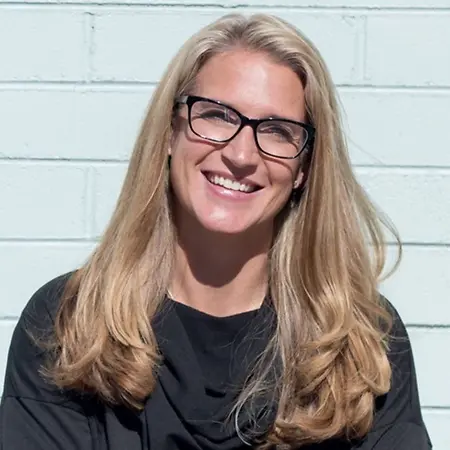
Her Story
About Janelle
I've been in the field of physician coaching informally since 2005, and formally for over 7 years as the founder and CEO of Footlamp Consulting. My journey began with 25 years of real-world leadership experience in healthcare operations. I worked as a medical office director at Kaiser Permanente, then became the internal executive coach of the Colorado Permanente Medical Group, the largest medical group in Colorado and the physician side of Kaiser Permanente. This extensive healthcare background gives me the credibility and expertise that forms the foundation of my coaching practice. My most notable professional achievement has been figuring out how to successfully scale my very small practice into an agency model with 40 coaches serving large healthcare organizations who contract with us. As CEO, I spend my time on business development, helping executive leaders of large healthcare organizations across the country recognize the importance of providing personalized neuroscience research-based support to physicians who are struggling with a 49% burnout rate. I lead my team of 40 professional coaches and personally coach between 2 and 5 people at a time, keeping my panel small because I also have to run the company. We're also exploring narrow AI and what that's going to look like, and how we might be able to leverage that to bring the benefits of coaching to physicians everywhere who can't access it, can't afford it, or whose employer won't provide it. My niche is so weird and not the norm - we coach doctors, and we're not that well known, but we work with some big companies and I've had no problem replacing my income and being able to support my family.
Her Interview
Ten minutes with Janelle
01What do you attribute your success to?
I attribute my success to my risk tolerance. I didn't even realize it was a thing, because when you're a person who can do unconventional things, I don't call them courageous - I think some of the stuff I've done, most people would label as stupid. My older brother told me at one point that I was making decisions that were gonna land me in our mother's basement, living there with my husband and kids. I call them unconventional decisions, like buying a property in the hurricane-ravaged country of a third world nation in Dominica, which sounds very glamorous but that's not what most people would do. We were investing in the people there as a passion project. Now, 8 years later, there's an international airport being built behind our home that will probably turn into a very lucrative financial investment, but that's not what we set out to do. Sometimes the unconventional side of things, which I am led by with my faith, helps us land on things that I probably would not have landed on by myself. That comes from a pretty uncommon tolerance for calculated risk. I have learned over the last 10 years, being an entrepreneur not in corporate, that that is not normal. I just always thought, when people would say 'oh, I wish I could just leave corporate and start my own business like you,' I'm like, why don't you? It's actually really fun. It's not that hard. And they'd say 'oh, I could never do what you do,' and I was like, why not? I didn't understand that. It was easy for me. I also regularly manage my triggers - I am managing my amygdala on a regular basis. It's a four-step process that we have coined. When something goes down that you can't control, you have the opportunity to act on things in whatever way you think is going to best serve you. I don't let things trigger me and continue to have me ruminating and freaking out about it. That doesn't help anyone. I catch it, and I stop it. That, I think, also provides me with some capacity to do unconventional things that I'm comfortable doing.
02What’s the best career advice you’ve ever received?
The best career advice I've ever received came from Sheryl Sandberg's book Lean In. The first line in her book was 'What would you do if you weren't afraid?' I just remember that advice is actually incredibly helpful for me, and I think that's probably why I'm a coach. Another piece of advice from that book that was pretty influential for me was seeing your leadership career as a jungle gym instead of a ladder. That was great because it helped me to relax and not be too concerned about moving too slowly while I had little kids that I was raising. It made me feel like I could kind of keep my focus on my family first and not just have to put my career down. I could chill out a little bit for a decade or so and be there for my kids, and I did do that. I know Sheryl Sandberg has some not very happy fans, and that's fine, but she's gonna influence a lot of people. Honestly, a lot of the mentoring I received didn't apply to the stuff I was doing, because I was doing pretty unconventional risk tolerance things, like starting my own business and purchasing rental properties when everyone was running away screaming. I haven't found many people to give me advice, sadly, because you really should only get advice from people who are doing what you're already doing or doing it better. I seem to find that people want advice from me because I'm doing stuff they want to do. I've mostly learned from influential people that I don't know personally. On the real estate front, I was listening to real estate investors, following what they were doing, watching what they were doing, and doing some pattern association in my head.
03What advice would you give to young women entering your industry?
If someone was dead set on entering the coaching industry, I would tell them to get to know themselves really well and understand what their differentiating strengths are, and just fully leverage them so that they can really maximize the authentic differentiators they bring to the table and set themselves apart. Honestly, I don't really feel like I would have been even half the coach I am if I hadn't gone through 25 years of real-world leadership experience running medical offices and consulting healthcare executives. That, I feel like, is the base for what got me in the door and gives me credibility. So just becoming a coach as a young woman without a real professional consulting background to offer - I mean, you can, it's done, but there's about a gazillion other people trying to do that. My niche is so weird and so not the norm - we coach doctors, and we're not that well known. We work with some big companies, but we're not like an industry norm. Nobody knows anything about Footlamp, but we've been able to get enough work that I've had no problem replacing my income and being able to support my family.
04What are the biggest challenges or opportunities in your field right now?
The biggest challenges are people just being able to make a living. There's just a ton of people calling themselves a coach, going after marketing as a coach, not necessarily even delivering the best outcomes, but a lot of people don't really know what they should be getting from a coach. It's just a very unregulated field. That's a challenge, I think, for most coaches out there. That's why a lot of them are reaching out to me, trying to understand how do you make a living doing this. My business model's very different, but most of the coaches that are succeeding just coaching people themselves have built a network based on their credibility and their outcomes. I think it's hard to do that when you're just starting out, and most of these coaches are just starting out. I think AI also is presenting a pretty big challenge to our industry. A lot of folks are using AI to replace doctors and lawyers and therapists, and coaches are in there too. If they can get an AI chatbot to give them advice - and coaches don't give advice, so that's the other thing - people think they're being coached, but their chatbot tends to really go back to this common denominator of advising. Chatbots aren't great at coaching yet. Another big challenge is being able to understand what is the next iteration of Anthropics and OpenAIs and everyone else's products that are actually going to be able to contribute in a positive way. People in this industry and others are sort of fixated on what it's been doing or what it's currently doing, and none of them have access to the advanced versions. The general population just using ChatGPT is using the crap version that doesn't work very well. People have no idea what this thing is capable of - it's going to blow the socks off of the entire industry. That, I think, is another challenge: being able to get beyond your own cognitive bias that's gonna keep you in a space of safety about the fact that this isn't going to replace me, and actually start understanding how it might, and how you might do something with that as an entrepreneur in order to continue to keep feeding your family. I don't like living with my head in the sand - I don't find that to be a particularly helpful coping mechanism.
05What values are most important to you in your work and personal life?
The values most important to me in my work and personal life are integrity, authenticity, faith, family, and visionary action.
Join Influential Women and start making an impact. Register now.