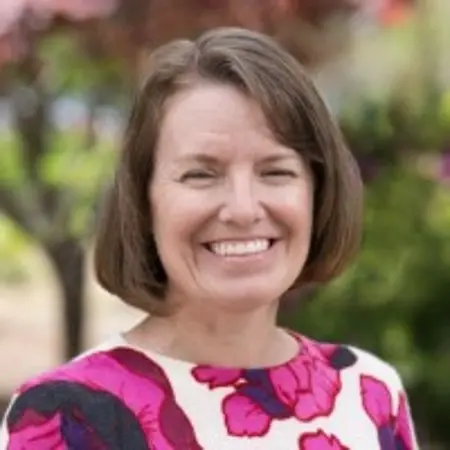
Her Story
About Jennifer
Jennifer (Jeni) Buckman is a Shareholder at BKS Law Firm, PC in Sacramento, California, where she practices environmental and public agency law with a primary focus on complex water rights matters. She has been practicing law since 1995 and has specialized in environmental law since 1997, building a career dedicated to addressing some of California’s most challenging natural resource and regulatory issues. As part of a boutique firm committed to making a difference, she works within a team recognized among California’s top environmental law practices, providing comprehensive, end-to-end guidance on environmental matters from strategic planning through litigation when necessary.
Her passion for law stems from a strong interest in intellectual rigor, research, and writing, along with a desire to create meaningful impact through her work. She began her career at firms with strong environmental and water law practices before serving in-house for approximately five years with a major public agency responsible for delivering water to about one million acres of highly productive agricultural land in California’s San Joaquin Valley. This combination of private practice and public agency experience has shaped her ability to approach complex environmental and water resource issues with both technical depth and practical perspective. She credits her mentor, Susan Hootkins, as an important influence in her professional development and growth.
Throughout her career, Jennifer has achieved significant milestones, including early involvement in precedent-setting litigation involving interpretation of the Endangered Species Act before the U.S. Supreme Court, as well as later successfully negotiating a major settlement that contributed to the restoration of the San Joaquin River. More recently, she has expanded her focus into innovation and technology, co-founding and investing in an AI company designed to help streamline environmental review under the California Environmental Quality Act (CEQA) and the National Environmental Policy Act (NEPA). She is also a respected educator and speaker in her field, frequently contributing to professional organizations and continuing to advance thoughtful, solutions-oriented approaches to environmental and water law.
Her Interview
Ten minutes with Jennifer
01What’s the best career advice you’ve ever received?
I had some amazing mentors, including Greg Wilkinson, a now-retired attorney that actually argued the case before the Supreme Court, and Emily, who was on the bench for a long time after I worked with her. The best piece of advice I got from Emily was that we are standing on the shoulders of the women who came before us, and we need to make ourselves available to the women who come after. That mentorship idea and supporting women in a male-dominated field has been really important for me. Because of that, I have kind of organized an informal, loose group, Women in Water, where we network and get together a few times a year and try to just support each other.
02What advice would you give to young women entering your industry?
My advice to young women entering this field is that there is no shortage of meaningful work, and it is an intellectually engaging and rewarding profession. Artificial intelligence is not something to fear, but a tool to embrace AI will support and enhance legal work, and those who learn how to use it effectively will have a clear advantage over those who do not. While technology will continue to transform how we practice, it will not replace the need for skilled legal professionals, particularly in areas like environmental law, where there is a strong and growing demand for knowledgeable advocates. This is an especially impactful field with real opportunities to make a difference, and I strongly encourage young women to consider it. Having a strong mentor along the way is also invaluable for guidance, growth, and long-term success.
03What are the biggest challenges or opportunities in your field right now?
One of the biggest opportunities in my field right now is the rapid advancement of artificial intelligence. I see tremendous potential in how AI can enhance efficiency, improve decision-making, and streamline processes across various functions. Rather than viewing it as a challenge, I choose to embrace AI as a transformative tool that is reshaping the way we work, creating new possibilities for innovation, and allowing professionals to focus more on strategic, high-value contributions.
04What values are most important to you in your work and personal life?
Part of why I'm in public law, or why I work a lot with public agencies, is that they share the values that I have. Public agencies are generally trying to do the right thing, and with very, very, very few exceptions, they're not going to be dishonest with you. They'll tell you the truth about what their aims are and what they're trying to accomplish, and usually it's pretty reasonable because they're public agencies, so they're representing a mixed constituency of people who they've already kind of sorted out and made a policy call as to how to balance the values. It's not just pushing one agenda or another. Those are the values that really have kept me very closely tied to public law, because I appreciate the fact that I can have honest conversations with my clients, and that they're generally trying to do the right thing, to make a good policy balance that helps the environment and gets the people the reliable water supplies they need. We call them co-equal objectives. I don't like the word co-equal because it's not a real word, but those are the values that drive it.
Join Influential Women and start making an impact. Register now.