Her Story
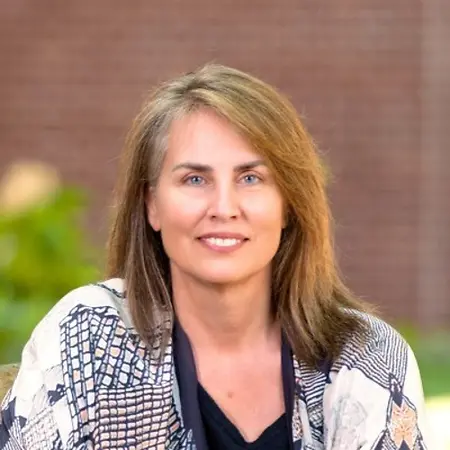
About Judy
I'm a recovering drug addict who transformed my life experience into a career as a neuroscientist specializing in addiction. I started using drugs when I was almost 12, drank a bunch of alcohol, and thought it was phenomenal. I was off to the races, and my whole life, the things I cared about, my family, all of that kind of went to the wayside. I eventually got kicked out of preschool, contracted hepatitis from sharing dirty needles, and got to a place where I was really hating myself when I was only in my teens. Cocaine was my biggest catalyst. I didn't want to get on this trajectory, but I wanted to cure myself so that I could use, and that seemed reasonable in my clouded state. Despite evidence to the contrary, I ended up sticking with school because I had this sense that there's something different about the brains and biology of people like me compared to people who can sort of take it or leave it. That's how I became a neuroscientist. It took me 7 years to get my undergrad, and 7 years for my PhD, then I did a postdoc, and then I took my first job thinking I was going to cure addiction at the level of the brain. I was working in mice on the role of stress, sex hormones, environmental influences like learning, and developmental experiences. Then I became an expert in the genetics of addiction, doing a postdoc right around the time the Human Genome Project was being completed. Neither did that turn out to be as helpful as everybody anticipated at the time. Meanwhile, I was sort of discouraged, but it's a very interesting problem, and I was sober. I'll have 40 years clean and sober in July if all goes well, right now 39. I wrote the book because it was frustrating to see that more people were dying than ever before, and despite my and other people's efforts, we weren't really making headway. I thought that if people could understand how it is that there's never enough, what a kind of dead-end regular use is, and it's just due to the way the brain works, it's sort of a fundamental principle, kind of like the first law of thermodynamics. You can't create or destroy energy, so kind of taking good feelings out of the bank, you have to pay those back, and you get in this vicious cycle of trying to feel better and making things worse. When I wrote the book, it was mostly because I wanted a sabbatical in Italy, and I was frustrated, and I didn't want to spend it in the BioLab. I was surprised when it went well. I think it really resonates because about a third of the population in the world suffer with some addictive disorder. It's so prevalent, most of us know people who have really suffered. We're in need of more understanding about not only the biology, but the social and cultural and all the factors, psychological factors.
Her Interview
Ten minutes with Judy
01What are the biggest challenges or opportunities in your field right now?
I was frustrated to see that more people were dying than ever before from addiction, and despite my and other people's efforts, we weren't really making headway. About a third of the population in the world suffer with some addictive disorder, so it's so prevalent, most of us know people who have really suffered. We're in need of more understanding about not only the biology, but the social and cultural and all the factors, psychological factors. It's more lethal than brain cancer. What we know now is that 90% of people who develop problems with mind-altering drugs, or you could look at pornography or gambling, begin when they're young, and the reason that it's such a vulnerable time is because addictive disorders are a form of learning, and kids learn everything better than adults. They're quicker at it, they learn it more deeply. For that reason, they're so vulnerable. That's why my students all over the place and I are pointing our efforts at other young people. We're trying to create posts, and I'm just in the midst of hiring my first full-time employee to really amp up that social media presence. I realize this is the way that people get information today. 77% of kids grow up in a home with an addicted parent. It's prevalent, and we're in this really, it's a pandemic, you know, it's affecting all of us, it's costing a lot.
02What values are most important to you in your work and personal life?
I have come to accept that I have to be willing to live a different way, and I have to live with advice, and I have to seek spiritual help, and I have to have friends, I have to change. I think people like you and me are the rare ones who actually transform. I recognize that people like you and me are uniquely strong in some ways, because as an addict, I knew how to persist, I knew how to drive toward goals, I knew how to ignore discomfort, I knew how to take risks, and all of those things are also really good for entrepreneurs. I think having a platform and having the opportunities that I do are important to be responsible about. I'm not really a promoter by nature, but I do realize that having a platform and having the opportunities that I do are important to be responsible about.
Join Influential Women and start making an impact. Register now.