
A thoughtful exploration of how lived experience, incomplete information, and curiosity shape professional growth and workplace dynamics across diverse career paths.
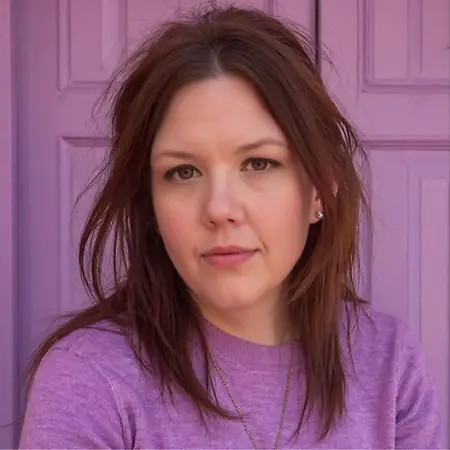
Influential Woman · Business Consulting and Services.
Katherine R Brown
Founder | Applied AI & Multidisciplinary Systems, FRAMEWORK | ktbxiii
Detroit, MI
22Years experience
2Articles published
Her Story
About Katherine
I’ve never followed a particularly linear professional path.
My experience has taken me through different industries, working environments, and disciplines. What I’ve learned along the way is that the most valuable knowledge doesn’t always come from the place you expect to find it.
Sometimes it comes from formal training. Sometimes it comes from a conversation with someone who has spent decades doing a job you’ve only recently learned exists.
And sometimes it comes from recognizing that two seemingly unrelated problems share the same underlying structure.
My background in construction safety has given me a practical environment for examining those relationships.
Safety requires more than identifying hazards and understanding regulations. It requires understanding how people work, how decisions are made, how information moves, and how operational systems influence behavior.
A problem that initially appears straightforward may involve planning, sequencing, communication, supervision, design, or competing priorities.
I’ve learned that the most useful question isn’t always what went wrong.
It’s what made the outcome possible.
That way of thinking has influenced how I approach problems far beyond construction.
Over time, my interests expanded into systems thinking, process development, operational analysis, technology, and artificial intelligence.
I became particularly interested in how AI could help connect information that traditionally remains separated by departments, professional disciplines, or individual experience.
I began developing AI-assisted workflows to organize information, examine relationships, create practical documentation, and translate technical material for different audiences.
But my interest has never been in technology for its own sake.
I’m interested in what becomes possible when technology is combined with human experience, professional judgment, and a clear understanding of the problem being addressed.
That philosophy is also central to FRAMEWORK | KTBXIII.
FRAMEWORK is the culmination of experiences and interests that, for much of my life, appeared unrelated.
Construction safety. Operations. Communication. Human behavior. Technology. Writing. Music. Design. Community involvement.
I don’t see those as competing identities.
I see them as different ways of examining the same fundamental questions.
How do people understand the world around them? How do systems influence their experiences? What happens when information is incomplete? And how can we use what we learn in one environment to improve another?
FRAMEWORK provides a place to explore those intersections through professional analysis, creative expression, and the development of practical ideas.
It’s an evolving platform rather than a finished concept.
My long-term interest is in applying this multidisciplinary approach to operational improvement, responsible AI adoption, workflow development, and problems that benefit from connecting different forms of expertise.
I believe experience becomes more valuable when we remain willing to examine it from another perspective.
And I believe some of the most meaningful opportunities begin when we stop asking which discipline a problem belongs to and start asking what it actually requires.
Her Interview
Ten minutes with Katherine
01What do you attribute your success to?
Curiosity, adaptability, and the willingness to learn from people whose experiences are different from mine.
I’ve worked in environments where I was initially unfamiliar with the terminology, the processes, and sometimes the entire industry.
Rather than pretending otherwise, I asked questions.
That approach has allowed me to learn from tradespeople, project managers, supervisors, business owners, technical professionals, and people whose expertise developed through years of practical experience.
Over time, I began recognizing similarities between problems that initially appeared unrelated.
A communication problem in one industry might resemble an operational problem in another. A process developed for safety documentation might offer a useful approach to organizing information elsewhere.
I became interested in those connections.
I think one of the most valuable professional skills is the ability to recognize what you don’t know without allowing that uncertainty to prevent you from learning.
My career hasn’t been defined by following a single path.
It’s been shaped by taking what I’ve learned from different experiences and finding ways to make that knowledge useful.
02What’s the best career advice you’ve ever received?
Learn the work, not just the rules.
A requirement tells you what needs to happen. Understanding the operation helps you determine how to make it happen.
That distinction has influenced how I approach construction safety, operational improvement, and technology.
I’ve learned that people closest to the work often understand details that aren’t immediately visible to someone reviewing a process from the outside.
Before attempting to improve something, I want to understand how it currently functions, why it developed that way, and what happens when one part changes.
I’ve also learned that good questions can be more valuable than immediate answers.
You don’t need to be the expert in every discipline.
You need to understand enough to recognize when something doesn’t make sense, ask the right questions, and know when another perspective is needed.
03What advice would you give to young women entering your industry?
Don’t allow your job title to define the limits of your professional potential.
Develop expertise in your responsibilities, but remain curious about the work happening around you.
Ask questions. Learn from people with different backgrounds. Explore technology and ideas outside your immediate discipline.
You don’t have to know everything before you have something valuable to contribute.
You also don’t have to pretend to know something you don’t.
Professional credibility develops through preparation, consistency, accountability, and the willingness to keep learning.
There may be environments where your confidence is questioned or your capabilities are underestimated.
You cannot control every assumption someone makes about you.
You can control how thoroughly you prepare, how responsibly you approach your work, and whether you’re willing to stand behind your professional judgment.
And remember that changing your position when presented with better information is not a weakness.
It’s part of developing sound judgment.
04What are the biggest challenges or opportunities in your field right now?
One of the most significant opportunities is finding practical ways to integrate artificial intelligence into existing operations without losing the expertise and judgment that make those operations function.
There’s considerable attention on what AI can generate.
I’m more interested in what happens before and after that output.
What problem are we trying to solve? What information does the technology need? How will the results be evaluated? And does the finished product actually improve the process?
Organizations contain enormous amounts of institutional knowledge.
Much of that knowledge exists in people’s experience rather than in formal documentation or easily accessible systems.
AI offers opportunities to help organize, translate, and apply that information.
But implementation requires more than access to technology.
It requires understanding the operation, establishing appropriate workflows, protecting sensitive information, verifying outputs, and maintaining human accountability.
There’s also a generational and experiential component.
Someone with decades of professional knowledge may be unfamiliar with emerging AI tools. Someone comfortable with technology may lack the experience necessary to recognize an inaccurate or impractical recommendation.
Those perspectives should complement one another.
I believe the greatest opportunity lies in connecting them.
The objective shouldn’t simply be faster output.
It should be better communication, more accessible knowledge, and more informed decisions.
05What values are most important to you in your work and personal life?
Curiosity, integrity, accountability, creativity, and usefulness.
I value people who are willing to share what they know and equally willing to acknowledge what they don’t.
I believe consistency matters, but consistency shouldn’t mean refusing to reconsider an assumption when better information becomes available.
I also believe that a solution should be evaluated by how well it works for the people expected to use it.
A process can look impressive on paper and still create unnecessary complications in practice.
Personally, writing, music, design, technology, and community involvement have given me different ways to examine the world around me.
Those interests have influenced my professional thinking more than I initially recognized.
They’ve also reinforced my belief that learning doesn’t belong exclusively to formal education or a particular career.
It happens through observation, experience, conversation, experimentation, and sometimes failure.
I value remaining open to those experiences.
And I believe that understanding people is just as important as understanding the systems in which they work.
Her Content Hub
Articles by Katherine
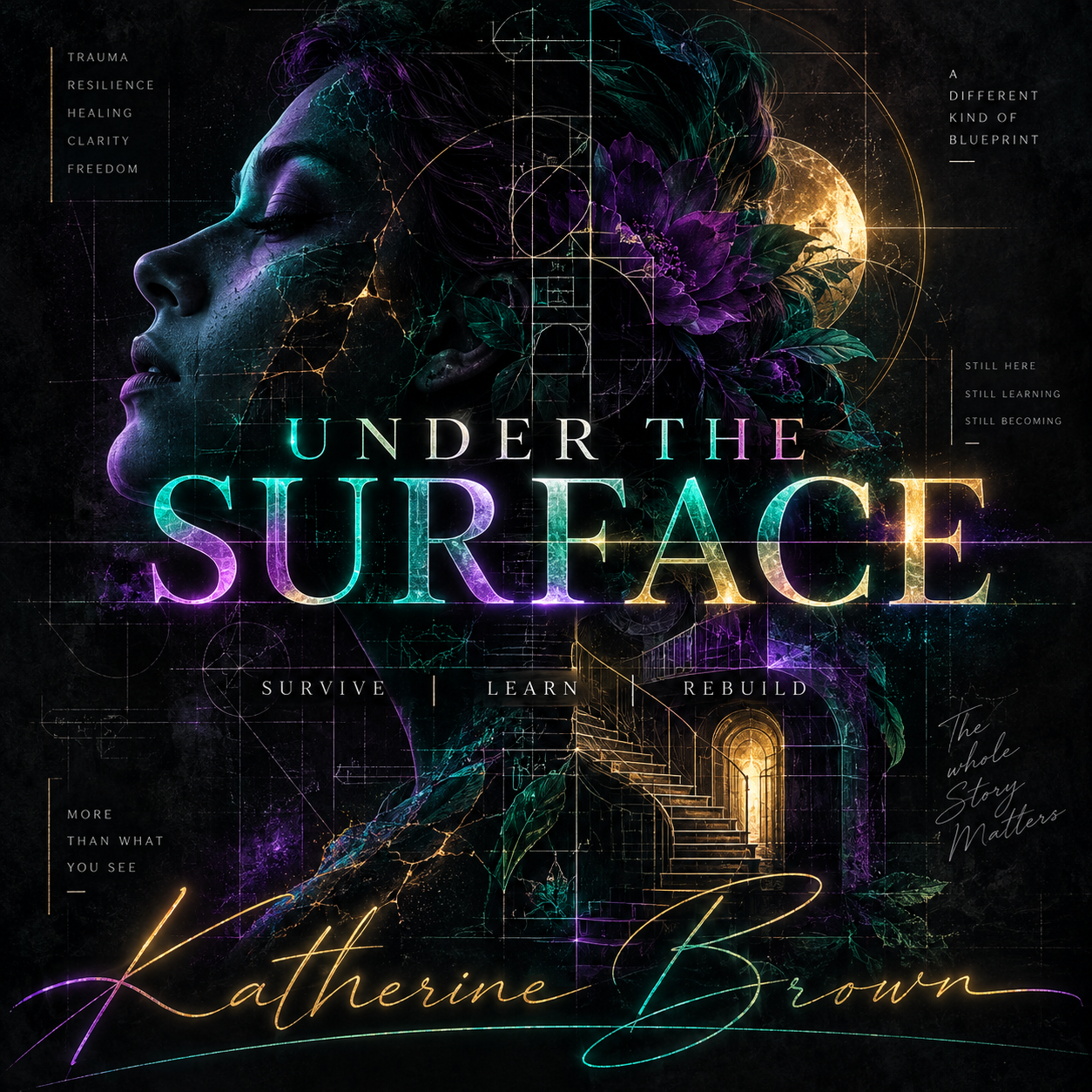
Under The Surface
How Lived Experience, Curiosity, and Incomplete Information Shape Better Work
I have visible self-harm scars.
I think about them before job interviews.
Not because they affect my ability to do the job. They don't.
I think about whether the person across from me will notice them.
And if they do, what information will they think they have?
Because they do have information.
They know I have scars. They just don't know why.
That's the problem with incomplete information. It isn't necessarily false. It's just incomplete.
And I think I've spent a surprisingly large part of my career dealing with exactly that problem.
What You Can't See on a Resume
My scars came from a period of my life when I was dealing with severe trauma and PTSD that hadn't been correctly identified yet.
There is a much longer story underneath that. I've written about parts of it before.
I lost both of my parents young. We experienced homelessness. I worked while going to school and helped support my mother while her health deteriorated.
She died during my first semester of college.
I entered adulthood without either parent and without much of a roadmap for what adulthood was supposed to look like.
For years, I didn't even have the language to explain some of what I was experiencing.
Eventually, after a lot of treatment and evaluation, earlier psychiatric misdiagnoses were corrected. The actual picture included PTSD, ADHD, and autism.
And suddenly, a whole lot of things made considerably more sense.
That history isn't something I normally explain when somebody asks about my professional background.
But it is part of that background.
Not because trauma gave me some kind of professional superpower. I don't buy the idea that suffering automatically makes people stronger or wiser.
Sometimes shitty things are just shitty things.
But experience does give us information.
What we do with it is a different question.
My Resume Makes More Sense If You Stop Reading the Job Titles
On paper, parts of my career look pretty random.
- Music and event work.
- Sales.
- Healthcare admissions.
- Substance use treatment.
- Construction safety.
Some of it was necessity. Some was opportunity. Sometimes somebody gave me a chance, I saw something worth learning, and I took it.
But my resume makes a lot more sense when you stop reading the job titles and start reading the functions.
- Coordination.
- Communication.
- Negotiation.
- Translation.
- Pattern recognition.
- Problem-solving.
- Understanding human behavior.
- Taking a complicated situation with a lot of moving parts and figuring out how to move it toward an executable outcome.
The technical subject changed. The underlying work really didn't. Even the jobs that looked unrelated were teaching me something I eventually used somewhere else.
Working around music events taught me coordination, customer service, and how to deal with a lot of different personalities moving toward the same goal.
Sales taught me how to listen differently.
And yes, I was one of those weird people who actually paid attention during the trainings.
Challenger Sales. The 80/20 principle. Finance. ROI.
Did I adopt every model wholesale and make it my entire personality?
Absolutely not.
I kept the parts that worked.
I also learned that ROI isn't always immediately monetary.
Sometimes the return is trust.
Sometimes it's reputation.
Sometimes it's a relationship that makes the next difficult conversation easier.
Sometimes ten minutes spent understanding the actual problem saves hours spent solving the wrong one.
Then I Ended Up in Substance Use Treatment
I worked in admissions.
I had lived experience that helped me understand some of the people calling us.
But lived experience wasn't enough. Neither was technical knowledge by itself.
- Insurance mattered.
- Clinical criteria mattered.
- Transportation mattered.
- Family dynamics mattered.
- Whether someone had clothes packed mattered.
- Whether someone understood what was about to happen mattered.
- Whether someone was actually willing to walk through the door definitely mattered.
I regularly helped 40 or 50 people enter treatment in a month. One 12-hour shift still sticks with me.
I coordinated 11 admissions. None of those people started their day planning to enter residential treatment.
By the end of it, they were going. All 11 required air travel.
So now we're coordinating insurance, flights, transportation, facilities, family members, expectations, logistics, and 11 human beings making an enormous decision in real time.
Knowing the technically correct answer is very different from knowing how to help another human being act on it.
Then I entered construction safety. Completely different technical subject.
Surprisingly similar human problem.
The Regulation Isn't the Whole Answer Either
Obviously, I need to know the technical requirements.
I need to understand the regulation, the hazard, the control, the procedure, and what all of that actually looks like in the field.
But a regulation can tell me what has to happen.
It can't tell me everything about why it isn't happening.
For that, I might need the electrician. Or the superintendent. Or the laborer actually doing the task. Or production. Or the project manager. Or the person who wrote the procedure.
Different people are holding different pieces of the answer. The guy covered in dirt, sitting in his truck, drinking a Monster, might know something the person carrying the laptop doesn't.
The reverse can also be true. The laborer may see something the project manager doesn't.
The superintendent may understand a sequencing problem that isn't visible in the safety procedure.
Safety may recognize a risk production hasn't considered.
Production may know exactly why the proposed safety control won't work the way someone drew it up.
Nobody has to be stupid or incompetent for information to be missing.
Sometimes people are simply standing in different places.
The solution usually gets better when we get those pieces into the same conversation.
That's One Reason Structure Matters
I've worked for small businesses.
I've worked around large organizations. I've had good experiences and bad ones in both.
I've also developed a real appreciation for good organizational structure.
Good systems don't eliminate bias, misunderstanding, personality conflicts, or bad decisions.
Nothing does.
But they can reduce how much those things control an outcome.
- Clear expectations matter.
- Documented processes matter.
- Training matters.
- Consistent accountability matters.
- A process for accommodations matters.
Structure gives people something to return to when individual interpretation gets noisy.
And one of the places I notice an organization's investment in that structure is training.
Which brings me to something I do that I don't normally tell people I do.
Sometimes I Ask Questions I Already Know the Answer To
Recently, I attended a Lunch and Learn about mental health.
The speaker talked about what mental health is, what it isn't, how stereotypes influence the way we interpret people, and how to approach some of those situations differently.
He also used his own very personal experience.
He was excellent.
The technical information gave the presentation structure.
His lived experience gave it dimension.
Then we reached that inevitable part of almost every training.
"Does anyone have any questions?"
Silence.
It was on Teams.
Anything in the chat? Nothing.
And I'm sitting there thinking, come on. We can't waste this.
This isn't a conversation every workplace is willing to have. We had somebody openly discussing a subject people regularly avoid, and the company had actually created the time and space for us to talk about it.
So I put a question in the chat.
Here's the part nobody there knew.
I already knew the answer.
I wasn't really asking because I needed the information.
I was changing the room.
Someone has to be first.
Once one person asks a question, being the second person doesn't feel quite as exposed.
And sure enough, somebody else asked something.
Then that opened another part of the conversation.
Now we weren't just listening to a presentation.
We were talking.
I've done this throughout most of my professional career.
Sometimes I ask a question. Sometimes I make a comment. Sometimes I just give the room somewhere to go.
Not because I need to demonstrate that I know something.
Quite the opposite.
I'm trying to make it easier for somebody else to contribute what they know.
Because that's usually when I learn something too.
Prepared material can teach me a lot.
But sometimes the most useful part of a training is the question somebody else asks that never even entered my mind.
That's the information I didn't know I was missing.
Curiosity Is Useful
I used to think asking questions was mostly about getting answers.
I don't anymore.
Questions do a lot more than that.
- They expose missing information.
- They test assumptions.
- They reveal barriers.
- They help translate technical information into something usable.
- They give another person an opportunity to tell you what the situation looks like from where they're standing.
- And sometimes they change the conditions enough that somebody else feels comfortable speaking.
That's useful in a training room.
It's useful in healthcare.
It's useful in education.
It's useful in crisis intervention.
It's useful in management.
It's useful in construction.
It's useful anywhere human beings are attempting to accomplish something together, which unfortunately appears to be most workplaces.
There's a time and place for questions.
There's also a way to ask them.
But I have become increasingly comfortable being the person who asks.
Sometimes I genuinely don't know.
Sometimes I think I know and want to make sure.
Sometimes I want to understand how somebody else arrived at a completely different answer.
And sometimes I already know the answer, but somebody has to ask the first question.
Which Brings Me Back to the Scars
For years, people could see them.
People formed opinions about them.
People formed opinions about me.
Very few people ever asked what happened.
That's interesting to me now because asking questions has become one of the most useful things I do professionally.
I ask the electrician because I don't know electrical work like an electrician does.
I ask the superintendent because I want to understand the sequence.
I ask the worker because I want to know what the task actually requires.
I ask the person seeking treatment what is keeping them from saying yes.
I ask questions during training because sometimes somebody has to break the silence.
None of those questions make me less knowledgeable.
They give me information I didn't have before.
And maybe that's the connection underneath a career that doesn't always look particularly connected on paper.
- A scar is information.
- A diagnosis is information.
- A resume is information.
- A job title is information.
- A first impression is information.
- A mistake is information.
- So is a success.
None of them are useless.
They're just incomplete.
Our lived experiences can be useful too.
They don't automatically make us experts. They don't replace education, technical knowledge, evidence, or professional standards.
But they can help us notice something.
They can help us recognize a gap. They can help us ask a better question.
And sometimes they can give somebody else information they didn't know they needed.
I don't think my scars tell you what kind of worker I am.
I don't think a diagnosis does either.
I don't think the worst decision somebody ever made tells you everything about who they are. And I don't think a polished resume tells you everything either.
People are more complicated than that.
So are workplaces.
So are systems.
Sometimes the answer we need isn't missing.
Sometimes nobody has created the conditions for it to come out yet.
Maybe we should ask more.
A reflective exploration of how informal mentorship and continuous learning from colleagues across all levels can shape a successful career in construction safety, emphasizing curiosity, respect, and the value of extracting lessons from every experience.
Not Every Mentor Knows They’re Your Mentor
How asking questions and learning from everyone around you can shape a successful career in an unfamiliar industry.
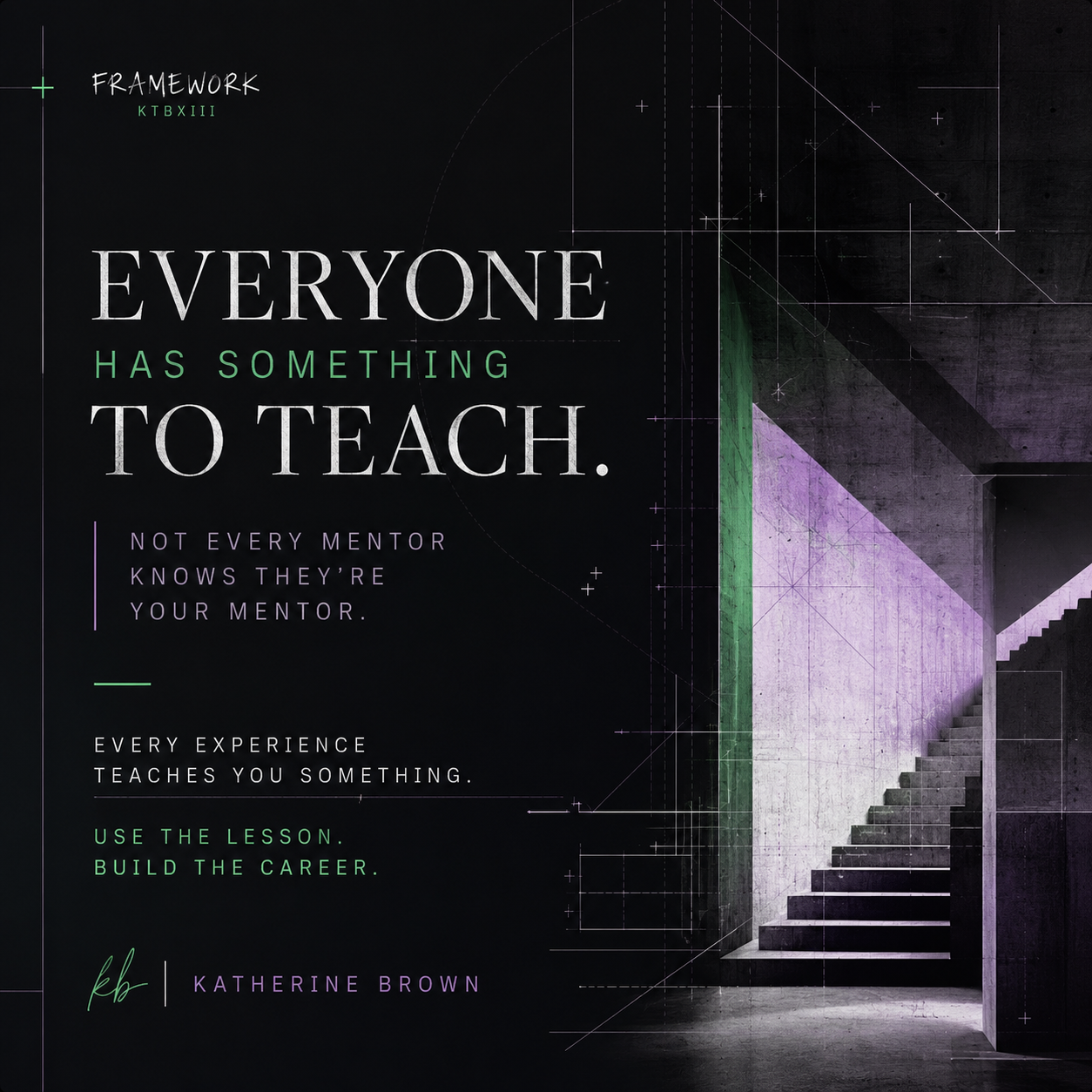
Learning From Everyone: The Unexpected Power of Mentorship
I started a career in construction safety without a traditional background in construction.
I didn’t grow up in the trades. I didn’t enter the industry with years of field experience behind me. There was a great deal I simply did not know.
What I did have was the willingness to ask questions, pay attention, and learn from the people around me.
Looking back, that may have been one of the most important tools I brought with me.
Early in my career, I learned quickly that construction is full of people who know things you cannot learn from a manual alone. Regulations and formal training matter. Certifications matter. Policies and procedures matter. But there is another kind of education that happens when you are standing in the field with someone who has performed the work for twenty years and is willing to explain what actually happens when the plan meets reality.
So I asked questions.
I asked electricians why something was installed a particular way. I asked tradespeople to walk me through their work. I listened when superintendents explained sequencing and logistics. I watched how project owners approached risk and accountability. I paid attention to the people who could walk into a complicated situation, identify what mattered, and communicate it without creating unnecessary chaos.
Over time, I stopped thinking of mentorship as something that had to be formal.
Some of the most influential people in my career have probably never considered themselves my mentors.
They were simply people who took five minutes to explain something.
People who challenged an assumption.
People who showed me a better way to communicate.
People who let me watch how they handled a difficult situation.
People who answered one more question when I was still trying to understand the bigger picture.
Every trade I have worked alongside has taught me something. Every project has taught me something. Project owners, superintendents, safety professionals, engineers, coordinators, and workers in the field have all contributed pieces to how I understand the work today.
And not every lesson came from a positive experience.
Some people teach you what good leadership looks like.
Others teach you exactly what you never want your leadership to become.
Some projects show you the value of strong systems and clear expectations. Others show you what happens when those systems are missing.
Some mistakes teach you more than successes ever could.
Even conflict can be useful if you are willing to examine it carefully enough to ask: What can I take from this? What would I do differently? What should I carry forward, and what should I leave behind?
That does not mean every difficult experience needs to be reframed as something positive. Some experiences are simply difficult. Some decisions are poor decisions. Some environments are unhealthy.
But there can still be information in them.
That distinction has become important to me.
Being grateful for what an experience taught you does not require pretending the experience itself was good.
It means refusing to waste the lesson.
As my career has developed, I have also realized that entering an industry without knowing everything can create an unexpected advantage: you have permission to be curious.
You can ask why.
You can ask someone to show you.
You can admit when you don’t know.
And when you approach those conversations with genuine respect for another person’s expertise, people are often remarkably generous with what they know.
Eventually, those individual lessons begin connecting.
A conversation with an electrician changes how you evaluate an electrical hazard. A superintendent’s explanation of sequencing changes how you think about planning. A worker’s frustration with a procedure makes you reconsider whether a system works as well in practice as it does on paper. Watching a strong leader communicate during an incident changes how you communicate during the next one.
Little pieces of information become a larger understanding of how people, work, risk, and systems interact.
That is how much of my career has been built.
Not through one mentor.
Not through one class.
Not through one project.
Through hundreds of interactions with people who knew something I didn’t.
I still approach the industry that way because there will always be someone on a project who knows something I don’t.
Experience has not made that less true.
It has simply made me better at recognizing it.
If I could offer one piece of advice to someone entering an unfamiliar industry, it would be this:
Do not wait for someone to officially become your mentor before you start learning from them.
Pay attention.
Ask good questions.
Respect expertise wherever you find it.
Learn from the people doing the work.
Learn from good leadership.
Learn from poor leadership.
Learn from the project that goes well and the one that does not.
Keep what makes you better. Leave behind what does not.
Your career will eventually become a collection of those lessons.
Mine certainly has.
And I am grateful to every person—whether they knew it or not—who contributed one.
Join Influential Women and start making an impact. Register now.