Her Story
About Kimberley
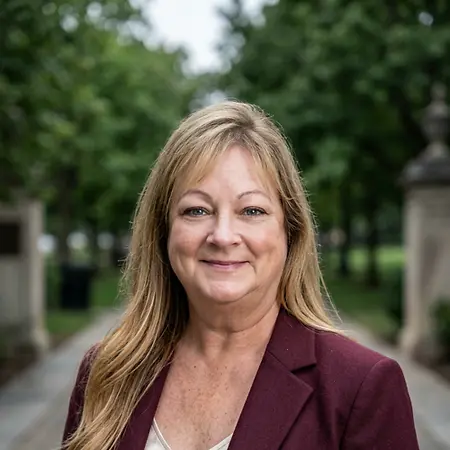
Kimberley Flickner is the Chief Operating Officer of Silvercreek Association Management in San Ramon, California, and a respected leader in the community association management industry with nearly two decades of experience. Since entering the field 19 years ago, she has built a reputation for operational excellence, strategic leadership, and a people-first approach to management. Promoted to COO in 2026, Kimberley oversees company-wide operations across management, support, and business development divisions, working closely with executive leadership to drive growth, strengthen client relationships, and enhance organizational performance.
Throughout her career, Kimberley has held senior leadership roles at several prominent community management firms, including Executive Vice President, Vice President of Operations, and Director of Management Services. Known for her analytical mindset and talent for solving complex operational challenges, she has successfully led organizational transformations, implemented scalable systems, and developed high-performing teams. Her leadership philosophy centers on integrity, accountability, and collaboration, guided by the belief that leaders should never ask others to do something they would not do themselves.
In addition to her executive responsibilities, Kimberley is a dedicated educator and advocate for professional development within the industry. She serves on the faculty of the California Association of Community Managers (CACM), where she teaches courses and speaks at industry and legal seminars. A multiple-time recipient of CACM Vision Awards, including recognition for leadership, innovation, and education, she is widely regarded as a trusted mentor and thought leader. Her commitment to continuous learning, operational excellence, and empowering others has made her a highly respected figure in community association management.
Her Interview
Ten minutes with Kimberley
01What do you attribute your success to?
I think my success comes from always trying to stay positive, no matter what. I have a saying that people make fun of me for - anytime anything happens, I always say 'this is very exciting.' Even if there's an urgent matter going on, I don't show any alarm. I just say this is exciting, this is such an exciting opportunity, we're gonna learn, we're gonna do this. That goes back to controlling your narrative, right? Because if they don't see me sweat, they're not gonna sweat. I just don't get stressed. I don't want to be upset, and I don't want anybody to be upset. We're working because we have to, not because we want to, but it doesn't need to be that deep. There's a way we can get our job done without a thumb on our head, without people feeling micromanaged, and not everything needs to feel like an emergency. We'll get through it all, we will be okay. This is just an exciting learning opportunity. I want people to want to work here. We all are gonna get up and go 'oh, I can't believe I have to go to work today,' but at least I get to go here. My people skills and staying positive are what drive my success.
02What’s the best career advice you’ve ever received?
The best career advice I've received is that you don't know what you don't know. The second best is to take everything as a learning opportunity. I don't think anybody should be having weaknesses - I think there are opportunities to learn, opportunities to grow. One of the most important things I tell everybody is to control your own narrative. Not everything has to be negative, not everything has to be bad. You can control how that is. I'll talk to boards sometimes and they're upset with their manager, but I'll start it out with 'why don't we start off with what is positive?' because I don't want to go down the rabbit hole. You control the narrative. You control how you want things to go. You take ownership of how you want things to be. I think that's probably one of the most important things you can do - control your own narrative.
03What advice would you give to young women entering your industry?
I think the most important thing is to be tenacious. We get yelled at for a living, so you have to be tough. Always keep your integrity and your ethics - that's non-negotiable. Be confident. Always be your best self. Never let them see you sweat. Never let them see a side of you that can be misinterpreted. Women in this field face a challenge - if we're too aggressive, we get called names. If we're not aggressive enough, we're called impassive. It's a fine line we have to ride. But if you're true to yourself, that gives you the confidence. When you walk into a room, you stand straight, you have your head back, and you will look like the most important person in the room. Your presence and your presentation is really important. Just be confident in yourself. If you have the knowledge and you know what you're doing, don't be afraid to show it. Be yourself, be tenacious, and never let them see you sweat.
04What are the biggest challenges or opportunities in your field right now?
The recession and COVID have been my biggest challenges. I was working in the realtor field during the recession, and we went from loving life to on the struggle bus in a day. Trying to navigate that and knowing when to get out and find something else that fits was a big struggle, but I stumbled into this field, so it was for a reason. COVID was really challenging because one day we were in the office, and the next day we weren't. Everybody needed to pay bills, and I didn't want to lay everybody off. We all got together and worked on a plan for everybody to stay employed. We serve homeowners associations, and they have bills to pay, insurance to pay, homeowners that need gates fixed and need to pay their assessments. We had to figure out how to keep that going and do it seamlessly. That's been my biggest challenge but my greatest victory in my career. We were able to keep everybody employed. Within a week, everybody was working from home. When we were okay to come back to the office, it was working, so we realized we didn't need four offices anymore. We could take that money from the overhead and splash it around to our staff. It helped us reinvent ourselves. COVID was the biggest challenge because everybody was nervous and scared, but everybody still needed to pay their bills. Life kept going, and we had to find a way to make sure everybody that worked with us was supported while keeping our business and everyone else's business still going.
05What values are most important to you in your work and personal life?
I think the most important value is integrity. It's non-negotiable. Your integrity is your bond, your word is your bond. My dad used to always say, 'Make every decision like I'm standing in the room with you.' Because if our dad is there, we're not gonna lie, or we're not gonna get mad, or we're not gonna yell, right? Integrity is always doing the right thing, even if you don't want to. It's always doing the right thing and creating who you are. I told my bosses the other day, integrity is our bond. Once it's gone, it's gone. It's hard to get back. You just stay true to who you are, and that's the absolute best thing you can do. Another important value is caring for people and motivating them. Being a good leader is a learned skill, but what can't be learned is being a good motivator. A lot of that is just taking the time to care for people. I don't want anybody to feel like they're 'the help.' Everybody is just as important. I refer to people as my co-workers, my colleagues, even the people that answer the phone, because that's what we are. I hate saying I'm the boss. We're all equals, we just have different positions. My motto is you should never ask somebody to do something that you're not willing to do yourself. Everybody knows that if the phone needs to be answered, I will answer it. I'm not above anybody else. We're all equal, we just have different positions.
Join Influential Women and start making an impact. Register now.