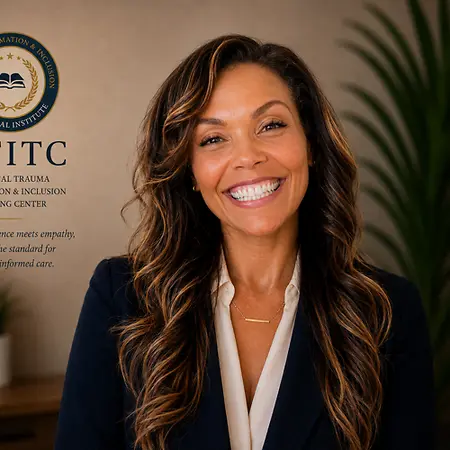
Influential Woman · Trauma-Informed Training and Mental Health
Lindsay Yisrael
Executive Director, National Trauma and Inclusion Training Center
Alhambra, CA 91801
Her Story
About Lindsay
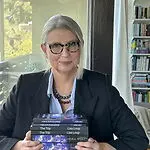
Lindsay Yisrael is an executive leader, trauma-informed systems strategist, and advocate dedicated to transforming the way organizations respond to trauma, workforce wellness, and inclusion. As the Executive Director of the National Trauma and Inclusion Training Center (NTITC), she leads initiatives that equip organizations, frontline workers, and leadership teams with practical, sustainable frameworks for trauma-informed care and organizational resilience. Her work combines systems-level strategy with deep compassion, emphasizing that healing-centered environments are essential for both employee well-being and long-term organizational success.
With more than two decades of experience in healthcare, behavioral health, and high-acuity human service systems, Lindsay began her career in 1998 as a Registered Nursing Assistant and steadily advanced into leadership roles across multiple sectors. Throughout her journey, she worked closely with individuals and families facing homelessness, severe abuse, mental health crises, refugee displacement, and complex trauma. Her experiences revealed a consistent gap within organizations: professionals were expected to carry tremendous emotional burdens without the structural support needed to sustain healthy systems or healthy people. These insights ultimately inspired her to create NTITC and develop a proprietary trauma-informed framework that integrates ACEs awareness, SAMHSA principles, and region-specific approaches tailored to the unique needs of rural and urban communities.
In addition to her leadership at NTITC, Lindsay is the founder of Beyond the Struggle, a nonprofit organization providing trauma-informed housing support, mentorship programs, after-school services, and community interventions designed to help individuals and families heal and thrive. A trauma survivor herself, Lindsay brings authenticity, empathy, and resilience to every aspect of her work, often describing her mission as “creating the systems and spaces I wish had existed when I needed them as a child.” Through speaking engagements, training programs, curriculum development, and community advocacy, she continues to champion environments where excellence meets empathy and where healing becomes a shared responsibility rather than an afterthought.
Her Interview
Ten minutes with Lindsay
01What do you attribute your success to?
I attribute my success to a deeply rooted belief that trauma-informed care is not simply a passing trend, but the future of sustainable, human-centered leadership and organizational excellence. Throughout my career, I have remained committed to transforming the way organizations support both the people they serve and the professionals carrying the emotional weight of that work every day. Through the National Trauma Information & Inclusion Training Center, I partner with organizations, leaders, and frontline professionals across the country to build trauma-informed systems that strengthen workplace culture, improve care outcomes, and support long-term workforce resilience. My work spans healthcare systems, behavioral health organizations, schools, nonprofits, government agencies, and community programs, all grounded in one essential truth: people cannot thrive in systems that fail to prioritize healing, safety, inclusion, and sustainability. I believe organizational transformation begins when leadership recognizes that employee wellness and operational excellence must coexist rather than compete. One of my greatest strengths has been my ability to bridge the gap between trauma science and practical, actionable implementation that organizations can immediately apply within their daily operations. By streamlining shared training models and developing priority frameworks, I help organizations create measurable improvements that positively impact both staff and the communities they serve. I am passionate about ensuring professional development is not only inspirational, but also evidence-based, sustainable, and directly connected to meaningful organizational outcomes. My leadership style combines empathy, strategy, collaboration, and innovation, allowing me to create environments where professionals feel valued, supported, and equipped to thrive. I also believe that healing-centered leadership has the power to reduce burnout, strengthen retention, and create healthier systems for future generations. Above all, I attribute my success to remaining purpose-driven, relentlessly advocating for human dignity, and leading with the conviction that when organizations care for people well, transformation becomes possible for everyone involved.
02What’s the best career advice you’ve ever received?
The best career guidance I ever received was not spoken advice, but a deep inner calling to create what I once needed as a child. That sense of purpose inspired me to build systems and spaces that prioritize healing, safety, and support for others who may be walking similar paths. I believe this calling continues to guide my work, reminding me that true impact comes from transforming personal experience into meaningful change for others. When asked about advice that shaped my career, I shared that it really came from within, from God, from the Holy Spirit. There wasn't anybody around saying I should do this work. Instead, it came from every single person I encountered: all the moms when I used to do refugee housing and low-income housing, all the kids going through foster care systems, all those people who made me realize there's not really a system that is there to support them on the levels that they need it. That realization became the driving force for creating what people truly need.
03What advice would you give to young women entering your industry?
My advice to young women entering this industry is to prioritize their own healing first, because you cannot pour from an empty cup. I would say, heal first, sis, and then move forward. You have to come first, and that is very hard to learn, especially for somebody who's an over-giver. This work can be very draining if you don't know how to take care of your own self and refill your own cup and ground your own self, because you start carrying other people's stuff. You start taking on their problems, and you start trying to fix everything for people, and that's not what we're here to do. We're here to help people learn how to fix it themselves, and we walk alongside of them on that journey. The healing doesn't have to happen alone. I also want young women to understand that this is a life's mission. For me, the only way my childhood makes sense is that this had to turn into this work. So anybody going down this road needs to understand the depth of commitment required, but also the importance of self-compassion, especially when you are a traumatized person. A lot of times people make decisions when their brain is still on fight or flight, and they carry all this guilt and shame. It's so hard for people to have self-compassion, especially if they grew up hearing horrible things about themselves. That's one of the biggest things that's very hard for people to do, but it's essential.
04What are the biggest challenges or opportunities in your field right now?
One of the biggest challenges in my field is that while many people are becoming aware of trauma-informed care and workforce wellness, there is still significant untapped potential in truly implementing it within organizations and systems. The problem with the industry is that a lot of people know about it, but they don't quite understand how it bleeds into every facet of our lives. Most Americans are walking around triggered all the time. You can see it everywhere: somebody cuts you off in traffic, people have attitudes when you go to get something to eat, it's all over the place. Everybody's triggered. I feel like we as a society are very undereducated on how trauma affects us in all these different ways, and how we really need to make our mental health, our nervous system regulation, a priority in our daily lives. This creates an incredible opportunity to educate leaders, professionals, and communities on how healing-centered practices can transform both people and workplace culture. Above all, I see this moment as a powerful opportunity to lead meaningful change by helping organizations move from simply talking about support and inclusion to actively building systems where people can genuinely thrive.
05What values are most important to you in your work and personal life?
My values are deeply grounded in faith, compassion, empathy, and authenticity. I believe in leading with these values while extending grace to both myself and those I serve, recognizing that healing and growth require patience and care. Self-compassion is something I hold as essential, especially because it's one of the hardest things for traumatized people to practice. When you grow up hearing horrible things about yourself and making decisions while your brain is still on fight or flight, carrying all that guilt and shame, it becomes incredibly difficult to have self-compassion. A strong advocate for self-care, I intentionally create space to disconnect from work and engage in activities that restore my spirit and renew my sense of purpose. I've learned that you really have to turn it off completely, not look at email, not look at any of the website stuff, and discipline your mind to find something that truly makes your heart happy. Through my work and my organization Beyond The Struggle, which provides housing programs and after-school support, I remain dedicated to uplifting communities and helping individuals move beyond adversity toward hope and stability. Everything I do is rooted in creating what I needed as a child, building systems and spaces for people that are truly hurting and helping people heal.
Keep Exploring
More Influential Women · California




Join Influential Women and start making an impact. Register now.