Discover how simple gestures like a bowl of chocolate and authentic connections can transform workplace relationships and unlock the power of effective communication and leadership.
Verified Member
Influential Woman · Public Relations and Communications Services
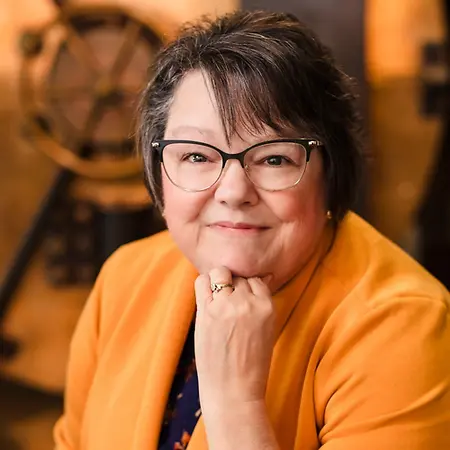
Lori Croy, APR
Founder and Principal, Mentor PR
Fulton, MO 65251
1Article published
2Awards received
“
A friend asked when I'd invest in myself as much as I invested in others. That's when I chose to pursue my own business instead of walking away out of fear.
Lori Croy, APR · In Her Own Words
Her Story
About Lori
Lori Croy, APR is a seasoned strategic communications and public relations professional with more than 30 years of experience spanning higher education, state government, and consulting. Based in Fulton, Missouri, she is the founder and principal of Mentor PR, a communications consultancy focused on government, education, and insurance sectors. Throughout her career, she has built a reputation for empathetic leadership, audience-centered messaging, and her ability to translate complex organizational goals into clear, impactful communication strategies. Lori spent 25 years at the University of Missouri, where she helped pioneer web communications at a time when digital strategy was still emerging. Rising to the role of Chief Creative Officer, she led multidisciplinary teams responsible for the university’s primary digital and creative communications, helping unify print and online messaging across campus. She later transitioned to Missouri state government, serving for over eight years as Director of Communications for the Department of Commerce and Insurance, where she strengthened internal and external communications across multiple regulated industries while advancing consumer-focused messaging. In addition to her professional communications leadership, Lori is an award-winning children’s book author and an active advocate for literacy and storytelling. She holds Accreditation in Public Relations (APR), is involved with professional organizations such as the Public Relations Society of America, and has received honors including the Lloyd B. Dennis Award for leadership, ethics, and integrity. Beyond her career, she is passionate about mentoring emerging professionals, public speaking, and using storytelling to build trust, connection, and purpose in both organizations and communities. She likes to help people turn their strategies into storytelling.
Her Interview
Ten minutes with Lori
01What do you attribute your success to?
It goes back to family for me. I had incredible parents who instilled in me all the values I hold dear. I came from a large family with very engaged parents and grandparents - we lived next door to my grandparents and grew up on a big farm where I learned work ethic, having fun, and not being ashamed to ask questions. I learned that all types of work are valuable. My father was an Army veteran and a mechanic his whole life, and my mother was a working mom who worked in a grocery store and then for the athletic department at the university for many years. They were not college educated, but they were so highly respected for who they were in the neighborhood and community and what they did. They had expertise that they had achieved and developed, and I think it helped bring me an appreciation for all people and all types of work. It taught me that credentials are important, but they're not everything - they're not everything about who you are and what you can do. Sometimes you need people to see you and what you can do and just give you a chance to show it. I attribute that to my parents, because they were those kinds of people. My children are my biggest heroes too - when you look at your children achieving things, you just stand back in awe and think, wow, did I really have a part in that? I always thought I would go to college and get my PhD, but I didn't do that - but I have a daughter that did, and she has her EDD in education and is a college professor. It's kind of nice to have a doctor daughter in the family. All of my children have very people-focused jobs and all of them have to use their communication skills, and there's just this tiny piece of me that likes to think they got that from me, that they're carrying that on like I carried that forward for my own parents.
02What’s the best career advice you’ve ever received?
The best career advice I ever received came from my boss at the University of Missouri, who told me to be strong, share my ideas, and be proud of them. She specifically told me, 'Don't start a sentence by saying, I'm sorry, but' - because that's not a position for you to share how smart you are. She encouraged me to be more assertive about what I knew and where I thought we needed to go. There may have been some days when she regretted that advice, but I became more assertive, and I think every young woman in a professional field needs that kind of cheerleader. She also cautioned me as I moved up the leadership ladder to learn to delegate wisely. Never give away all of the work or projects that make you want to get up and come to work in the morning. Make sure you keep something that reminds you why you love your work and your profession.
03What advice would you give to young women entering your industry?
I would advise people to always look for opportunities to do their best work and be their best selves. Those may not come with a big paycheck, but they are things that help you become who you're supposed to be. People tend to be so focused on everyone and everything else that they fail to take care of themselves and what they need to grow, to learn, to be happy, and to find joy. I always counsel people to really study what brings them joy in their lives and work. Why do you do what you do? Why did you choose it? Why do you continue to do it? Why does it matter? I have a wall of joy in my office that I can look at while I'm working every day, with quotes my parents used to say that my children made for me, and photos of family members - all the photos are people laughing. It reminds me of what brings happiness to myself and to others. When I'm having a day where I'm challenged, where people aren't being very nice to me, or I'm working, but don't know if it matters to anyone, I can look across the room and see the words, the people, some of the awards given because you took time for people and did something that someone thought was important in their life or the life of others. It sort of resets things for me and reminds me why I'm sitting in the chair, why I'm staring at the screen, why the words are important - if not to me in the moment, to someone in the future. So that's what I would tell them to do - look for opportunities, but don't forget to find your joy along the way. And find a mentor, someone who has more experience, whether that means they're older or they've just been in that profession as a practitioner longer. We need each other to be successful. We need people who understand some of the unique challenges that we may have.
04What are the biggest challenges or opportunities in your field right now?
One of the biggest challenges I see is helping people understand that communicators should be part of other people's work from the very beginning, not at the end of their stories as the last to know and the first to go, which is where we usually find ourselves. Too often, people come to us and say, 'Here's my research, could you please make it readable, make it pretty, slap that up on a web page, and make sure that the media pays attention.' But as communicators, to do our best work, we need time to fully understand the benefits of someone else's work and its impact on other people's lives. We're looking for the 'so what's' in things like research. We have to sift through the data and work with the person who created those reports to understand how that might impact the daily life of a citizen we might communicate with. It's our role to build bridges, to build trust, to help people avoid creating those kinds of divides in the first place, because we choose our words thoughtfully and with purpose. The opportunity I see is in helping organizations and leaders understand this - that we're not just making things pretty at the end, but we're strategic partners who can help turn their strategy into storytelling so that people can find themselves as a part of that story, something that finds a place in their daily life.
05What values are most important to you in your work and personal life?
Honesty, integrity, and empathy are the big three for me. I also believe deeply in 'love thy neighbor' - that everyone has a story to tell, and their story isn't necessarily our story, but it's something that they deserve to share, something that needs to be told. I think that we all owe it to each other to understand what makes someone who they are. Where do you come from? What do you believe in? Where are you going? What are your hopes and dreams? These values guide everything I do, both professionally and personally. I've been recognized for leadership, ethics, honesty, and integrity through awards such as the PRSA Public Affairs and Government Lloyd B. Dennis Award, and those are truly the qualities a person wants to embody and uphold. Having that acknowledged by my peers was a moment of great joy because it showed that I'm not just trying to do this - people see that I have done this.
Her Content Hub
Articles by Lori
The Bowl of Chocolate
Ways to encourage people to talk to you when you're new.

It All Starts with a Bowl of Chocolate
One would think that getting to know people, building relationships, and always knowing what to say would be easy for anyone who works in communications. But just because you work in communications doesn’t mean you’re automatically extroverted, crave conversation, or are always ready with a conversation starter.
Sometimes, you’re the new person on the job, trying to find your place. You may be a one-person shop among larger groups of professionals. It can be lonely being in public relations. This is how I came to use a tactic I learned by observing personal interactions, starting in childhood.
I came from an extremely large family in a rural area. I grew up on a farm next door to my paternal grandparents and was surrounded by other farms owned by family members. We grew our own food, cooked, and fed many people year-round. From a very early age, I learned that sharing a meal often encouraged conversation—even among those who weren’t ordinarily chatty. There was something magical about breaking bread together that helped us break the ice and get to know one another better. This became the foundation of relationship-building. Since then, I have used this approach to engage with people, which has led my children to refer to food as my “love language.”
It’s difficult to invite everyone you work with over for dinner. However, having a potluck at the office, a team picnic, or a barbecue is a great opportunity for relationship-building. What can a communications director do to encourage conversation and build trust and strong connections? It starts with something as simple as a bowl of chocolate.
The bowl of chocolate represents welcome. It always sits on a table within view of those passing by my office. As people walk by, they pause and notice the candy beckoning them. After all, who can resist the temptation of a sweet treat during a busy workday?
When I notice someone pausing, I call out and invite them to come in and help themselves. People are sometimes reluctant, shy, or embarrassed to be caught eyeing the candy. But after a few minutes, we’ve exchanged names, I’ve learned what they do, and I’ve gained my first personal insight into this new colleague—their favorite chocolate from the dish.
People make repeat visits as the days pass, and I begin to notice certain habits and tendencies. Some use the chocolate as an excuse to come and chat. They may not feel comfortable stopping by solely to visit, but the chocolate gives them a purpose.
I also find that some people only come in for chocolate when they’re stressed or upset. This allows me to learn more about what may be happening in the office. Sometimes it’s simply interpersonal disagreements between team members, but occasionally I gain insight into something more significant. In those moments, the information can help me use communication strategies to quietly resolve an issue or identify a larger concern that may require leadership involvement. These are opportunities to help through communication skills and influence.
Eventually, people transition from using chocolate as an excuse for a quick visit to using it as a gateway to deeper conversations or communication counsel. They come into the office, select a piece of chocolate, unwrap it, and sit in the chair across from my desk.
This is when one of the most important superpowers of a communicator—the power of listening—comes into play.
The conversations that happen simply because you offer something small and seemingly insignificant, like a piece of chocolate, can be invaluable. As a communications professional, trust is critical. People must trust you before they will share information, accept your counsel, and allow you to tell their stories.
It’s also a meaningful way to create a comfortable environment where employees feel at ease engaging with you and speaking openly with their team leader. Building the trust that encourages staff to be honest about problems, share concerns, and both give and receive constructive feedback is essential for the success of any team.
As a communications director, I find that many of the most frequent visitors to the candy dish are those in leadership roles. The process is the same. Sometimes they want to chat for a few minutes and get another perspective on something that’s on their mind. Other times, they simply need a brief respite from the burdens of leadership.
A piece of chocolate, a quiet place, and an empathetic ear may be all that’s required to help someone through a challenging day.
Using chocolate to open communication is only one method. There are many other ways to start conversations and get to know your coworkers. Another is to go “walkabout.”
When I am in a new environment, whether at a new job or attending a conference, one of the first things I do is grab a cup of tea or coffee and go walkabout.
One way to kick-start relationships is to quickly learn people’s names, what they do, and something unique about them. In fact, I have been known to assign walkabout tasks to my staff to help them become familiar with the people they will be working with or writing about.
Knowing someone’s name causes them to see you differently. It’s almost as though they feel compelled to remember yours in return.
I approach a random cubicle, cup in hand, introduce myself, and ask the person their name and what they do. Usually, they respond with their name and job title. My follow-up question is to ask them to explain their role and describe what they do each day.
It’s a great way to learn more about your new environment and the people who work there. It also lets people know you are genuinely interested in them and that you value their contributions to the workplace.
Going walkabout and learning more about your organization and colleagues is essential for establishing rapport early. When people see someone in a management or leadership role taking the time to connect regularly, it sends a strong message.
It says a great deal about you as a leader and demonstrates your desire to connect with the people who help your organization achieve its goals and serve its constituents.
Although you may think it’s just a ten-minute stroll around the office, some of the people you stop to visit will remember it as a rare moment when the boss cared enough to ask about their work. You may make dozens of these connections during your walkabouts, but some employees will remember that brief conversation for years and feel they received meaningful one-on-one time with a leader.
Another effective method is to have something interesting in your office that serves as a reliable conversation starter.
For many years, I worked at a public research university. During that time, I kept a charred brick on my desk. There was no indication of what it was or why it was there, and I never talked about it unless someone asked.
And, of course, they always did.
The conversations usually went something like this:
“I see you have a brick on your desk,” the visitor would say.
“Yes, I do,” I would reply.
That response almost always required the visitor to ask more questions and engage more fully in conversation.
“Why do you have a brick on your desk?” they would ask.
“Because that brick has an amazing story,” I would reply.
By this point, curiosity would get the better of them, and they would likely have taken a seat and become fully invested in the conversation.
They would ask, and then I would tell them the tale.
(Note: I seriously considered leaving this next part out to force readers to connect with me and ask about the brick. But, not being a cruel author, I decided to tell you the rest of the story.)
The university where I worked was established in 1839, and the original campus building was called Academic Hall. It burned down, leaving only the iconic columns as evidence of its existence. The building was replaced, and many of the burned bricks were buried near the columns during demolition.
Decades later, restoration work around the columns uncovered many of those charred bricks. The communications professional for the campus facilities department knew of my deep love of history—particularly university history—and brought me one as a memento.
That brick remained on my desk until the day I left the university.
When someone new visited my office, the brick helped break the ice (no pun intended) and provided an opportunity to share a unique piece of university history. The conversation became more memorable and often helped establish a solid working relationship built on communication and mutual respect.
Another conversation starter was a gift from one of my bosses, who became an important mentor.
It all started during a walk back from lunch one spring day.
As we passed a florist shop decorated for Easter, several ceramic chicks of varying sizes were displayed in the window.
I pointed to one and said, “Isn’t that the cutest little fat chick you’ve ever seen?”
A few days later, that little fat chick appeared on my desk as an Easter gift.
As time passed, people began asking about the chicken on my desk. Easter had come and gone, yet the chick remained.
I decided I needed a better story than, “My boss gave it to me for Easter.”
So I named her Fat Chick and declared her my alter ego.
She became the sometimes snarky, pun-loving, irreverent, and always witty side of me. She often “stole” my laptop without permission and told outrageous tales.
Fat Chick inspired many humorous stories, and eventually others gifted me additional ceramic chickens to expand the narrative. Before long, I had an entire flock living on a shelf in my office.
They became another way to start conversations and put people at ease.
I often encourage people to discover their own communication superpowers to help them build relationships. While food may be my love language, humor is my communication superpower.
It is important to explore your personal strengths and identify the qualities you can leverage to build strong relationships. Whether it’s humor, empathy, strategy, or another attribute, your unique skill set can help you start conversations, establish strong foundations, and maintain open communication.
Join me as we explore the many ways we can master the art of communication and people management.
After all, it all starts with a bowl of chocolate.
Join Influential Women and start making an impact. Register now.