Her Story
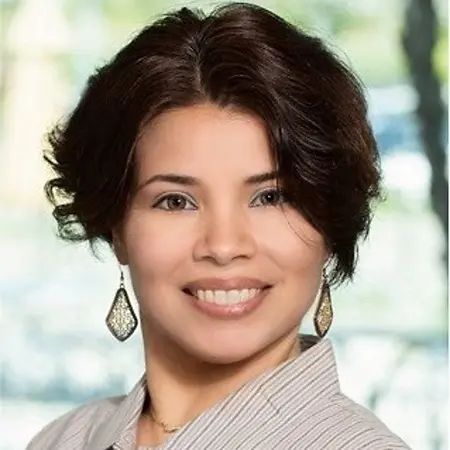
About Lydia
My career in supply chain and procurement spans over 25 years, though I never planned to enter this field. When I was in undergrad, there wasn't even a supply chain management degree like there is today. My college advisor was faxing my resume to companies for internships, and Organon called me to come in and file. I started literally just filing POs, requisitions, and contracts, and they offered to pay for my undergrad if I stayed full-time. I progressed from purchasing assistant to senior assistant to buyer. My boss at the time, Challoway, who was amazing, encouraged me to get an MBA. Since I supported agencies in the marketing field, I got my MBA in marketing. Throughout my career, I've worked at Organon for 8 years, Bayer for 13 years, Otica for 3 years, and now I'm at Regeneron for less than 2 years. My main area of expertise is medical communications agency sourcing, supporting medical affairs. At Bayer, I also supported the commercial side including promo med ed, HR/OR agencies, market access, and medical consulting. I focus on working with agencies that do publication work and create ad boards. What I'm most proud of are the relationships I've built with my stakeholders and agencies over the years. Those relationships have given me the passion to continue doing my work. It's a small world, and people move from company to company or to the agency side, so when you find really good people, you want to foster and keep those relationships. That's been my greatest achievement.
Her Interview
Ten minutes with Lydia
01What do you attribute your success to?
I attribute my success to the relationships I've built throughout my career. My most notable professional achievement has been the relationships I've garnered with my stakeholders and my agencies overall. Those relationships have really given me the passion to continue to do my work. At the end of the day, it's not necessarily the agencies themselves, because those can change. It's the people that work in them. It's a small world, and they go from one agency to another, and when you find really good agencies and people that work in these agencies, as well as the stakeholders, you want to foster and keep those relationships. My stakeholders go from pharma company to pharma company, or they go to the agency side, and my agencies themselves move around too. So I think that's my greatest achievement, truly the relationships that I've garnered with not only my stakeholders but my agencies themselves.
02What’s the best career advice you’ve ever received?
The best career advice I ever received was from my boss at the time, Challoway, who told me I needed to get an MBA. At first, I was like, okay, I'll do it, but afterward, it literally increased my pay by 50% when I left my organization. You only see that increase when you leave, but it was truly impactful. My mother always said that no one can take away education, and she was right. Getting that MBA was irreplaceable, and it's something that will benefit you for years to come in ways you don't even know yet. Now I tell my interns and anybody who's supporting me who may be juniors to get that MBA, because it's truly a no-brainer. It brings your mind to work in teams, because they focus more on that team building when you get your graduate degree versus undergrad. It really helps you be able to work with different personalities and people working in different areas of companies, whether they're in finance or IT or whatever. Having that ability to really work with diverse organizations and people from all different types of companies is invaluable.
03What advice would you give to young women entering your industry?
I would tell young women entering this industry to focus on strategy, building relationships internally, and the importance of follow-up. The follow-up is so important, but not the follow-up to be annoying, but the follow-up to be thoughtful. You don't want to come across as pushy, but you need to move things along. I think it's so key to focus on the strategy, the follow-up, and building those relationships internally and externally. Those are probably the most crucial things to focus on. Also, especially with the advent of AI, you have to constantly learn and foster those relationships internally and externally. Otherwise, you don't have a career, quite frankly. And I have to say, we as women don't sell ourselves very often. We're always selling our agencies internally that we feel are really good, but we don't feel like we sell ourselves, especially women. We're just so stuck in the day-to-day. That's something I don't actively pursue, and perhaps I should.
04What are the biggest challenges or opportunities in your field right now?
I think there's a misperception that young people today aren't prepared for the business world, and I don't think that's true. I think they grew up with AI, they grew up with the technology, for sure. It's just our ability to make sure that they have the other skills, like strategy, follow-up, and trying to build relationships. I think they're probably readier for the future than we are. We just have to train them on different skills that they may have not gotten in their development before. People take for granted that because we've been doing what we're doing for so long, we think that just because these people don't know it, that they're not intelligent or not capable. But they are, they're just intelligent in different ways. It's a matter of trying to give them the grace and the patience to work with them to get there. And because once they get there, they're excellent. It's about giving them that space and grace to get there, even though it might be frustrating. In the long run, it's really worth it. I think a lot of people just don't stick it out. Also, with the advent of AI, things are going to be definitely getting quicker and faster, but we still need that human element to check and verify. Our work has to go beyond savings. It's got to go to value, not only for our organization internally, but others as well, because it's a two-way street.
05What values are most important to you in your work and personal life?
The values I bring from my personal life into my work life are really my faith, for sure, and just being able to see people as individuals and hear them and understand what they're trying to do and not be dismissive. I think there's a perception in the area where I focus in sourcing that we're here to save money, we're here to prevent you from doing or working with a specific agency or supplier, and that's not the case. We just have to make sure that the organization is in financial standing and that it's legitimate and not a risk for the organization. Once people talk to us and understand where we're coming from, then they're more open to understanding. It's about having that dialogue and trying to understand what they're doing, because we're not trying to prevent them from doing anything. It's a matter of communicating what their needs are and saying, let's see what are the options out there for you. A lot of people have misconceptions about our area, and we're trying to build that value that goes beyond the savings. You have to build that value within the stakeholder groups and with the agencies too. It's a two-way street for sure.
Join Influential Women and start making an impact. Register now.