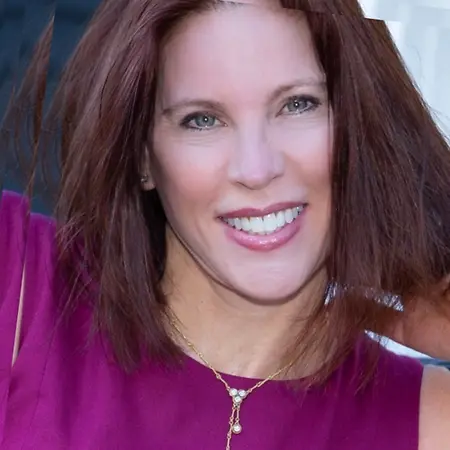
Her Story
About Mariette
Mariette Wharton, MBA, is an entrepreneur, investor, advisor, and innovation leader whose career spans more than three decades at the forefront of emerging technologies. After beginning her professional journey in management consulting within the financial services sector in 1991, she earned her MBA with highest honors from Columbia Business School and transitioned into the rapidly evolving world of technology. She helped pioneer some of the earliest e-commerce initiatives, guiding major financial institutions and global retailers as they established their online presence. In 2008, Mariette co-founded one of the world's first cloud-based video conferencing companies, creating an innovative platform that allowed seamless communication across laptops, telephones, and enterprise video systems years before remote collaboration became mainstream. The company developed groundbreaking interoperability solutions connecting platforms such as Skype and Google Talk and was ultimately acquired by a major technology organization that continued using the platform for many years.
A three-time founder and active investor, Mariette has spent her career helping transformative ideas become successful businesses. She was an early investor in several high-growth technology ventures and has advised more than one hundred startups across sectors including artificial intelligence, robotics, neuroscience, fintech, and longevity science. Since 2018, she has led NIMBLE Mindset, a nonprofit organization dedicated to democratizing entrepreneurial education and AI literacy for underserved communities around the world. Through accelerator programs and partnerships with U.S. Embassies in Ethiopia, Morocco, Kenya, and Rwanda, as well as initiatives across the United States and Europe, she has helped founders develop business models, secure funding, and scale their ventures. Her work has earned invitations to speak at the United Nations, the World Economic Forum in Davos, IEEE conferences, leading universities, and global innovation forums, where she shares insights on entrepreneurship, artificial intelligence, health innovation, and the future of work.
Today, Mariette focuses on the rapidly expanding longevity and biotechnology sectors, advising founders and investors on how to transform promising scientific breakthroughs into investable, scalable companies. Through NIMBLE Mindset Ventures and her newest venture initiative focused on neuroimmunology and chronic pain solutions, she works with innovators developing AI-powered healthcare technologies, wearable devices, regenerative medicine platforms, and next-generation therapeutic approaches. Known for her passion for mentorship, she actively guides students, young entrepreneurs, and emerging leaders as they navigate the startup journey. Beyond business, Mariette is an avid traveler who has explored 53 countries across five continents, a devoted mother of two, and an outdoor enthusiast who enjoys skiing and mountain climbing. Her career reflects a lifelong commitment to innovation, continuous learning, and helping others turn bold ideas into meaningful impact.
Her Interview
Ten minutes with Mariette
01What do you attribute your success to?
I've been accidentally biohacking since I was young, which has given me incredible energy and mental clarity throughout my career. When I was in college, I started intermittent fasting without even knowing what it was called. I'd sleep in, go running, and eat my first meal around 2 o'clock, and I felt phenomenal with really good mental clarity and high energy. I also started hacking my sleep in my early 20s, going to bed and getting up at the same time, and recognizing immediately that there were enormous benefits. In my early 20s, I got involved in a program for elite athletes at Stanford working on nutritional programs, what people call the keto diet today. Being very health-conscious and accidentally biohacking, always being interested in health and tracking things way ahead of the curve, has been foundational. I own my own hyperbaric oxygen chamber, I've been doing red light therapy for probably 8 years, and I have healing devices like pulsed electromagnetic field frequency devices. This focus on health and biology has always been near and dear to me, and I've always loved biology. When I got Lyme disease and tick-borne relapsing fever, I realized conventional approaches wouldn't work, so I ended up doing plasmapheresis and got better with no medication. I was spending so much energy researching microbiome, biology, and immunology to solve this medical mystery that I realized I might as well devote my career to it because I love it and was already spending all my time on it anyway.
02What’s the best career advice you’ve ever received?
When I was in my early 20s, around 22, one of my bosses taught me an incredibly valuable lesson. I was working on reports with him, and I would just take out a red pen and cross out paragraphs and destroy his work. We always had good results, but he was much older than me and took out a piece of paper, drew a baby stick figure, and said, 'When you criticize somebody's work, it's like you're telling them their baby's ugly.' He was telling me to be careful how I give people feedback. What I took away from that is the relationship and the connections you have with people is more important than the outcome of the work. The way that you are in the world, the way that you interact with people, whether it's giving feedback or asking for advice or anything you do, that matters more than anything. When you're really young, you can be like a bull in a china shop if you just state your opinions without thinking about how you present things. Your relationships with people matter more than anything. It gets back to that network part of it and making sure that you have a good network and people to support you, and you support other people. This boss, Terry Aloise, was an example of how you want to interact with people because he was always very cognizant and mindful of treating people with an enormous amount of dignity and respect, and over-communicating. That's something you don't always see in business, so thinking about how you interact with people is super important.
03What advice would you give to young women entering your industry?
First and foremost, you have to learn how to leverage AI tools. I don't think you can be successful today without developing expertise in knowing how to properly leverage AI. Second, it's really helpful in a career to have some type of focus or specialty, whether it's domain knowledge or subject matter expertise. But most importantly, you have to just start doing the job you want, because people may not always give it to you. You just have to take it upon yourself to start doing the work or the job that you want. Today it's a lot easier to do that because you can write blog posts, you can do social media reels, you can share your expertise. I've seen a lot of young women gain a lot of recognition, and therefore opportunities, by sharing what they know and their expertise. It really helps them to leapfrog and be seen as leaders when they use a platform like that to showcase what they know. I would also say it's helpful to seek out a mentor, somebody that will help guide you and show you the ropes, though you have to kind of manage that mentor too. Understand your own strengths and cultivate them, and just step into your power and start taking action. Don't wait, just start doing things. Taking action gives you information about the next step you need to take. Oftentimes people are paralyzed by indecision or feeling that they don't have enough information, but you learn by doing. In entrepreneurship especially, you figure out by taking action. The results will reveal themselves, and then you can make other decisions based on what happens. In business, there's a lot that's unknown and you can never have complete information, so just starting to make decisions and take actions will start revealing the direction you need to go in. I also like to tell especially younger women to not wait for somebody to give them permission. Just step into your power and own your own power, because I think men sort of naturally do that, and women often wait for somebody to give them permission.
04What are the biggest challenges or opportunities in your field right now?
The biggest challenge is that we only understand about 3% of biology. That's what David Sinclair said, and he's one of the leading researchers in longevity innovation, and I believe him. Our human understanding of biology in our bodies is so profoundly limited that it's hard. Even immunology, we don't really understand. We do not really understand how a cell even works. It's so complicated, and there's so many interactions in our body from a biochemical perspective, from an energetic perspective, we just don't comprehend it. But I think that also presents enormous opportunity. Because we know so little, there's so far to go, and I do think we're going to solve a lot of problems. I'm very excited about it, and I think AI is going to help us get there too, because the computational ability of machine learning, data science, and the sheer power of AI is unlocking opportunities right now. A lot of companies are taking advantage of that. So I do think there's a lot of opportunity ahead of us. It's just challenging because biology is so complex. There are also some practical challenges like funding cuts happening, but I think human ingenuity combined with AI gives us the potential to solve a lot of problems that we haven't been able to yet. I'm very optimistic that we'll solve a lot of problems. A lot of people are still succumbing to diseases and injuries and things that we still haven't quite figured out. Nature is pretty amazing.
05What values are most important to you in your work and personal life?
The most important thing to me is being able to help other people. That's how I like to go in the world, and it's probably the most meaningful thing to me. I've always taken great care in helping other people and encouraging other people to help each other, because I think we all benefit when we help each other. Having a network is one of the most valuable things you can have, and your relationships with people matter more than anything. I think the way that you are in the world, the way that you interact with people, whether it's giving feedback or asking for advice or anything you do, that matters more than anything. Making sure that you have a good network and people to support you, and you support other people, is essential. I also really value health and maintaining a healthy lifestyle. I'm very health-conscious and have been biohacking for decades, focusing on sleep, nutrition, and exercise. I love being outside in nature, skiing, being in the mountains, and traveling. I've been to 53 countries and took my family around the world for a year after selling my company. I think it's important to spread joy. I'm a joyful person, and I like to sprinkle it around. One of the things I really enjoy doing is just spreading joy. I also value the opportunity to inspire others and mentor younger people, helping them step into their power and not wait for permission.
Join Influential Women and start making an impact. Register now.