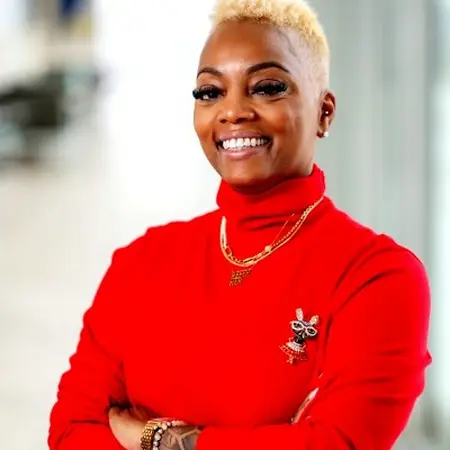
Her Story
About Monique
I've been in law enforcement for 26 years. I originally thought I would become a lawyer, but as a teenage mom growing up as an inner-city kid without always having the support and resources, policing gave me an opportunity to still be involved with law and make a difference. Throughout my career, my focus has been on community work, being a voice and advocate for community needs, and making sure those needs are implemented in the way we do police work. I'm most proud of being a strong advocate to make sure the community is seen, heard, and their needs from their lens are met, not just from a public safety lens. I received my bachelor's degree in 2020 alongside my daughter, who encouraged me to go back to school with her. After that, I continued on and got my master's degree. I've also attended professional development programs that prepare you for executive command level, including the Police Executive Leadership Institute (PELI) and the Senior Management Institute of Policing (SMIP), which are renowned trainings for chief preparation. Currently, I'm building a brand new police department, which I'm absolutely excited about. It's a once in a lifetime opportunity to start the foundation of a police department and hire the right people who are community-focused and driven, bringing compassion and letting them know it's okay to do policing the way we feel we should be a help and bring resources and support to community. This is probably the best job I have had in this 26-year career of mine.
Her Interview
Ten minutes with Monique
01What do you attribute your success to?
I attribute my success to the many folks who have invested in me during different stages of my career and have seen so many different layers of me that I didn't even recognize for myself. I lost both of my parents very young - my dad was murdered by his brother when I was young, and I lost my mom throughout the stages of that, just because she couldn't get over her grief and guilt. Even having my own children, I didn't know how it was happening because I couldn't see myself as being a parent. But I made sure that I became who I needed during those times of growing up as a young mom, and I poured into my children that same way to make sure I was giving them as much of me as I could. I've grown the life I've been able to build, and I'm pouring into my children and grandchildren in ways that let them know that we can come from struggle and still be successful, making sure the opportunities and exposure are happening for them as they're happening with me. I also make sure to be a mentor in this profession. Not really having many female mentors coming up through my home agency, Baltimore Police Department, I make sure I give back when I see other female leaders or young leaders starting their way. I make myself available to them to be that mentor that I didn't have, share my experiences, and help them navigate through challenges, helping them think differently and see themselves differently. Everything doesn't mean you need to go to war - there's a different way of being in that space and still getting what you need.
02What advice would you give to young women entering your industry?
Do it. Bring all your big, bubbly self, all of your capacity, and especially if it is your purpose and you're feeling like you want to be helpful, make sure that you're in the space doing just that. Even if others try to silence you, even if others try to push you away from being able to do it, do it. Because so many communities need us, and they need to see that we are coming to be a help. I think we do it every day as moms - we manage chaotic households, each child has different needs at the same time, and you still have to make sure that you're serving both those needs. We just bring a different perspective, and I think we bring a different vibe and a different aura to the work. So if the reasoning is because they want to be helpful, and they want to do more, and they want to find purpose, do it.
03What are the biggest challenges or opportunities in your field right now?
I think the biggest challenge is that we're still hearing that people are the first, especially with women. Why are we still just getting here, especially with some of the organizations that have been around for so long? The other challenge is really recruiting folks into the profession because of so many things that are happening worldwide. When we see the abuse, the misconduct, and the misuse of power, some people are turned away from that because they don't want to be associated with those actions or be a stigma. It's really about recruiting folks to say, hey, listen, bring all of your passion, bring all of your compassion for community, and come and make things better. If we don't join a profession, how do things change? That's always kind of my pitch to folks. And especially now building a brand new police department, which I'm absolutely excited about, it's a once in a lifetime opportunity in our profession. You can come up through your own home agency and get promoted, or you can go to another agency and become the chief, but to be able to begin and start the foundation of a police department and hire the right people who are community-focused and driven and bringing that compassion and letting them know that it's okay to do policing the way that we feel as though we should be a help and bring the resource and support to community, is probably the best job that I have had in this 26-year career of mine.
04What values are most important to you in your work and personal life?
I'm going to go all the way back to kindergarten - do unto others as you would have others do unto you. That is huge, that is my framework, that is my foundation. I don't think you have to be nasty to people in order to get your point across. I'm in this profession where sometimes we are finding and engaging with people when they are in crisis, and we should be the most compassionate during those times. Even if we have to arrest people, that doesn't mean that we get to be the judge and the jury and mistreat people because they've committed some act. That goes a long way - people will always remember your kindness. For me, my foundation in all relationships is do unto others as you want things to be done to you, and so I'm very thoughtful in my approach for a lot of things, whether it's personal or my professional life. How would you want to be engaged if it was you? What would you want folks to think about if it was you? How would you want to be treated? That's always forefront of thought for me.
Join Influential Women and start making an impact. Register now.