
A powerful reflection on documentary filmmaking's responsibility to preserve Roma survivors' testimonies from WWII persecution, emphasizing women filmmakers' crucial role in recovering overlooked historical voices and ensuring marginalized stories endure for future generations.
Verified Member
Influential Woman · Media Production, Broadcasting and Digital Marketing
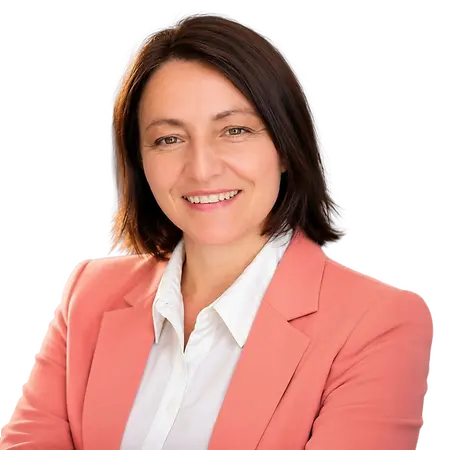
Natalia Ghilascu
Media Producer and Film Director, Hora Inc.
Chicago, IL 60625
15Years experience
1Article published
6Awards received
Her Story
About Natalia
Natalia Ghilascu is an award-winning documentary filmmaker, journalist, media producer, and entrepreneur whose career reflects a commitment to human rights, cultural understanding, and the transformative power of storytelling. Originally from the Republic of Moldova and now based in Chicago, Illinois, Natalia has built an international media career spanning more than 15 years. Her work combines investigative journalism, documentary filmmaking, television production, and digital media entrepreneurship, with a particular focus on bringing overlooked histories and underrepresented communities into public conversation.
As a Digital Media Producer at HORA Inc., she develops original video productions, digital news content, and multimedia communication campaigns. She also produces and hosts Making Waves, a television and digital series featuring immigrant entrepreneurs, community leaders, cultural figures, and professionals whose journeys illustrate the resilience and contributions of immigrant communities in America.
Natalia is the founder and publisher of HORA in America, an independent media platform dedicated to documenting the experiences, achievements, and cultural identities of Romanian and Moldovan Americans. Through this initiative, she has created opportunities to recognize women entrepreneurs, highlight community leadership, and share stories that connect immigrant experiences with the broader American narrative.
Before expanding her career in the United States, Natalia worked in journalism and television production in Moldova, including editorial and leadership roles with independent media organizations. Her professional experience also includes digital media production with ARCA TV and editorial leadership associated with Moldova Times.
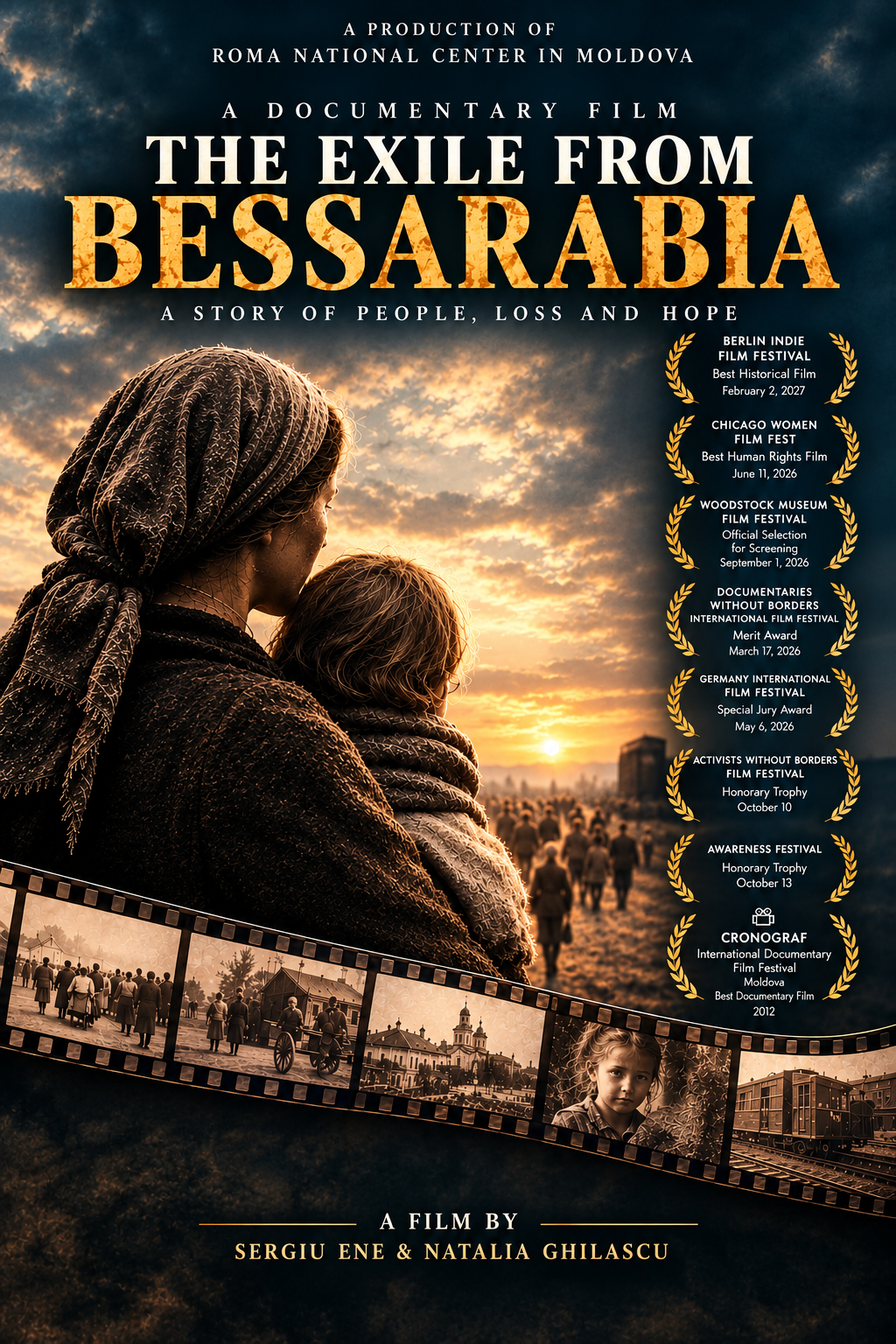
A defining achievement of Natalia's filmmaking career is The Exile from Bessarabia, a historical documentary that investigates the persecution and forced deportation of Roma communities from Bessarabia to Transnistria during World War II. As co-director, screenwriter, and producer, Natalia helped preserve survivor testimonies and document a chapter of Holocaust history that has received limited international attention. The film represents her belief that documentary filmmaking can serve as both an artistic expression and a lasting historical record.
The documentary gained renewed international recognition in 2026 through screenings and awards across the United States and Europe. Its honors include Best Human Rights Film at Chicago Women Film Fest, Best Historical Film at Berlin Indie Film Festival, a Special Jury Award at Germany International Film Festival, and Merit Award at the Awareness Film Festival in Santa Monica, California.
For Natalia, these achievements carry significance beyond professional recognition. They demonstrate how stories originating in small communities can contribute to international conversations about historical justice, discrimination, human dignity, and collective memory.
Natalia's commitment to social impact began early in her journalism career. Her work promoting human rights through media received recognition from the United Nations in Moldova, including an award associated with her pioneering television program Human Rights Studio. Beyond reporting and filmmaking, she has contributed to human rights education through initiatives in rural Moldovan schools, encouraging young people to examine discrimination, freedom of expression, and social inclusion.
She also organized the Equal Chances film festival initiative, providing a platform for short films addressing disability rights and raising awareness about the experiences and creative contributions of people with disabilities.
Her educational background includes graduate studies in public relations at the Free International University of Moldova and journalism training in Moldova. As a Hubert H. Humphrey Fellow at Arizona State University's Walter Cronkite School of Journalism and Mass Communication, she further developed her expertise in American journalism, media production, and international professional collaboration.
As a woman who has built a career across countries, cultures, and media industries, Natalia believes that professional success is not defined solely by titles, awards, or recognition, but also by the opportunities one creates for others. Her work increasingly highlights women who have demonstrated leadership, entrepreneurship, creativity, and resilience while building new lives in the United States.
Her Interview
Ten minutes with Natalia
01What do you attribute your success to?
I attribute my success to curiosity, perseverance, a willingness to reinvent myself, and the people whose stories have given meaning to my work. Throughout more than 15 years in journalism and media production, I have learned that professional growth often begins when we step beyond familiar environments and embrace opportunities that challenge us. Moving from Moldova to the United States encouraged me to develop new skills, build meaningful professional relationships, and find creative ways to connect communities through storytelling.
I have been especially inspired by the journeys of immigrants and women who have built successful careers, businesses, and meaningful lives despite uncertainty and obstacles. Their courage has strengthened my belief that success is not simply about personal achievement, but also about what we contribute to the lives of others.
My family, friends, colleagues, and mentors have also played an essential role. They have encouraged my ambitions, recognized my potential, and helped me understand where I could continue growing.
Ultimately, I measure success by the impact of my work. If a documentary helps preserve a forgotten history, a television interview inspires a woman to pursue her ambitions, or a media story helps an immigrant community feel seen and valued, I consider that a meaningful achievement.
Success, to me, is not a final destination. It is the freedom to keep learning, creating, and making a difference.
02What’s the best career advice you’ve ever received?
One of the most valuable lessons I have learned is that talent opens doors, but curiosity, discipline, and the willingness to learn from others help us grow beyond our expectations.
Throughout my career, I have benefited from the guidance and creative collaboration of experienced media and film professionals, including Lucian Blaga, Tudor Petruț, Elena Beuca, and Irina VanPatten. Their perspectives have encouraged me to explore new approaches to storytelling, strengthen my creative vision, and embrace opportunities beyond traditional journalism.
I have also learned that we should never wait until we feel completely prepared to pursue an important opportunity. Some of our greatest professional breakthroughs happen when we accept challenges that require us to grow. If the opportunity you are looking for does not exist, have the courage to create it. This philosophy has guided me in developing independent media projects, producing documentaries, and building platforms that connect people across cultures and communities.
03What advice would you give to young women entering your industry?
My advice to young women entering journalism, filmmaking, and digital media is to believe in the value of their perspectives and never underestimate the power of their own voices.
The media industry can be competitive, unpredictable, and demanding. There will be moments when opportunities seem limited, when your ideas are questioned, or when progress takes longer than expected. Do not allow these experiences to define your potential.
Invest in your education, develop technical and creative skills, seek mentors, and surround yourself with people who challenge and inspire you. Be willing to experiment, make mistakes, and continue learning as technology and the media landscape evolve. Most importantly, do not measure your journey against someone else's achievements. Every woman brings a unique combination of experiences, values, and creative strengths.
I also encourage young women to support one another. When women share knowledge, create opportunities, and celebrate each other's achievements, they contribute to a stronger and more inclusive professional environment. You do not need permission to have a vision. You need the courage and persistence to bring it to life.
04What are the biggest challenges or opportunities in your field right now?
One of the greatest challenges facing journalism and filmmaking today is maintaining authenticity and public trust in an increasingly crowded and technology-driven media environment.
Artificial intelligence, digital platforms, and rapidly changing audience habits are transforming how stories are produced and distributed. These developments create exciting opportunities for independent filmmakers and journalists, but they also raise important questions about accuracy, ethics, originality, and the preservation of human perspectives.
For independent media professionals, another significant challenge is securing sustainable funding while maintaining editorial independence and creative integrity. At the same time, I believe this is an extraordinary period for women in media. Digital technology has made it possible to develop independent productions, reach international audiences, and build meaningful communities without relying entirely on traditional broadcasting institutions.
Through my work with HORA Inc. and Making Waves, I have experienced how digital storytelling can connect immigrant entrepreneurs, professionals, artists, and community leaders across geographic boundaries. I see tremendous potential for women filmmakers and journalists who combine technological innovation with strong storytelling, ethical responsibility, and a clear social purpose.
The future of media will not be defined by technology alone, but by the creativity, credibility, and humanity of the people who use it.
05What values are most important to you in your work and personal life?
Authenticity, integrity, gratitude, lifelong learning, and meaningful human connections are the values that guide both my professional and personal life. As a journalist and filmmaker, I believe storytelling carries a responsibility to represent people with dignity, accuracy, and empathy. This is particularly important when documenting historical trauma, discrimination, or the experiences of vulnerable communities.
I also value education and service. Throughout my career, I have supported initiatives focused on human rights awareness, social inclusion, children's education, and community development. I believe that knowledge becomes more valuable when it is shared and used to create opportunities for others. My experiences across different countries and cultures have taught me to appreciate diversity, remain open to new perspectives, and recognize that personal growth often begins outside our comfort zones.
Gratitude is equally important to me. I try to appreciate the people who have supported my journey and the opportunities that have allowed me to pursue meaningful work. Above all, I believe that a fulfilling life is built not only through what we accomplish, but through the relationships we nurture, the values we uphold, and the positive influence we leave behind. The most meaningful success is the kind that allows us to grow while helping others rise.
Her Content Hub
Articles by Natalia
When the Last Witnesses Are Gone: Why Women Filmmakers Must Preserve Forgotten Histories?
Documentary filmmaking as a sacred responsibility to preserve the voices and testimonies of Roma survivors for future generations.
While producing The Exile from Bessarabia, a documentary about the persecution and deportation of Roma communities during World War II, I encountered testimonies that revealed not only historical suffering but also extraordinary resilience. Today, the survivors whose voices we recorded are no longer alive. Their memories, however, remain preserved through film. This experience strengthened my belief that documentary filmmaking is more than a creative profession. It is a responsibility to future generations.
In 1942, under Romania's wartime Antonescu regime, approximately 25,000 Roma were deported from Romania to Transnistria, a territory between the Dniester and Bug rivers in Eastern Europe that was under Romanian administration. At least 11,000 never returned, having perished from starvation, disease, and exposure to extreme cold. Behind these devastating numbers were families, children, mothers, and fathers whose lives were destroyed by hatred and discrimination.
While researching the documentary in Moldova, I encountered elderly Roma survivors who had carried painful memories for more than seven decades. Some had never shared their experiences, even with their own children, because the fear of discrimination and renewed persecution remained deeply rooted in their lives. The women's testimonies were particularly heartbreaking.
They spoke about sexual and physical abuse by soldiers, the humiliation of persecution, and the devastating loss of husbands and children. They remembered families torn apart, children dying from hunger and freezing temperatures, and relatives killed during the war.
As a woman filmmaker, listening to these stories was among the most difficult responsibilities I have undertaken. I realized that documenting trauma requires more than technical skills. It demands patience, empathy, historical accuracy, and the ability to create a space where survivors feel safe enough to speak. Our responsibility was not to dramatize their suffering, but to preserve their experiences with dignity.
The documentary's historical relevance was further reflected in a 2016 report published by the International Holocaust Remembrance Alliance (IHRA), The Genocide and Persecution of Roma and Sinti. The publication referenced The Exile from Bessarabia in its discussion of documentary films examining national and regional histories of Roma persecution. It also identified the limited number of films addressing the Roma Holocaust and the broader lack of public awareness surrounding this history. For me, this reference reinforced the importance of preserving testimonies from a community whose suffering had remained underrepresented in documentary filmmaking and public historical memory.
While producing the film, I spent months examining historical documents in Moldova's national archives and collaborating with Roma community representatives to identify survivors willing to share their experiences. Originally awarded Best Local Documentary at Moldova's Cronograf International Documentary Film Festival in 2013, The Exile from Bessarabia gained renewed international recognition in 2026 through screenings and awards across the United States and Europe. Its honors include Best Human Rights Film at Chicago Women Film Fest, Best Historical Film at Berlin Indie Film Festival, a Merit Award at Awareness Festival in California, and a Special Jury Award at Germany International Film Festival.
The true legacy of documentary filmmaking is not measured solely by festival awards or international recognition, but by the voices we preserve and the understanding we leave for future generations. Yet the most meaningful recognition comes when someone approaches me after a screening and says, "I never knew this happened." I believe women filmmakers have an essential role in documenting histories in which women's experiences have too often been overlooked.
Women are not merely witnesses to historical events. They are survivors, guardians of family memory, and powerful voices in understanding how violence affects entire generations. When the last witnesses are gone, their stories must not disappear with them.
When I began filming these survivors, I could not have known that their testimonies would one day become some of the last surviving records of their experiences. Today, I see this work as a responsibility to history. As women filmmakers, we have the opportunity to challenge silence, recover overlooked perspectives, and ensure that stories once pushed to the margins become part of our collective memory. The witnesses may be gone, but their voices must never disappear.
Join Influential Women and start making an impact. Register now.