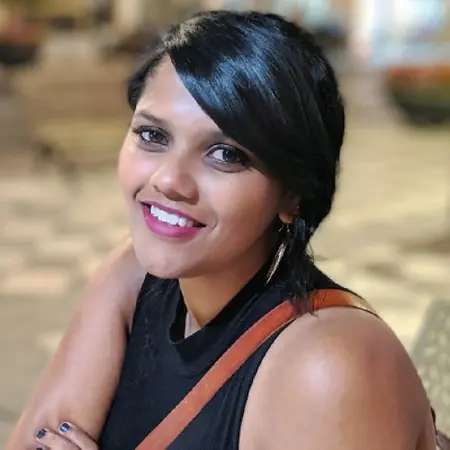
Her Story
About Neethi
My journey in architecture began in Bangalore, India, where I completed my bachelor's in architecture and spent two years working in the construction industry, primarily with residential architecture. I moved to the United States to pursue my Master's in Adaptive Reuse at Rhode Island School of Design, which became a pivotal turning point in my career. This niche program sits at the intersection of architecture and interiors, focusing on repurposing existing buildings rather than new construction, and it helped me move into a more focused field of study. After graduating in 2017, I continued this work for about five years at Signal Works in Providence, Rhode Island, a city with a very historic neighborhood and district where a lot of adaptive reuse work happens. The transition from the East Coast to the West Coast marked one of my biggest achievements. I moved from a small firm of 5-6 people where I wore many hats as a designer to HLW's much larger California office in Los Angeles, where I now serve as a job captain on bigger projects. While our California office is more woman-led, I'm often the only woman on a project or on construction sites, navigating a male-dominated industry where it takes time to build rapport and be taken seriously, especially as a younger woman. I've learned that I can't go wrong, I always have to do a great job and make myself heard. Beyond my formal education, I participated in two transformative workshops: Design Into Rhode Island, where I worked with a cohort supporting non-profit organizations including a drug rehabilitation center, and the Open Architecture Collaborative workshop based in San Francisco, which opened my eyes to equity in design, diversity, dignity, and how the built environment affects communities. This program taught me about the history of architecture in the United States, including topics like redlining and the Civil War's impact on communities, helping me understand how to serve communities better through my work.
Her Interview
Ten minutes with Neethi
01What do you attribute your success to?
I think, personally for me, I think it's a God moment, because I don't think I really had my life planned out. I wanted to do interior design, I actually wanted to do graphic design at some point, I wanted to probably get into biotechnology or the sciences, but I think everything kind of, so many different influences led me back to design. And I think it was, if it was on my own accord, or what I thought I wanted to do, I wouldn't be here today. I think this was the perfect fit for me because of all those different influences, and I can say that's also, you know, my parents. I think from the time we were young, they were very interested in interior design, and so we would always go to furniture stores, and lighting stores, and carpet stores, and we were picking things out for our house, and they would always take me along. And so, I think my eyes had opened into the world of design from a very young age. I used to go for art classes from a very young age, so I was very drawn to this field, but I never fully thought that it could be a career that I would do. It was always just something I was interested in. And, so I definitely feel like it was a God moment that I was led back into design, because I was so close to choosing the sciences. So yeah, I think every step or every decision I've taken, every door I've walked through, has definitely just been from above. I don't think I would have walked through the right doors if that was not the case.
02What’s the best career advice you’ve ever received?
The best piece of advice I've received professionally came from my current mentor. Actually, before he was my mentor, we had just met at an event, and we were just talking. I said I had been going for mentorships where I was the mentor, mentoring other upcoming designers or students, but I wanted to be mentored myself. And when he asked me what was stopping me from being mentored, I said, well, I don't know how to find a mentor for myself. And he, all he said was, you just ask. And so when he said that, I said, well, if I ask you to be my mentor, will you? And he said, yeah, of course I will. And so that's how he became my mentor. And so, I think since then, this idea of, like, oh, I can just go and ask somebody, has actually shifted a lot more. Just the way I talk to people, or the way I network, I don't think I'm scared to say, hey, actually, I want to talk to you, or I want help from you.
03What advice would you give to young women entering your industry?
I would say you can either be a part of an industry that you have people just like you, and it's easy to make friends or fit in and go along with the norm, or you can be a part of an industry that has nobody like you, and you can break that norm. Architecture is still a very male-dominated industry. It's, you know, there's a lot of women who study and get into the field of architecture, but it requires a lot more due diligence, or hard work, or knowing your place, or knowing how to, or learning how to navigate. And the minute you have to step forward, or you're put into that role, I think there's a lot of women that take a step back or stay put because they're afraid to test the waters or rock the boat, and I think in this industry, you definitely have to if you have to get anywhere. It's a tough one, not gonna lie, it takes a long time to figure that out. It took me a while. If you had asked me like 3 years ago, I was probably a very timid woman in architecture, just kind of asking everyone else for advice, or asking everyone else, like, oh, am I doing the right thing, or am I sending the right email? And now I don't ask, I just do. That switch between the two is so important, and even as I mentor other women, I think I see that in them. If they're scared to step foot on the other side, they'll never grow in the industry at all. So do their due diligence, don't be scared, ask questions, network, and find a mentor. And also, I think one of the things that I really hold onto is holding your feminine qualities. A lot of women in the field tend to, in order to climb up the ladder or grow, follow in the footsteps of men, because obviously they are in positions of power. But actually, women in leadership should embody feminine qualities, which is empathy and care and skills of listening and nurture, and I think those are also very much leadership qualities. The advice is that as we develop more women in positions of leadership, we want to be able to use our feminine qualities for those leadership roles, and not just borrowing from those masculine qualities. How do you be assertive without being aggressive, or still coming with care, or still understanding where the other person is coming from? There's just so many things that women do so well, and we should be able to embody that.
04What are the biggest challenges or opportunities in your field right now?
The challenge in my field is that architecture has become very, there's a lot of cooks in the kitchen right now. I think before, architects would hold a lot more knowledge, or weight, or decision-making in a lot more areas, and right now, in a firm, we hire a lot of consultants to do a lot of specialized work, whereas before, architects would take on all that specialized work themselves. So I think it's a good thing in one way, because we're helping branch out that industry, especially because architecture has gotten so intricate and specialized. But also, at the same time, it doesn't help us, because sometimes you're giving away that decision-making to somebody else. You're having to trust somebody else on that specific area of expertise, and if you have no background knowledge in that, you can't really oversee their work. You just have to trust what they're saying is right. For example, right now we have consultants that are mechanical, electrical, plumbing, security, structural, and those are disciplines that have been there for a while, and so you're able to look at the work and say, hey, actually, could you shift this? Because you have baseline knowledge on all those areas. But there are sub-specialties, like, for example, I'm working on something where there's chemicals involved, and so we have to find another consultant that can go and research and tell us what's the maximum allowable quantities of these chemicals in this space. And there are these lists and categories that we don't understand, that's beyond our knowledge, and you're just like, oh, but you can't really oversee it, because you don't have that knowledge. So you have to trust that the information they're giving you is correct. And so that's a little more tricky in that sense. Especially when you're handling, if anything happens to the project, you're to blame. So, when you can't oversee, you don't have knowledge, it's kind of, you're just hoping that the consultant is the right person.
05What values are most important to you in your work and personal life?
My values are definitely service. I feel like I owe services or values, like service to community, service to people, so when I'm doing my work, that's in service to somebody else. That'll help somebody else's life be better, or get better, or make somebody else happy. So, for me, service is a huge value. And the other value I really hold is the quality of listening. I think it has a lot of power. Sometimes there's a lot of chaos in a room or in a space, and a lot of people are talking, there's a lot of voices, but actually there's power in silence, and when the storm has gone, then you say your piece. And that's because you've listened to everyone's version of everyone's problem, and then you build a solution. So there is such an innate quality in listening, and I see that every day in my work. So that is a very important value that I will also hold.
Join Influential Women and start making an impact. Register now.