Her Story
About Rebecca
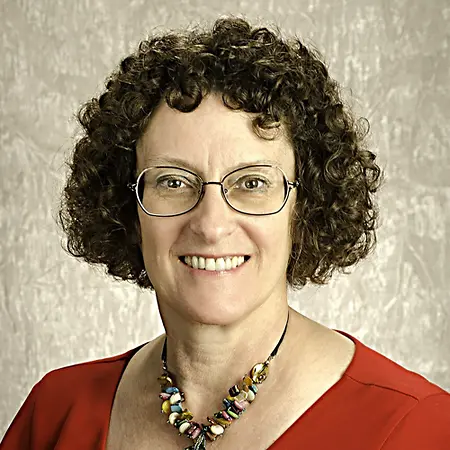
Rebecca A. Bowman, Esq., P.E., D.F.E. (NAFE #1153), is a private practice attorney, forensic engineer, and engineering ethicist based in Canonsburg, Pennsylvania. Her connection to engineering began in early childhood, where she was drawn almost instinctively to construction and problem-solving activities and later recognized a lifelong, singular focus on engineering. She began practicing professionally in 1974 at the age of 21 and has remained continuously active in the field since then. Throughout her academic and professional journey, she stood out for her persistence and commitment to engineering in environments where she was often in the minority, maintaining a steadfast focus on her chosen discipline.
Her career evolved into a unique integration of engineering and law after working on international construction claims negotiations with Westinghouse, where she was encouraged to attend law school to strengthen her effectiveness in complex dispute work. She earned her J.D. from the Thomas R. Kline School of Law of Duquesne University, studying intellectual property, real estate, and employment law, and later expanded her expertise through graduate studies in sustainability policy at Penn State University. Over the past decade, she has also practiced as a certified forensic engineer, building a career at the intersection of technical analysis, legal reasoning, and arbitration, including serving as Senior Director of Ethics and Professional Practice at the National Society of Professional Engineers.
In her current work, Rebecca maintains a self-directed practice handling construction disputes from engineering, legal, and arbitration perspectives, and serves frequently as an arbitrator. She spends much of her time traveling approximately 90 to 120 days per year lecturing to professional and technical organizations on engineering ethics and professional responsibility. Alongside her technical and legal work, she is also a lifelong pianist, having begun playing at age three, an experience she credits with strengthening her cognitive and creative balance. She describes her professional identity simply as that of an engineering ethicist, reflecting her ongoing commitment to thoughtful, principled practice across disciplines.
Her Interview
Ten minutes with Rebecca
01What do you attribute your success to?
I had a very challenging childhood, and as a result, when I left home at 17, I was a person of considerable strength. I would not recommend that childhood for anyone else, but it did result in my being a stronger, more resilient, independent person, and far less influenced by the opinions of others. I've also been extraordinarily blessed to find probably the only man on the planet who could put up with my crap, and we've been married 47 years coming up. He's a nuclear engineer, so we are intellectual peers. We're both people of faith, we're both multilingual, we're both musicians. I could not have been who I am without him. My faith has been a tremendous anchor and a source of great peace and resilience. I've been liberated from being in charge of the world.
02What’s the best career advice you’ve ever received?
I'm not sure I've ever received career advice. Even when I was in university, most of my professors knew I was pretty focused and kind of got out of my way. They already knew I was non-normative because I was the only woman in the class. I feel like I give myself, and I have probably given myself the best advice. If it looks like fun, you should try it. That's what I would say about myself. I already knew I was going to forge my own path, and that's the career advice I gave myself. It's okay to be odd, or as I prefer to say, it's okay to be original.
03What advice would you give to young women entering your industry?
Be absolutely fearless about two things: asking questions and volunteering. Volunteering for ugly work assignments, volunteering for charitable work. If you are willing to put yourself out there, you can have experiences that simply aren't available to other people who don't. And if you are fearless about asking questions, there are so many things that people around you know from that. They know that you are comfortable in your skin. They know that you will never sabotage them by proceeding on your own because you interpreted it wrong. Those two things, and falling under that fearless about asking questions is fearless about working with a mentor and being a mentor. Be fearless about asking questions and fearless about volunteering.
04What are the biggest challenges or opportunities in your field right now?
I became an engineer before affirmative action, which is one reason I forged my own path. I observed consistent forward progress over the past 48 years. But in the last two and a half years, I believe we've taken several steps backwards. The elimination of DEI was awful. I tell people there are really only two questions as you enter into any professional relationship: Can you do your job, and how can I help? Anything else is nonsense. When I talk to students doing History Day projects and gender issues come up, I point out that there were Rosie the Riveters in World War I. They were made to go home after the war and they dealt with that. But 20 years later, they had given their daughters power, and so in World War II, Rosie the Riveter didn't want to go home. We do not give enough credit to those World War I Rosie the Riveters. They shut the groundwork, and when you talk about opportunities for professional women today, you cannot pretend you do not stand on the shoulders of your predecessors.
05What values are most important to you in your work and personal life?
Integrity is the most important value to me. It encompasses reliability, accountability, honesty, and fidelity. I can't tell you how many cases I have because people stepped out from their employer's best interests. If you tell me you're going to do something, I expect you to do it. I'm not going to micromanage you. I'm going to assume you're going to do it, and if you have questions, I'm going to assume you're going to ask them. When I start a new relationship where there is accountability, I start with that. I am not your mother. I'm not going to ask you if you've got your homework done. If you have a problem with a deadline, I'm going to expect you to come back and tell me about it. If you've got questions, I'm going to expect you to ask. And that's actually very empowering because half of the time, people don't ask because they're embarrassed.
Join Influential Women and start making an impact. Register now.