Explore the key differences between large and small water treatment facilities, from operational structures and staffing to treatment processes, sampling responsibilities, and the diverse roles operators must master in each environment.
Verified Member
Influential Woman · Water and Wastewater
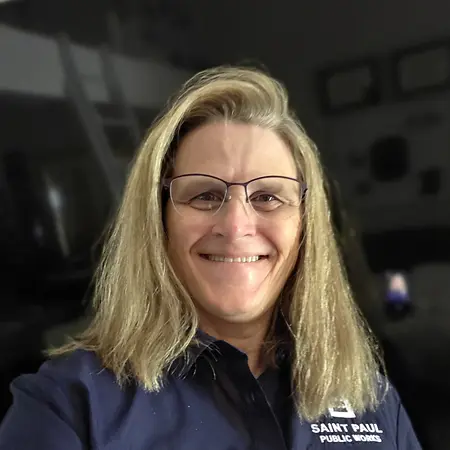
Renee Oelrich
Water Treatment Specialist, Saint Paul Regional Water Services
Saint Paul, MN 55113
25Years experience
3Articles published
2Awards received
Her Story
About Renee
Renee Oelrich is an accomplished water and wastewater operations professional with more than 26 years of experience in municipal water treatment, environmental technologies, and utility operations. Since beginning her career after earning her Water Environmental Technologies diploma from St. Cloud Technical and Community College in 2001, she has built extensive expertise in water treatment, wastewater operations, biosolids processing, laboratory chemistry, plumbing, electrical systems, construction, troubleshooting, and SCADA technology. Currently serving as a Water Treatment Specialist with Saint Paul Regional Water Services, Renee has dedicated her career to ensuring safe, reliable drinking water while advancing operational excellence across Minnesota's public utilities. Throughout her career, Renee has held key operational roles with municipalities including the City of Le Sueur, the City of Mankato, the City of Rockford, and Saint Paul Regional Water Services, gaining hands-on experience with both large-scale and community-based water systems. She is a licensed Special Class Engineer and has completed advanced management and supervisory leadership training, reflecting her commitment to continuous professional growth. Beyond her work in utility operations, Renee has volunteered as a presenter for St. Cloud Technical & Community College's DIVA TECH Program, introducing young students to careers in water, wastewater, environmental science, and other skilled trades. She also served as a volunteer well driller with Living Water International, helping provide access to clean water in underserved communities. In addition to her technical career, Renee is a published author, blogger, and children's book writer. Through her website, www.Renee-oelrich.com, she shares inspirational stories, blog posts, and her popular children's chapter book series, including *Frecklopia*, *Camp Frecklopia*, *The Fiddlemites*, and *A Frecklopian Christmas*. She credits her success to knowing her worth and maintaining confidence while working in traditionally male-dominated industries, believing that teamwork, trust, loyalty, patience, and perseverance are essential to long-term success. Outside of work, Renee supports animal rescue organizations and Minnesota's The Food Group through regular charitable giving, reflecting her lifelong commitment to serving both her community and future generations.
Her Interview
Ten minutes with Renee
01What do you attribute your success to?
Knowing my worth and my confidence as a woman being asked to work in dominated fields. Men are not the enemy, they're our colleagues. I have always been very confident on knowing what I can do, how I can be successful, find where I can troubleshoot and grow in my own self.
02What’s the best career advice you’ve ever received?
Be patient and learn that each individual brings something to the table that's unique. It's helpful if you find the right ways to utilize everyone's input. We're all part of the team trying to advance and make the best water possible.
03What advice would you give to young women entering your industry?
To know your worth, know what you can do, know your skills, build on your skills, grow for yourself, not for everyone else, and you bring something unique to the table, and never forget that that is very valuable.
04What are the biggest challenges or opportunities in your field right now?
Biggest challenge is getting qualified applicants, really getting shorthanded of people coming into the field. The opportunity is a place to really grow with variety including operations, plumbing, electrical, construction, troubleshooting, computer and SCADA and IT technology.
05What values are most important to you in your work and personal life?
Loyalty of the team, dependability, trust in teamwork, patience, recognizing what's important, taking small steps as stepping stones.
Her Content Hub
Articles by Renee
Large Water/Wastewater Facilities -vs- Smaller Water/Wastewater Facilities
Understanding the operational differences and responsibilities between large and small water treatment facilities.
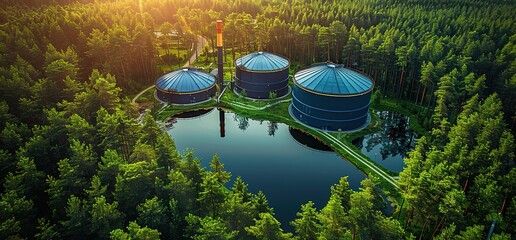
Large Facilities vs. Small Facilities
Larger Facilities
Larger facilities tend to have a 24-hour rotation schedule, seven days a week, and the operational tasks are more specific to each plant and its individual components.
For example, when I worked at a sand filtration plant, my duties were strictly based on that plant and its equipment. I was required to perform hourly rounds and sampling to ensure that the plant equipment was functioning properly, that pumps were feeding the proper dosages of treatment chemicals, and that the filters were backwashed for the highest possible efficiency of treated water moving through the plant.
With larger facilities, there is more equipment and a greater number of processes to maintain. There is typically larger chemical storage, more backup parts and inventory, more sampling requirements, larger metering routes with more shutoffs, billing notices and customer complaints, and increased preventive maintenance and reporting.
Because these larger facilities have more equipment, piping, sampling points, electrical components, and record-keeping requirements, the facility may hire employees from specific trades to handle those duties. This allows the operator to focus primarily on the plant itself, treatment requirements established by the permit, and safety procedures.
Smaller Cities and Facilities
Smaller cities tend to operate on an on-call rotation, with operators performing a wider range of tasks across multiple job trades.
This is where you may find yourself working in many different roles throughout the city while only stopping in to oversee the water and wastewater plants during scheduled rounds.
In smaller cities, you may find yourself:
- Jetting manholes
- Flushing hydrants
- Reading meters and performing shutoffs
- Responding to water-main breaks
- Street sweeping
- Trimming trees
- Mowing park lawns
- Snowplowing
- Repairing and maintaining lift stations
- Locating service lines
- Climbing water towers
- Performing manhole inspections
- Completing clerical work
- Preparing reports and budgets
- Attending council meetings
- Performing janitorial duties
You may also be responsible for handling customer complaints, billing issues, and other customer-related concerns.
In a smaller facility, a water plant may receive its water from well houses, treat it, and send it directly to a tower. Alternatively, the water may pass through several sand filters before being treated and sent to one or more towers, depending on the population and needs of the city.
Smaller, more rural communities may have pond systems for their wastewater streams. These systems may include several lift stations that pump wastewater to the ponds.
The ponds serve as a dilution and retention process, allowing wastewater to settle within a body of water over time. As the wastewater becomes clearer, it overflows a weir into another pond, where the settling process continues. The clearer wastewater then flows over another weir into a third and final pond before eventually reaching an outfall, where it is discharged to a receiving water body such as a river.
Smaller facilities may also require operators to jet the collection system, service lift stations, locate services, repair broken valve boxes, plow snow, and respond to water-main breaks.
Laboratory and Sampling Responsibilities
Laboratory work and the management of sampling points and procedures are also important responsibilities at smaller facilities.
Operators may be required to perform laboratory techniques and work with chemists as part of the requirements established by the Department of Health (MDH) and the Minnesota Pollution Control Agency (MPCA).
These responsibilities can include:
- Setting up samplers
- Operating laboratory equipment
- Performing laboratory analyses
- Completing bench sheets and spreadsheets
- Completing data entry and reporting
- Preparing billing documentation
- Meeting permit requirements
- Monitoring wastewater solids and particles
- Monitoring bacteria and disease-causing organisms
The operator may essentially serve in multiple roles, including plant operator, field technician, laboratory technician, maintenance worker, and customer-service representative.
Activated Sludge Wastewater Treatment
Most smaller cities have an activated sludge wastewater treatment plant.
Many of these plants begin with what is known as the preliminary treatment process. This is where larger, heavier, non-organic materials are removed from the waste stream using bar screens, comminutors, and fine-screening equipment.
Almost all plants utilize a process known as aeration. Aeration adds oxygen to the wastewater and helps initiate the biological treatment process while supporting the separation and treatment of fats, grease, and oils.
The waste stream then moves to the primary treatment process, where floatable materials and heavier solids are removed.
The secondary treatment process is usually the final major biological treatment stage. During this process, bacterial organisms consume or take up organic material and help separate it from the water. The treated, clearer water then flows over weirs to be disinfected before being discharged to a receiving water source, such as a river.
The settled solids from the secondary process can be returned to the aeration or primary processes to further support biological treatment and improve the settling characteristics of the organisms.
Some of the settled solids can also be wasted to a digester or transferred to a biosolids process, if the plant has one.
Biosolids Processes
Both large and small facilities may utilize some form of a biosolids process.
These processes can vary considerably from one facility to another and may involve many different technologies and methods.
One particular plant where I worked used a centrifuge to dewater the solid material. The dewatered solids were then pumped to a dryer system.
The dried solids product was conveyed to bagging hoppers, and the filled bags were stockpiled in a storage area.
During the spring, the bags were removed from storage and the biosolids product was land-applied to agricultural crops.
The differences between large and small facilities can be significant, but both require operators who are capable of adapting to the needs of the facility.
At a larger facility, an operator may spend most of the shift focused on a specific treatment process or piece of equipment. At a smaller facility, the same operator may be responsible for everything from plant operations and laboratory sampling to hydrant flushing, snow removal, customer service, equipment repair, and emergency response.
Regardless of the size of the facility, the responsibility is the same at its core: protect public health, protect the environment, maintain the infrastructure, and ensure that the system operates safely and effectively.
Explore the key differences between water and wastewater facilities, including their distinct regulatory requirements, treatment processes, operator responsibilities, and critical roles in protecting public health and environmental safety.
Water Facilities -vs- Wastewater Facilities
Understanding the Key Differences Between Water Treatment and Wastewater Management Systems
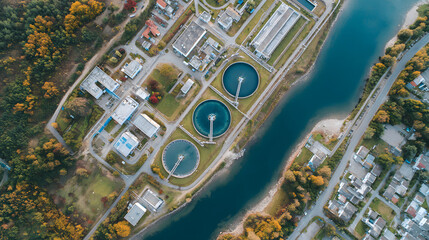
Water Facilities vs. Wastewater Facilities
Water Facilities
Water facilities have permit requirements through the Department of Health (MDH), which are regulated by the U.S. Environmental Protection Agency (USEPA). These requirements include sampling and monitoring quality-control parameters for treated water to ensure that the water is safe for public consumption.
The operator controls the influent water from wells or rivers and may blend, aerate, or soften it prior to treatment.
Treatment can consist of softening agents, aesthetic treatment techniques, filtration methods, aeration, coagulation and sedimentation, corrosion control, disinfection, and fluoride additives.
As the treated water leaves the facility, the operator controls the volume of water in reservoirs and towers to ensure that pressure remains stable and consistent while keeping the water moving through the system to maintain the freshest possible quality for consumers.
Some water facilities use a blending method that combines well water and river water to supply the community. Other facilities may have a lime-softening process, coagulation and flocculation, a carbon chamber, membrane filtration, disinfection, and fluoridation processes that fill reservoirs and towers daily.
The operator conducts rounds, monitors all plant processes, services equipment, and manages the distribution system, which consists of reservoirs and towers.
Depending on the shift, the operator's daily duties may include:
- Receiving and monitoring chemical deliveries
- Verifying standby power systems and automatic monitoring systems
- Determining chemical dosages and controlling chemical applications
- Collecting water samples and performing laboratory analyses
- Snowplowing and snow removal
- Mowing and general grounds maintenance
- Performing general and preventive maintenance
- Calibrating and servicing pumps
- Pinning membranes
- Managing inventory
- Operating the lime dewatering press
- Entering data and completing required reports
- Repairing equipment and piping
- Performing janitorial and custodial duties
Wastewater Facilities
Wastewater facilities have requirements established by the Minnesota Pollution Control Agency (MPCA), which are regulated by the U.S. Environmental Protection Agency (USEPA) under the Federal Water Pollution Control Act of 1972. These requirements include sampling and monitoring effluent discharge limitations specified in the National Pollutant Discharge Elimination System (NPDES) permit. This is intended to ensure that the quality of the discharged water is safe for the environment.
The MPCA also regulates the land application of biosolids.
As sewage streams enter the plant, non-biological or inorganic materials are separated from the waste stream. The biological or organic components then proceed through the reclamation and treatment processes, with the operator controlling the treatment of the waste materials.
The treated and disinfected wastewater is then discharged to an approved receiving body, such as a wetland or river, in accordance with the facility's permit requirements.
The biosolids that settle out of the wastewater stream can be managed through several regulated practices. The solids may be stored in liquid form and injected into agricultural land, or they may undergo a dewatering process and be converted into a drier product that can be stored, land-applied to farm crops, or used as a landfill cover or neutralizing material.
Biosolids can also be composted and processed into a product for public use. Depending on the facility and applicable regulations, biosolids may also be disposed of in designated landfill sites or incinerated in a high-temperature furnace.
Most facilities choose either to inject the liquid form into agricultural land or produce a drier product for land application.
Some wastewater facilities have bar screens and grit cyclone separators as part of their preliminary treatment processes. Most facilities have primary clarifiers, aeration basins, secondary clarifiers, sedimentation trains, filtration disks, dissolved air flotation (DAF) solids-thickening units, digesters, Dystor tanks, biosolids presses, chlorine contact basins, dechlorination basins, and, in some cases, equalization basins.
Operational tasks include conducting daily rounds; collecting samples; monitoring chemical dosages; evaluating processes and equipment for upsets, leaks, and faults; flushing, cleaning, and repairing components; monitoring equipment, pumps, and motors; maintaining inventory; and completing data entry and required reporting.
Operators assist the maintenance crew and perform preventive maintenance. They operate biosolids presses, check boilers, monitor methane gas burner systems, clean clarifiers and weirs, and perform snow removal, including snowplowing, snow blowing, and shoveling.
Operators may also assist chemists and laboratory personnel with sampling techniques, complete equipment calibrations, perform minor repairs, and carry out custodial duties.
The Difference in Focus
Although both water and wastewater operators are responsible for complex treatment processes, monitoring, equipment maintenance, sampling, and regulatory compliance, their primary objectives are fundamentally different.
Water treatment protects public health by producing and distributing safe drinking water.
Wastewater treatment protects public health and the environment by treating used water and managing the materials removed from it before the treated effluent is discharged or beneficially reused.
Both require highly trained operators who understand chemistry, biology, mechanical systems, electrical equipment, regulatory requirements, and the importance of consistent monitoring and documentation.
Renee Oelrich's inspiring journey from truck driving to water and wastewater operations demonstrates how determination and skill transcend gender barriers. Her career spans multiple Minnesota cities, mentoring, and now writing, proving that non-traditional paths lead to meaningful impact and personal fulfillment.
A Non-Traditional Woman's Legacy
From truck driving to water treatment: How one woman broke barriers in a male-dominated field and became a mentor for the next generation.
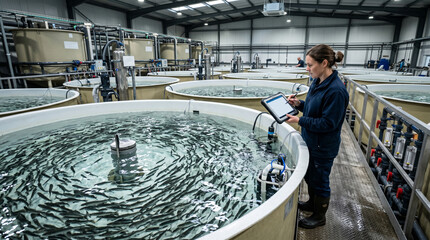
Breaking Barriers: A Non-Traditional Woman in Water and Wastewater
I am Renee Oelrich, and I have been a non-traditional woman all my life.
According to Dictionary.com, “non-traditional” is defined as “new and different from an established norm, custom, or method.” Non-traditional careers refer to “jobs that traditionally are filled by one [same] gender.”
After graduating from high school and working a few part-time jobs, I signed up for the truck-driving course at Alexandria Technical Community College (ATCC) in 1989. There, I earned my Class A commercial driver’s license.
I began my journey in non-traditional careers as a dump truck driver for ML Schendzielos Excavating later that year, working there from 1990 to 1992. I hauled plenty of black dirt and Class #5 rock while learning to operate heavy equipment.
When I realized that the job lacked year-round work, required me to be unemployed for much of the winter, and did not include many benefits, I was led toward working for Viking Coca-Cola from 1992 to 1995. There, I had full-time work and great benefits.
I filled vending machines with pop, candy, and snacks and occasionally drove to branch locations to deliver bulk items, candy and snack machines, and lots of pop!
This was a time when women just didn’t really do these kinds of jobs. It took a specific type of woman to take on labor-intensive work with very long hours. These jobs weren’t particularly attractive to women, especially without great benefits.
It was also a time when the government was trying to create greater opportunities for minorities to enter careers that had plenty of available work but lacked workers.
Needless to say, doors were opening, and I was given opportunities by these employers to gain experience and work toward a better future.
Finding My Way Into Water and Wastewater
From 1996 to 1999, I was set back by a car accident. But with determination to build a better future, I was fortunate to return to school at St. Cloud Technical Community College (SCTCC) in 2000.
After completing an aptitude test, I was given three choices of courses to pursue, and I was immediately drawn to the Water Environment Technology program.
This course provided the basics of water, wastewater, and biosolids treatment, along with OSHA regulations, basic science concepts, and laboratory principles.
Completion of the course provided enough experience and knowledge to take the necessary state examinations through the Minnesota Department of Health (MDH) and Minnesota Pollution Control Agency (MPCA), which are required by the state to work at facilities throughout Minnesota.
The biosolids licensure certificate requires three days of training and an examination, all completed as part of the same course, which can be taken at any time.
By July 2001, I was filling out applications and beginning my career as a water/wastewater operator—a profession with many roles, daily duties, and skilled trades incorporated into the job.
We find ourselves performing the duties of a plumber, electrician, mechanic, janitor, IT technician, administrative clerk, chemist, biologist, general engineer, contractor, landscaper, dump truck driver, snowplow operator, maintenance worker, and public relations representative.
City of Minneapolis
My first position was with the City of Minneapolis, where I worked from 2001 to 2007.
This larger facility has four main processes: the softening plant, the dewatering plant, and two sand filtration plants. One of the sand filtration plants was integrating membrane filtration technology at the time, in 2004.
Later in 2007, I found myself branching out to learn more. I wanted to know as much as I could about my profession and, quite frankly, energetically embraced the variety of working in a smaller city facility.
City of Le Sueur
I started working for the City of Le Sueur and, within a few months, was trained at the water plant, well houses, and towers.
This is where I began gaining wastewater experience.
I quickly trained in and learned all about pond systems while actively participating in the planning of a new activated sludge plant.
During this time, it was all hands on deck, so to speak. I was out jetting the collection system, servicing lift stations, flushing and repairing hydrants, locating services and fixing broken valve boxes, plowing snow, and responding to water-main breaks.
You never really know when you’re going to stumble upon your own hidden talents.
As the activated sludge plant started up, new roles found me. I was asked to set up the laboratory and establish all sampling points and procedures.
So, off I went to learn everything I could about chemistry and laboratory techniques.
Samplers were placed, bench sheets and spreadsheets were created, and the sampling began.
Data entry and reporting are key factors in this area of the job, so I created year-end plant binders that compiled all the necessary documents for annual inspections.
So, I am proof that learning to be a chemist can be achieved even if you never took chemistry in high school!
In 2013, I was nominated for and won the Laboratory Operator of the Year Award, given by the Minnesota Wastewater Operators Association (MWOA).
That recognition inspired me to continue becoming a thorough and creative operator while reaching for higher goals and achievements.
Using All My Senses
What I love most about this career is that I use all my senses as an important part of my operational skills.
The sights, sounds, and smells of the processes and equipment can tell me a lot about the condition of a facility because each process has its own unique qualities and characteristics.
I am still energetically enthusiastic about the variety this career offers and, thanks to technological innovation, still have an abundance of room for growth and new opportunities.
City of Mankato
As I felt I wasn’t allowing myself to reach my full potential, I spread my wings farther and started working for the City of Mankato in 2015.
This water facility uses a blending method of well water and river water to supply the community. The plant has a lime-softening process, a carbon chamber, membrane filtration, disinfection, and fluoridation that supply four reservoirs and two towers daily.
The Mankato wastewater facility is one of the larger water reclamation facilities in the state.
This plant has two bar screens and two grit cyclone separators for its preliminary process, two primary clarifiers, four aeration basins, three secondary clarifiers, two sedimentation trains, four filtration disks, two DAF solids-thickening units, three digesters and a Dystor tank, two biosolids presses, two chlorine contact basins, one dechlorination basin, and three equalization basins.
This particular job allowed me to haul biosolids from the presses in a Mack dump truck, bringing back fond memories of my excavation days.
Giving Back Through Water
Working in the water treatment field challenges me to go beyond myself in so many ways.
In 2018, I found myself becoming part of a group that traveled to Guatemala to drill a well for a small village.
The barriers associated with these types of projects are incredible examples of different learned trades coming together and making a project succeed when the odds are against you.
After traveling beyond my comfort zone and experiencing all these incredible aspects of both fields—water and wastewater—I found myself moving closer to home to spend time with family members I hadn’t seen in years.
It was a part of my life that had to be put to the side for my career and its many different rotations and distant locations.
City of Rockford
I spent two and a half years with the City of Rockford, beginning in 2020, working in the water and wastewater facility.
I was back running around in a big old truck with big old tools and being on call every weekend.
This facility has five wells, two towers, and a small activated sludge wastewater plant.
The job was challenging, but once again, I had come back home to spend time with family.
St. Paul Regional Water Services
So, I traded my on-call weekends for another rotational shift with St. Paul Regional Water Services in 2022.
This water facility has ten wells and also uses channeled river water, lime softening, and twenty-four filters to treat water for the communities it serves.
Luckily, the plant was undergoing a major renovation to replace outdated infrastructure and bring it up to current technological standards.
I am excited to be a part of this new future in water treatment and excellent water quality.
Women in a Male-Dominated Field
In my honest opinion, being a woman in a more male-dominated field has never really felt like a rivalry between genders.
Men are not the enemy. They are knowledgeable colleagues.
We all bring different talents, trades, and skills to the duties and expectations of any job.
As long as I know my job, show up for my shift, and do the work that needs to be done, I am just as valuable as any other employee.
I have learned a great deal from my male colleagues, just as they have learned from me.
I have made respecting my coworkers a fundamental part of my professional role, and I try to set an example that can be reciprocated.
More women in the field can only bring greater collaboration, innovative techniques and technologies, diverse perspectives, and a uniquely productive organizational atmosphere.
Roles tend to form based on the opinions of those who seem to limit themselves. But I have found this career broadening my mind and enhancing my skills by allowing me to learn from people of all genders and embrace the knowledge that comes from being part of an entire team—especially in smaller cities.
I’ve taken advantage of the opportunities I’ve been given in these non-traditional positions, from learning to use the “jaws of life” with fire and rescue to learning gun safety with the police.
There is always another chapter in life.
Mentoring the Next Generation
At this point in my career, I am truly honored to finish my legacy by mentoring women and helping them understand that they can do these jobs—or anything they set their hearts and minds to do.
There was a program at SCTCC called “Diva and Dude Tech” that introduced sixth-grade girls and boys to non-traditional career options through non-traditional women and men who worked in those fields.
I was given the opportunity to encourage these young adults to consider this career for four years in a row.
So, I am always open to mentoring and helping anyone succeed in becoming the expert of their own life, no matter what they choose to do or who they choose to become.
The Next Chapter
My next chapter is to expand myself into the world of writing.
As I close out this amazing career in water and wastewater, I am writing stories, blogging short stories, and enjoying the opportunity to be more creative than ever.
I have my children’s chapter-book series available on Amazon. I have a webpage full of information about the books, and I can also be found on Facebook.
Thank you for inspiring me to keep going, to open myself to the possibilities of the unknown, and to take the chances and risks that fear too often prevents us from taking.
There is always another chapter. I’m grateful that I get to write mine.
References
Alexandria Technical & Community College (ATCC)
1601 Jefferson Street
Alexandria, MN 56308
320-762-4600
ML Schendzielos & Sons Excavating Inc.
7760 Front Street
Clear Lake, MN 55319
320-743-2000
Viking Coca-Cola
4610 Rusan Street North
St. Cloud, MN 56303
320-251-4602
St. Cloud Technical & Community College (SCTCC)
1540 Northway Drive
St. Cloud, MN 56303
1-800-222-1009
Water Environment Technology
320-308-5952
City of Minneapolis / City of Lakes
Contact 311 for inquiries.
City of Le Sueur
1500 North Commerce Street
Le Sueur, MN 56058
507-665-9941
City of Mankato
Water Treatment Plant
730 Mound Avenue
Mankato, MN 56001
507-387-8661
Water Resource Recovery Facility (Wastewater Facility)
701 Pine Street
Mankato, MN 56001
507-387-8602
City of Rockford
6031 Main Street
Rockford, MN 55373
763-477-6565
St. Paul Regional Water Services
1900 Rice Street
Saint Paul, MN 55113
651-266-6350
Minnesota Department of Health (MDH)
P.O. Box 64975
St. Paul, MN 55164
health.drinkingwater@state.mn.us
Certification Information: Noel Hansen, 651-201-4690
Minnesota Pollution Control Agency (MPCA)
520 Lafayette Road
St. Paul, MN 55155
1-800-657-3864
Certification Information: Tracy Finch, 651-757-2103
Minnesota Wastewater Operators Association (MWOA)
3783 Lavaque Road
Hermantown, MN 55810
Renee Oelrich
Join Influential Women and start making an impact. Register now.