Water Facilities -vs- Wastewater Facilities
Understanding the Key Differences Between Water Treatment and Wastewater Management Systems

Water Facilities vs. Wastewater Facilities
Water Facilities
Water facilities have permit requirements through the Department of Health (MDH), which are regulated by the U.S. Environmental Protection Agency (USEPA). These requirements include sampling and monitoring quality-control parameters for treated water to ensure that the water is safe for public consumption.
The operator controls the influent water from wells or rivers and may blend, aerate, or soften it prior to treatment.
Treatment can consist of softening agents, aesthetic treatment techniques, filtration methods, aeration, coagulation and sedimentation, corrosion control, disinfection, and fluoride additives.
As the treated water leaves the facility, the operator controls the volume of water in reservoirs and towers to ensure that pressure remains stable and consistent while keeping the water moving through the system to maintain the freshest possible quality for consumers.
Some water facilities use a blending method that combines well water and river water to supply the community. Other facilities may have a lime-softening process, coagulation and flocculation, a carbon chamber, membrane filtration, disinfection, and fluoridation processes that fill reservoirs and towers daily.
The operator conducts rounds, monitors all plant processes, services equipment, and manages the distribution system, which consists of reservoirs and towers.
Depending on the shift, the operator's daily duties may include:
- Receiving and monitoring chemical deliveries
- Verifying standby power systems and automatic monitoring systems
- Determining chemical dosages and controlling chemical applications
- Collecting water samples and performing laboratory analyses
- Snowplowing and snow removal
- Mowing and general grounds maintenance
- Performing general and preventive maintenance
- Calibrating and servicing pumps
- Pinning membranes
- Managing inventory
- Operating the lime dewatering press
- Entering data and completing required reports
- Repairing equipment and piping
- Performing janitorial and custodial duties
Wastewater Facilities
Wastewater facilities have requirements established by the Minnesota Pollution Control Agency (MPCA), which are regulated by the U.S. Environmental Protection Agency (USEPA) under the Federal Water Pollution Control Act of 1972. These requirements include sampling and monitoring effluent discharge limitations specified in the National Pollutant Discharge Elimination System (NPDES) permit. This is intended to ensure that the quality of the discharged water is safe for the environment.
The MPCA also regulates the land application of biosolids.
As sewage streams enter the plant, non-biological or inorganic materials are separated from the waste stream. The biological or organic components then proceed through the reclamation and treatment processes, with the operator controlling the treatment of the waste materials.
The treated and disinfected wastewater is then discharged to an approved receiving body, such as a wetland or river, in accordance with the facility's permit requirements.
The biosolids that settle out of the wastewater stream can be managed through several regulated practices. The solids may be stored in liquid form and injected into agricultural land, or they may undergo a dewatering process and be converted into a drier product that can be stored, land-applied to farm crops, or used as a landfill cover or neutralizing material.
Biosolids can also be composted and processed into a product for public use. Depending on the facility and applicable regulations, biosolids may also be disposed of in designated landfill sites or incinerated in a high-temperature furnace.
Most facilities choose either to inject the liquid form into agricultural land or produce a drier product for land application.
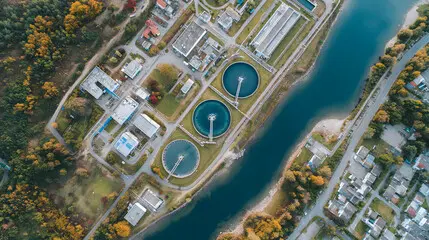
Some wastewater facilities have bar screens and grit cyclone separators as part of their preliminary treatment processes. Most facilities have primary clarifiers, aeration basins, secondary clarifiers, sedimentation trains, filtration disks, dissolved air flotation (DAF) solids-thickening units, digesters, Dystor tanks, biosolids presses, chlorine contact basins, dechlorination basins, and, in some cases, equalization basins.
Operational tasks include conducting daily rounds; collecting samples; monitoring chemical dosages; evaluating processes and equipment for upsets, leaks, and faults; flushing, cleaning, and repairing components; monitoring equipment, pumps, and motors; maintaining inventory; and completing data entry and required reporting.
Operators assist the maintenance crew and perform preventive maintenance. They operate biosolids presses, check boilers, monitor methane gas burner systems, clean clarifiers and weirs, and perform snow removal, including snowplowing, snow blowing, and shoveling.
Operators may also assist chemists and laboratory personnel with sampling techniques, complete equipment calibrations, perform minor repairs, and carry out custodial duties.
The Difference in Focus
Although both water and wastewater operators are responsible for complex treatment processes, monitoring, equipment maintenance, sampling, and regulatory compliance, their primary objectives are fundamentally different.
Water treatment protects public health by producing and distributing safe drinking water.
Wastewater treatment protects public health and the environment by treating used water and managing the materials removed from it before the treated effluent is discharged or beneficially reused.
Both require highly trained operators who understand chemistry, biology, mechanical systems, electrical equipment, regulatory requirements, and the importance of consistent monitoring and documentation.