Large Water/Wastewater Facilities -vs- Smaller Water/Wastewater Facilities
Understanding the operational differences and responsibilities between large and small water treatment facilities.

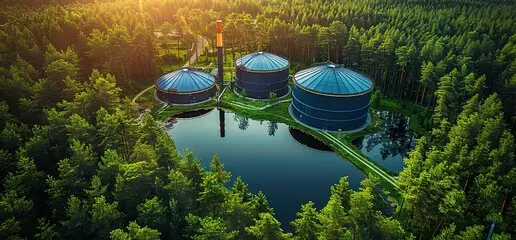
Large Facilities vs. Small Facilities
Larger Facilities
Larger facilities tend to have a 24-hour rotation schedule, seven days a week, and the operational tasks are more specific to each plant and its individual components.
For example, when I worked at a sand filtration plant, my duties were strictly based on that plant and its equipment. I was required to perform hourly rounds and sampling to ensure that the plant equipment was functioning properly, that pumps were feeding the proper dosages of treatment chemicals, and that the filters were backwashed for the highest possible efficiency of treated water moving through the plant.
With larger facilities, there is more equipment and a greater number of processes to maintain. There is typically larger chemical storage, more backup parts and inventory, more sampling requirements, larger metering routes with more shutoffs, billing notices and customer complaints, and increased preventive maintenance and reporting.
Because these larger facilities have more equipment, piping, sampling points, electrical components, and record-keeping requirements, the facility may hire employees from specific trades to handle those duties. This allows the operator to focus primarily on the plant itself, treatment requirements established by the permit, and safety procedures.
Smaller Cities and Facilities
Smaller cities tend to operate on an on-call rotation, with operators performing a wider range of tasks across multiple job trades.
This is where you may find yourself working in many different roles throughout the city while only stopping in to oversee the water and wastewater plants during scheduled rounds.
In smaller cities, you may find yourself:
- Jetting manholes
- Flushing hydrants
- Reading meters and performing shutoffs
- Responding to water-main breaks
- Street sweeping
- Trimming trees
- Mowing park lawns
- Snowplowing
- Repairing and maintaining lift stations
- Locating service lines
- Climbing water towers
- Performing manhole inspections
- Completing clerical work
- Preparing reports and budgets
- Attending council meetings
- Performing janitorial duties
You may also be responsible for handling customer complaints, billing issues, and other customer-related concerns.
In a smaller facility, a water plant may receive its water from well houses, treat it, and send it directly to a tower. Alternatively, the water may pass through several sand filters before being treated and sent to one or more towers, depending on the population and needs of the city.
Smaller, more rural communities may have pond systems for their wastewater streams. These systems may include several lift stations that pump wastewater to the ponds.
The ponds serve as a dilution and retention process, allowing wastewater to settle within a body of water over time. As the wastewater becomes clearer, it overflows a weir into another pond, where the settling process continues. The clearer wastewater then flows over another weir into a third and final pond before eventually reaching an outfall, where it is discharged to a receiving water body such as a river.
Smaller facilities may also require operators to jet the collection system, service lift stations, locate services, repair broken valve boxes, plow snow, and respond to water-main breaks.
Laboratory and Sampling Responsibilities
Laboratory work and the management of sampling points and procedures are also important responsibilities at smaller facilities.
Operators may be required to perform laboratory techniques and work with chemists as part of the requirements established by the Department of Health (MDH) and the Minnesota Pollution Control Agency (MPCA).
These responsibilities can include:
- Setting up samplers
- Operating laboratory equipment
- Performing laboratory analyses
- Completing bench sheets and spreadsheets
- Completing data entry and reporting
- Preparing billing documentation
- Meeting permit requirements
- Monitoring wastewater solids and particles
- Monitoring bacteria and disease-causing organisms
The operator may essentially serve in multiple roles, including plant operator, field technician, laboratory technician, maintenance worker, and customer-service representative.
Activated Sludge Wastewater Treatment
Most smaller cities have an activated sludge wastewater treatment plant.
Many of these plants begin with what is known as the preliminary treatment process. This is where larger, heavier, non-organic materials are removed from the waste stream using bar screens, comminutors, and fine-screening equipment.
Almost all plants utilize a process known as aeration. Aeration adds oxygen to the wastewater and helps initiate the biological treatment process while supporting the separation and treatment of fats, grease, and oils.
The waste stream then moves to the primary treatment process, where floatable materials and heavier solids are removed.
The secondary treatment process is usually the final major biological treatment stage. During this process, bacterial organisms consume or take up organic material and help separate it from the water. The treated, clearer water then flows over weirs to be disinfected before being discharged to a receiving water source, such as a river.
The settled solids from the secondary process can be returned to the aeration or primary processes to further support biological treatment and improve the settling characteristics of the organisms.
Some of the settled solids can also be wasted to a digester or transferred to a biosolids process, if the plant has one.
Biosolids Processes
Both large and small facilities may utilize some form of a biosolids process.
These processes can vary considerably from one facility to another and may involve many different technologies and methods.
One particular plant where I worked used a centrifuge to dewater the solid material. The dewatered solids were then pumped to a dryer system.
The dried solids product was conveyed to bagging hoppers, and the filled bags were stockpiled in a storage area.
During the spring, the bags were removed from storage and the biosolids product was land-applied to agricultural crops.
The differences between large and small facilities can be significant, but both require operators who are capable of adapting to the needs of the facility.
At a larger facility, an operator may spend most of the shift focused on a specific treatment process or piece of equipment. At a smaller facility, the same operator may be responsible for everything from plant operations and laboratory sampling to hydrant flushing, snow removal, customer service, equipment repair, and emergency response.
Regardless of the size of the facility, the responsibility is the same at its core: protect public health, protect the environment, maintain the infrastructure, and ensure that the system operates safely and effectively.