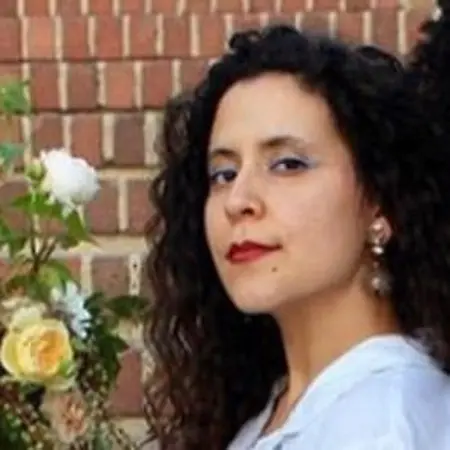
Her Story
About Sahara
I started my journey as a linguistics major from UCLA, graduating around COVID time. When I first graduated, I didn't find any work in the field, so I quickly had to pivot. I learned how to build computers through basic IT support and learned how to code. I started learning that skills themselves needed a bit more - they needed human connection, so I sought out mentorship. When I sought out mentorship, I realized that was the way to really build myself up, and I understood that mentorship isn't a ladder, it's a network. I was really inspired to understand how to become a mentor myself and let other people know that even if they don't necessarily come from the tech space or a traditional technical background, even if they've been unemployed or only hold a bachelor's degree, as long as you just start, that's the most important part. The Linguistic Security Institute is an open source community that I built out of everything that I've collected and learned through mentorship, through working with grant writing, and with other industry companies I've worked with before. I've gathered everything, and I want to be able to provide resources for free for people to learn how to get into the field themselves. I noticed there were a lot of foundational challenges coming up across industries that weren't traditionally intersecting - in tech, academia, and policy. When I started talking to other people outside of my own background, I learned that people in the space industry, people in policy, and people within education had similar problems with language communication and technology not representing languages correctly. My main area of expertise is computational linguistics. I've been able to collaborate with the Geo-Indigenous Alliance and the Arabic NLP community, which has helped me understand how various ethnic and language communities are viewing language right now and how it impacts technology. I recently spoke at the Geo-Indigenous Alliance Summit, where I was able to get to know other leaders in various industry fields.
Her Interview
Ten minutes with Sahara
01What do you attribute your success to?
I would contribute my success definitely to my community, who has held me accountable, who has taught me to stay humble, curious, and to also stay courageous throughout it all. Really, everyone around me who reminded me of those core pillars - humility, curiosity, and courage - has been instrumental in my journey. The people I met along the way who believed in me at my lowest points are still with me as I continue to grow. That's what's helped me the most.
02What’s the best career advice you’ve ever received?
I think the best career advice would be just start. Even if you're not fully ready, you don't have all of the resources. If you just start and you let people know your process and all of the time that you've failed, you'll start to see that there are others in your position, too. Also, collaborating with others is very important, even more so than just working solo. You could get so far on your own, but it does accelerate when you can share that with other people.
03What advice would you give to young women entering your industry?
I would give back the same advice that I have been given - that you don't need permission to start. You can build while you wait, as long as you show up, as long as you're humble and you're curious. The people who matter will see you. I want other women to see that it's possible, and that you don't need permission to start, and you don't necessarily need to be validated. There's a fine line between being validated by your mentors and only believing in what others tell you, but you also need that ability to believe in yourself and to just know that as long as you have an idea and you are alive, you can do anything. You can show up, you can build, you can ask, and the people who matter will see you. Even if you don't come from a technical background, you can still very much be in this space, and there are so many different ways to enter through different intersections of industry.
04What are the biggest challenges or opportunities in your field right now?
One of the biggest challenges I faced was unemployment and not having all of the credentials in certain spaces. Even though I worked really hard to get a BA from UCLA and was told that would be sufficient, by the time I graduated I had to learn to not let that harden me, but more so make me more creative in the ways that I could apply my degree. I had to learn not to let any kind of imposter syndrome stop me from starting anything, and not to let any kind of ego from others or even from myself stop me from working with others. Building alone didn't get me anywhere - it was really when I started working with others, not so much to receive something in return, but just to see someone else grow and to be inspired by their growth. Balancing many different roles like being a researcher, a consultant, a founder, a mentor, and a student has been challenging, and the number one challenge was balancing when to rest and when to celebrate the small wins. As for opportunities, I see being able to find intersections with other industries and creating different types of impact within policy, bilingual research, and expanding a mentorship web. There's global visibility and technical credibility to be built. I want to showcase to other women that even if you don't come from a technical background, you can still very much be in this space and have so many different ways to enter through different intersections of industry. People are still in silos primarily, but they're very open to speaking with you if you have the courage to go up and speak to them.
05What values are most important to you in your work and personal life?
One of the deepest values would be being community-oriented. Just being community-oriented, being able to think about working in true authenticity and beyond titles or beyond where you're currently at. I think being able to speak to anyone at any place is very important to me. Being able to just be resilient and continue to push forward regardless of the trials that come your way, and maintaining hope and uplifting others - those are all different types of values that I hold.
Join Influential Women and start making an impact. Register now.