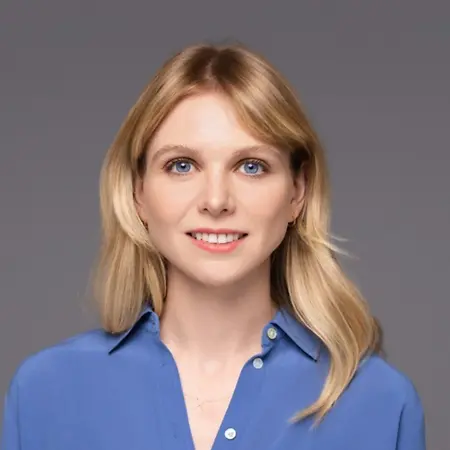
Her Story
About Sarah
I'm a software engineer at Salesforce where I've been for 7 years, working on a mobile SDK that deals with AI-powered agent platforms for enterprise. I'm the only woman on my team and have actually never had another female engineer on a team I've worked on, though my first job I had a female manager which was really cool and we're still in contact. I graduated from school in 2018 and worked at IBM for about a year before joining Salesforce. My career brought me from the east coast of Canada to Los Angeles, California during the pandemic when work went fully remote, so I took that opportunity to move. I'm currently doing my MBA part-time at USC, trying to pivot into more product ownership and less individual contributor software engineering. I think it's a good opportunity to sort of pivot into a more strategic role. I learned to program when I was probably 12 or 13 when my older brother got me into computers, and I started building websites using HTML and CSS. I thought it was really exciting and cool and saw the opportunity to go into computer science. I value a good work culture, which is the reason I've been at Salesforce so long on my team. I work with a really great team, everyone's really supportive, and it's hard to find that in tech. I never feel like people are questioning my knowledge or competency or experience, which I know a lot of women have experienced in work. Being in a place where that's not the culture is really important to me.
Her Interview
Ten minutes with Sarah
01What do you attribute your success to?
I think for engineering in particular, what's really important is not just the technical knowledge, necessarily. I mean, that's there, but especially with AI, the collaboration, the team building, the relationship building, all of those things have just become so much more important. I think those are strengths that I have and have been able to sort of lean on in my work, which I think is helpful. The emotional intelligence skills that go along with the engineering have been really valuable.
02What’s the best career advice you’ve ever received?
I had a manager tell me it's better to stay in a technical lane longer and get and really solidify those skills so you're not gonna lose them when you move into product or engineering management. I was thinking about moving into engineering management pretty early in my career, about 3 years into my job role at Salesforce, and I'm really glad that I didn't, because I think I would have lost a lot of the technical knowledge that I had, and I would have missed the AI revolution, which has just been such a big change in how we work and how we think about software engineering. I think working on solidifying those skills is really important. There's also advice that I didn't listen to that I'm glad I didn't listen to. A lot of people told me I should be switching companies and switching roles every few years in tech, but I've been at Salesforce for 7 years, which is pretty unusual. I've even been on the same team for seven years, and I think I've learned so much being on this team. Loyalty is really important to me, and I think that's something that is undervalued these days in terms of career. Having a long career at one company does allow you to build a lot of really great relationships and have a lot of really good mentors, and that's not something you get when you're moving companies every two years.
03What advice would you give to young women entering your industry?
I know from talking to women that I've mentored that they're really intimidated by AI, people talking about AI taking our jobs and there not being software engineering roles in the future. I would tell them I think that's definitely not the case. I think that if you have the right skills and you're able to build those relationships, to have that communication, you're gonna be so valuable. I don't want to say women are better at that, but I think there's a lot of skills and a lot of attributes that women bring to a room that are super valuable and just gonna become more valuable. The creativity, the different perspectives, I think women sometimes think, oh, I don't belong here. When I was in school anyway, I remember thinking like, oh, I don't belong here, and I think we just tend to have that imposter syndrome because it's not what people think of when they think of a software engineer. But I think those differences actually are a huge, huge benefit. Don't listen to that voice that says that you don't belong. Just focus on the strengths that you can bring, because I think it's those differences that do make people valuable.
04What are the biggest challenges or opportunities in your field right now?
I think having diversity of perspective makes work much better and makes products better. Having different perspectives in tech especially, where we're building products that everyone's gonna be using, is so important. There's a lot of examples of products that got built that were only tested on data from the people who were building it. Like the facial recognition at Apple, I remember hearing when they built it, they only tested it on the engineers that were building it, so it was all white men, and then the product didn't work on other people. It works a lot less well for women and people of color, so it's important to have all of those voices in the room. With AI becoming more important, the collaboration, the team building, the relationship building, all of those things have just become so much more important in engineering.
05What values are most important to you in your work and personal life?
I definitely value a good work culture. That's the reason that I've been at Salesforce so long on my team, just because I work with a really great team, everyone's really supportive, and it's hard to find that in tech. I really value the culture at Salesforce, how supportive it is. I never feel like people are questioning my knowledge or competency or experience, which I know a lot of women that I've talked to have experienced in work, where they feel like they're constantly being over-analyzed, over-questioned about what they know because they're a woman. Being in a place where I don't think that's the culture is really important to me. Inclusivity and diversity are important to me, and authenticity, to be yourself and not have to be questioned. I think having that diversity of perspective makes work much better and makes products better. Volunteer work is really important to me. Loyalty is really important to me, and I think that's kind of something that is undervalued these days in terms of career.
Join Influential Women and start making an impact. Register now.