The moment I realized my job no longer suited me was the moment I comprehended that staying would cost me more than leaving ever would.
How She Left a Job That No Longer Fit
Explore more
Influential Woman · Artificial Intelligence
Sierra Warren Developments, LLC
Lexington, KY 40505
AI collapsed the cost of sounding credible, so I shifted from producing outputs to engineering the evidence and provenance behind them because proof is becoming infrastructure.
Sierra N. Warren, MEng · In Her Own Words
The moment I realized my job no longer suited me was the moment I comprehended that staying would cost me more than leaving ever would.
How She Left a Job That No Longer Fit
Explore moreI learned that professionalism is not passivity. You can be respectful while being firm, collaborative while protecting your peace, and solution-oriented
How Women Dealt With a Belligerent Colleague and Found Strength in Professionalism
Explore moreHer Story
Sierra N. Warren is a multidisciplinary AI systems developer, researcher, systems architect, educator, media creator, and founder of Sierra Warren Developments. Currently studying at the University of Kentucky College of Engineering, she works at the intersection of artificial intelligence, software engineering, scientific research, robotics, digital infrastructure, education, and creative strategy.
Her work is guided by a central question: as intelligent systems become more powerful, how can people preserve the evidence, accountability, human judgment, and technical controls necessary to trust what those systems produce and do? Through this lens, Warren develops technologies, learning experiences, research frameworks, and communication strategies that make complex systems more usable, teachable, transparent, and ethical.
Warren’s work has reached major scientific and technology ecosystems. She has participated in NASA Exoplanet Science Institute programming and Roman Space Telescope-related research involving microlensing, binary-lens systems, stellar population simulations, and scientific data analysis. Her broader development record includes work connected with AMD developer environments, IBM initiatives, Xbox development, and the Cardano and Midnight ecosystems, where she has contributed to projects involving artificial intelligence, software infrastructure, cross-network settlement verification, and emerging technology.
She is the creator and architect of several original systems. AIREA.ai is an evidence-centered research and knowledge infrastructure platform designed to separate claims from evidence, preserve provenance, expose missing proof, classify epistemic states, and maintain auditable histories of how information changes. OMEN is a software patch-adjudication system that evaluates whether code changes actually satisfy their stated intent through counterfactual testing and fail-closed controls. Her other technical work includes Project CogniTwin, governed robotics systems, automated engineering tools, trading and market-intelligence systems, and cross-chain settlement verification architecture involving Cardano, Midnight, VIA Labs, and USDM.
Warren’s research extends beyond product development. She has published original technical and governance work, maintains a public ORCID research record, and created the Glass Substrate Protocol, preserved through a DOI-registered scholarly record. She is also the originator of Neuro-reactive Multimodal Metacognition and the Metacognitive Regulatory Layer, research addressing what she describes as the Cognitive Calibration Gap between the speed of AI-generated information and the human capacity to process, evaluate, and regulate it meaningfully.
As a creative strategist, digital educator, and brand developer, Warren brings together systems thinking, aesthetic design, instructional design, business marketing, and entrepreneurial execution. Her work includes developing courses, digital campaigns, educational tools, and communication strategies that translate complex technical ideas into accessible learning experiences. Through her work with Master-Pieced Inc., she contributes to program coordination, grant development, and community engagement initiatives that support education, cultural awareness, and community empowerment.
Warren has also held leadership roles in AI governance and education. Her work has included university-level AI governance leadership and service connected with the University of Kentucky’s AI initiatives. NAMIC St. Louis has presented her publicly as an author, entrepreneur, and AI governance engineer and policymaker. Her professional background includes several years of teaching, including K–5 STEM education, giving her experience designing learning environments where accessibility, creativity, human understanding, and responsible implementation are as important as technical capability.
Her research and development work includes ethical AI governance, machine learning applications, prompt engineering, and the design of human-centered digital systems. Through collaborations and initiatives connected with organizations such as Meta and Google Studio, Warren combines research-based clarity with creative execution to develop tools, courses, campaigns, and platforms that encourage learning and innovation.
Beyond engineering and research, Warren is building a public media platform around technology and the people shaping it. She created She.Velop, a podcast and media platform focused on women building careers, companies, and influence in technology. Through long-form interviews and editorial work, she highlights emerging women technologists, founders, and innovators while creating space for conversations about technical careers, ownership, leadership, visibility, and creative entrepreneurship. The project has also expanded into streaming-media development, including work toward a Roku-based distribution presence.
Her public record includes technical repositories, published research, articles, interviews, demonstrations, speaking and media appearances, and an Influential Women profile recognizing her work in artificial intelligence. Rather than treating engineering, governance, research, education, marketing, and media as separate pursuits, Warren connects them through a larger systems practice: building technology, studying how it behaves, designing ways to teach and communicate it, documenting how it can be trusted, and creating opportunities for people to participate in what comes next.
Through Sierra Warren Developments, she continues to develop systems across artificial intelligence, software, robotics, scientific computing, research infrastructure, education, and emerging technology. Her current work focuses increasingly on what happens after AI becomes capable of producing convincing answers at scale: establishing the evidence, provenance, technical safeguards, human accountability, and learning frameworks required to determine which answers, actions, and systems deserve trust.
Her Interview
01What do you attribute your success to?
I owe my success to being curious, sticking with things, and not shying away from tough questions. I’ve never been content just knowing how a piece of tech works; I want to dive into how the whole system functions, where it might break down, what backs up its choices, how people use it, and how it can be made more helpful, reliable, or trustworthy.
This approach has led me through systems engineering, software development, AI, scientific computing, robotics, distributed infrastructure, research, education, governance, and media. I’ve worked independently, been part of big technical and research communities, created new frameworks and systems, joined NASA/NExScI and Roman-related research, started Sierra Warren Developments, launched She.Velop, taught STEM, led community projects, and kept pushing forward even when there wasn’t a clear path for the kind of mixed-discipline career I wanted.
I also credit my progress to keeping good records and taking ownership. I learned early on that doing great work isn’t enough if no one knows it’s yours. I document what I create, publish what I can, keep proof of my work, and keep developing ideas I think should be out there.
What I’m most proud of isn’t just one document or project. It’s the collection of work I’ve done across different fields and the fact that the same principles tie it all together: thoroughness, evidence, human impact, technical responsibility, and the belief that complex problems need more than just surface-level fixes.
02What’s the best career advice you’ve ever received?
The best career advice I’ve ever gotten is to really learn the basics and not depend too much on whatever tool or platform is popular at the moment. Technology changes too fast for that. Programming languages change, AI models change, platforms come and go, and what everyone is using today might be outdated a year from now.
For me, having a strong foundation in things like math, algorithms, data structures, software architecture, systems thinking, research, and engineering makes it easier to adjust when the technology changes. I would rather understand why something works than only know how to use it.
I’ve also learned that the basics are not only technical. Being able to explain your work, document what you did, communicate clearly, take ownership of your ideas, and be honest about what you know and what you still need to figure out matters just as much.
The other part of that advice that stuck with me is not waiting until everything is perfect before I start. A lot of the work I’m proud of came from starting with an idea, researching it, building it, testing it, fixing what did not work, and continuing from there.
**I think consistency has taken me a lot further than trying to get everything perfect the first time.**
03What advice would you give to young women entering your industry?
I would tell young women not to confuse being overlooked with being unqualified. This field is competitive, and there are a lot of talented women who are just as hungry, capable, and ready as you are, waiting to hear their own name called too. Sometimes a “no” is not a judgment of your ability; sometimes there were simply several incredible women competing for one opportunity.
Still, do not assume good work will always speak for itself. Document what you do. Keep the receipts, save the drafts, protect your ideas, and make sure your contributions can be traced back to you., Do not shrink yourself into one title just because it makes you easier to understand. You can be technical and creative, an engineer and a storyteller, a researcher and a founder.
Support other women too. Recommend her, share her work, buy her book, listen to her podcast, say her name in rooms she is not in. Her success does not take anything from yours.
And when things do not go your way, feel it, learn from it, and keep moving. One room, one rejection, or one missed opportunity does not get to decide your whole story.
If you take anything at all, take this, , “Do not shrink yourself into one title just because it makes you easier to understand. “
04What are the biggest challenges or opportunities in your field right now?
One of the biggest shifts I am watching right now is AI moving from something that answers us to something that can actually act for us. That sounds exciting, and it is, but it also means we have to start asking much harder questions.
If an AI can open files, use credentials, send messages, write code, move information, make purchases, or complete a workflow on your behalf, then capability is no longer the only thing that matters. We have to think about permission, accountability, cost, privacy, failure, and when the system should stop and ask a human instead of just continuing. And I think there is a very human side to this too. People are tired. We are surrounded by synthetic content, automated conversations, fake intimacy, deepfakes, and systems constantly trying to predict what we want next. I do not think the answer is to make technology feel even more human. I think the answer is to make it more respectful of the human using it.
That is where I see the real opportunity. I want to see systems that are intelligent without being invasive, powerful without being reckless, and useful without making people feel like they have to babysit another machine.
We spent years asking how much AI can do. I think the next era is about deciding how much it should do, and making sure we are still the ones making that decision.
05What values are most important to you in your work and personal life?
The values that matter most to me are discernment, courage, responsibility, generosity, and freedom.
Discernment matters because not every opportunity is a good one, not every impressive idea is useful, and not every new technology deserves to be adopted just because it can be. I try to look past the surface and understand what something really means before I attach myself to it.
Courage matters because a lot of the work I care about requires questioning things people have already accepted as normal. Sometimes that means building differently. Sometimes it means saying no. Sometimes it means speaking up before everyone else is comfortable doing it.
Responsibility is important to me because I believe your name should mean something. If I create it, recommend it, teach it, or put it into the world, I want to be able to explain why.
Generosity shows up in how I support people. I believe in sharing information, opening doors, recommending talented people, and giving credit loudly.
And freedom matters because I never want success to cost me my ability to think independently, create honestly, or become someone I do not recognize just to fit into a room.
Her Content Hub
Sierra N. Warren explores AI-assisted error detection systems designed to safeguard against human fallibility in critical domains. Her work emphasizes ethical AI development that reinforces human judgment, prevents harm, and promotes safety through precision and accountability.
Building Safeguards: How AI-Assisted Error Detection Protects Against Human Fallibility in High-Stakes Environments
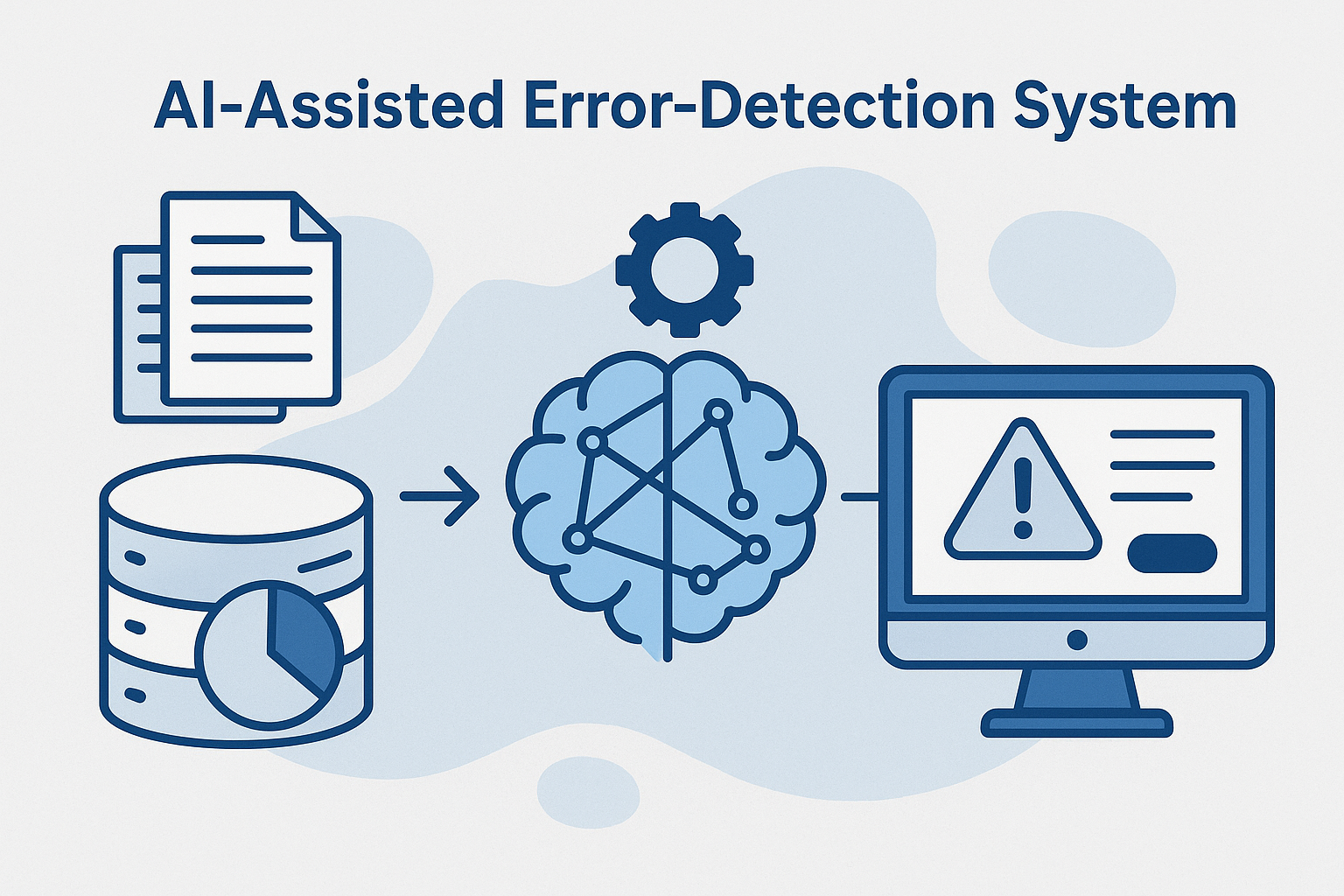
When I develop AI-assisted error detection systems, my focus extends far beyond technological efficiency. I am committed to building protective systems that serve a greater purpose. This commitment stems from a fundamental truth that is often overlooked: humans are extraordinarily intelligent, yet inherently fallible. In high-stakes domains—where a single mistake can cause irreversible harm, damage reputations, or alter the trajectory of a career or a life—the difference between safety and devastation comes down to precision. That understanding drives my work. I build systems that function as safeguards against the human errors that inevitably occur in environments of enormous pressure and responsibility.
My dedication to error detection emerges from a profound sense of responsibility. AI should not exist merely to optimize performance or increase profits. It should serve as a second layer of intelligence—identifying risks rooted in fatigue, stress, bias, or time constraints. The work I do operates in the delicate space between what could go wrong and what I refuse to allow. This is not about replacing human judgment; it is about fortifying it—ensuring that excellence is the result of intentionality rather than luck. By integrating advanced detection systems, I seek to create environments where human intuition and machine precision collaborate, preventing mistakes before they evolve into harm.
For me, an AI-assisted error detection system is not simply code. It represents foresight, intervention, and embedded accountability. It is an extension of my ethical framework, not just my technical capabilities. A system that identifies inconsistencies, flags risky patterns, and compels corrective action before damage occurs demonstrates respect for human life and acknowledges human limitations. This approach requires contextual understanding, not surface-level alerts—an ability to interpret why errors occur and how to prevent their repetition. In doing so, the system becomes not only a detector of error but a learner, continuously improving its capacity to protect and support human decision-making.
What distinguishes my approach is the intentionality behind the design. I do not build technology with the naive expectation that it will behave responsibly on its own. I engineer it with restraint, moral guidance, and clarity of purpose. Intelligence without structure invites chaos; power without conscience poses harm. Precision is not an enhancement in my systems—it is foundational. Ethical considerations are embedded at the architectural level so the technology reflects human values and fosters safer, more reliable outcomes for society.
Transparency and inclusivity are central to this work. AI does not affect all communities equally, and it is essential that systems be designed with an understanding of their broad social impact. By engaging diverse stakeholders—professionals, community members, and individuals with lived experience—I strive to create systems that are not only accurate, but equitable and just. This requires ongoing dialogue, humility, and a willingness to correct assumptions and biases before they become embedded in the technology.
Ultimately, my work in AI-assisted error detection is driven by responsibility. I believe AI should reinforce human judgment, promote safety, and uphold integrity in critical domains. Systems designed with foresight, accountability, and ethical grounding demonstrate respect for human fallibility and protect against preventable harm. Through this work, I intend to contribute to a world where technology and humanity work in tandem—where intelligence is guided by conscience, and precision is the standard rather than the exception.
Personal Research and Professional Work Sierras Path to the AI Judiciary Bench
Join Influential Women and start making an impact. Register now.