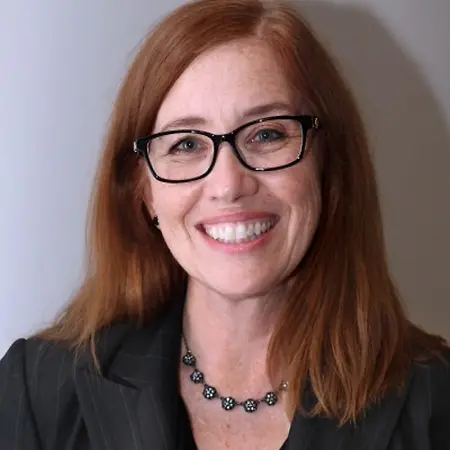
Her Story
About Sigrid
My fascination with space started when I was really little and my parents used to take me out to see Mr. Moon. In middle school and high school, I was part of the gifted program, doing things on the side that included astronomy and astrophysics, learning as much as I could and participating in local science fairs. I went to undergraduate and majored in physics and astronomy, then went to graduate school majoring in physics. I took a job at MIT Lincoln Laboratory and was able to go out to the middle of the Pacific, somewhere between Guam and Hawaii, on a little atoll called Kwajalein to do space surveillance. There I collected data on meteors, the plasmas formed when little tiny particles come in going 60 kilometers per second, they ablate, heat up, ionize, and form plasmas, shooting stars and meteors. This ended up being the foundation for my PhD thesis at Boston University through the MIT Scholars Program. While getting my PhD, I had the opportunity to present at a conference for the International Union of Radio Science, and I ended up placing first. After I placed first, Professor Imran Inan from Stanford approached me and said he thought I'd be a great fit for Stanford. I applied and was selected for the position. I also spent a few years at Los Alamos National Laboratory after getting my PhD. A lot of my background is working on big space-based projects in service of the country. Then 16 years ago, I made the change to Stanford, going into academia and running the lab and mentoring students.
Her Interview
Ten minutes with Sigrid
01What advice would you give to young women entering your industry?
Don't lose your voice. I would say, especially for women, unfortunately, I think most of us have experienced some form of discrimination throughout our careers. It's getting better, but it's still there, and I had a lot of people over the years who were wonderful and supportive, but unfortunately there were a few that were not so encouraging. After I received tenure, I had one influential figure tell me, don't slack off, because most women slack off after they get tenure. And this was in 2016. So, you know, be confident, and don't lose your voice. Don't let the loudest voice in the room tell you anything different, because having those people in your life who support you and mentor you matters so much.
02What are the biggest challenges or opportunities in your field right now?
I feel like we're at a turning point in our country right now. Science funding is very low. It's challenging to do fundamental research. A lot of our research is becoming political, and I think it's important to counter that. What we do is fundamentally just trying to figure out the truth. There should be no politics involved. I think that there are individuals out there that, unfortunately, don't have as much of a voice, and so I think getting out of our echo chamber and reaching out to the general population and explaining that is super important.
03What values are most important to you in your work and personal life?
It's really important to me to help the next generation. I think it's important to get out of our own echo chamber and make sure that you're reaching as many people as possible. What we do is fundamentally just trying to figure out the truth. There should be no politics involved. I think getting out of our echo chamber and reaching out to the general population is super important. Having people in your life who support you and mentor you matters so much.
Join Influential Women and start making an impact. Register now.