Her Story
About Stephanie
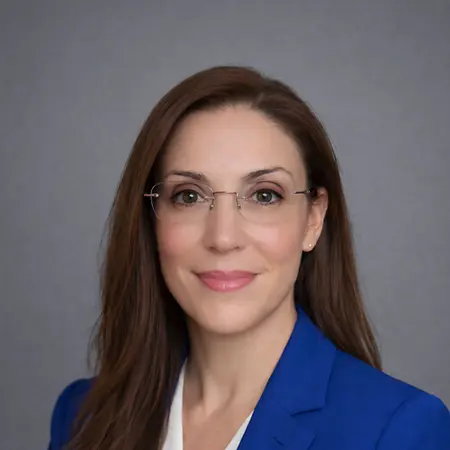
Stephanie Nehring is a healthcare leader, innovator, and advocate dedicated to transforming how care is delivered across the post-acute continuum. As Director of Clinical Programming at Allaire Health Services, she leads the development and implementation of system-wide clinical pathways, specialty programs, and quality initiatives that improve patient outcomes, reduce hospital readmissions, and elevate the standard of care in long-term care and subacute rehabilitation settings.
With over 20 years of experience as a registered nurse and over 30 years in healthcare, Stephanie brings a unique combination of clinical expertise and operational strategy. She has played a pivotal role in advancing nationally recognized programs, including American Heart Association, aligned heart failure and stroke certifications, as well as building innovative care models in pulmonology, dementia care, and complex chronic disease management.
A Certified Dementia Practitioner, Stephanie is deeply committed to patient-centered care and ensuring that individuals and families feel supported during some of the most critical moments in their healthcare journey. Her work focuses not only on clinical excellence, but also on bridging gaps between hospitals, post-acute providers, and the community to create seamless, coordinated care experiences.
Her passion for this work is deeply personal. While building her career, Stephanie also cared for her sick parents in her home, all while working full-time and raising two sons. This experience shaped her perspective on caregiving, resilience, and the realities families face, and continues to influence her commitment to compassionate, practical, and family-centered care.
Stephanie is also an author, using her voice and experience to empower others beyond the bedside. Her book, When the Hospital Says They Can’t Go Home, helps families navigate the often overwhelming realities of discharge planning, rehabilitation, long-term care, and caregiving—bringing clarity and advocacy to a complex system.
Recognized for her leadership, vision, and ability to drive meaningful change at scale, Stephanie continues to shape the future of healthcare delivery. She is passionate about innovation, education, and building programs that not only meet regulatory standards, but truly improve lives.
Her Interview
Ten minutes with Stephanie
01What do you attribute your success to?
I attribute my success to hard work, grit, and an unwavering commitment to helping others. I have always believed that if you keep showing up, keep learning, and keep pushing forward, no matter the obstacles, you will find a way through.
My journey has not been without challenges. Balancing a demanding career, raising my children, and caring for my parents taught me resilience at a level you can’t learn from a textbook. It taught me how to lead under pressure, how to stay grounded in purpose, and how to keep moving forward even when the path is unclear.
I don’t believe in giving up. I believe in adapting, problem-solving, and finding solutions, even in the most difficult situations. Every roadblock is an opportunity to grow stronger, think differently, and become better.
At the core of everything I do is a deep motivation to help others. Whether it’s improving patient care, supporting families during critical moments, or mentoring teams, that purpose has always driven me. Success, to me, isn’t just about achievement, it’s about impact.
And I’m still moving forward.
02What’s the best career advice you’ve ever received?
The best career advice I’ve ever received is simple, but powerful: don’t let “no” stop you if it’s something you truly believe in.
“No” is rarely the end. More often, it means not now, not this way, or not yet. I’ve learned that when you are grounded in purpose and conviction, you don’t walk away, you lean in. You ask better questions, find another path, build a stronger case, and keep moving forward.
Some of the most meaningful work I’ve accomplished came after resistance. It came from pushing past barriers, rethinking the approach, and refusing to accept limits that didn’t align with what I knew was possible.
If you believe in something, whether it’s an idea, a program, or a better way to care for people, figure it out. Be relentless. Be adaptable. And don’t wait for permission to make an impact.
Because the difference between those who move things forward and those who don’t… is the willingness to keep going after hearing “no.”
03What advice would you give to young women entering your industry?
Stay true to who you are. This field will challenge you in ways you can’t fully anticipate, emotionally, mentally, and physically, but don’t let it change the core of why you chose it in the first place.
Healthcare can be demanding, and at times, it can make people feel jaded. Protect your compassion. That ability to care deeply, to connect with patients and families, is not a weakness, it is one of your greatest strengths.
Work hard, stay curious, and never stop learning. The most effective and respected leaders in healthcare are those who continue to grow, ask questions, and seek better ways to care for others.
There will be moments when the work feels overwhelming, when the system feels imperfect, and when your voice feels small. Use it anyway. Advocate for your patients, for your team, and for yourself.
And most importantly, remember that the impact you make, often in the quietest, most difficult moments, matters more than you may ever realize.
Healthcare doesn’t just need skilled professionals. It needs strong, compassionate, resilient women who are willing to lead with both heart and purpose.
04What are the biggest challenges or opportunities in your field right now?
Healthcare-and especially long-term care-is at an inflection point.
We are operating in a rapidly evolving landscape defined by workforce shortages, rising patient acuity, regulatory pressure, and a fundamental shift toward value-based care. The traditional models we’ve relied on are no longer enough to meet the complexity of today’s patients or the expectations of the systems we support.
In long-term care, this is even more pronounced. We are caring for sicker patients than ever before, often immediately following hospitalization, while navigating staffing challenges and financial constraints. At the same time, we are being asked to do more,reduce readmissions, improve outcomes, and integrate seamlessly with hospitals and the broader healthcare continuum.
But this moment is not just about challenge,it’s about transformation.
There is a powerful opportunity to redefine what long-term care is and what it can be. It is no longer just supportive care,it is a critical extension of the healthcare system, capable of driving outcomes, preventing hospitalizations, and delivering specialized, high-acuity care.
The future belongs to organizations that are willing to innovate,to build advanced clinical programming, leverage data in real time, strengthen hospital partnerships, and create truly patient-centered, coordinated care models.
This is where leadership matters most.
We have the opportunity to move beyond reactive care and build systems that are proactive, predictive, and outcome-driven. To elevate standards. To challenge outdated thinking. And to ensure that long-term care is recognized not as a last step—but as a vital, high-performing part of the healthcare continuum.
The challenges are real,but so is the opportunity to fundamentally reshape the future of care.
And that’s where the work begins.
05What values are most important to you in your work and personal life?
At the core of both my work and my personal life are integrity, compassion, and resilience.
Integrity is foundational to everything I do. It means doing the right thing, even when it’s not the easiest path, and staying true to my values in every decision, whether I’m leading a program, supporting a team, or caring for a family in a difficult moment.
Compassion is what drives me. In healthcare, technical skill is essential, but it’s compassion that truly defines the experience for patients and families. I believe in leading with empathy, treating people with dignity, and never losing sight of the human side of care.
Resilience has been equally important in my journey. Life and healthcare both come with challenges, and I’ve learned the importance of continuing to move forward with strength, adaptability, and purpose, especially during difficult times.
I also value hard work, accountability, and a commitment to growth. I believe in showing up consistently, continuing to learn, and always striving to do better-for my patients, my team, and my family.
Ultimately, everything comes back to impact-making a meaningful difference in the lives of others, both professionally and personally.
Join Influential Women and start making an impact. Register now.