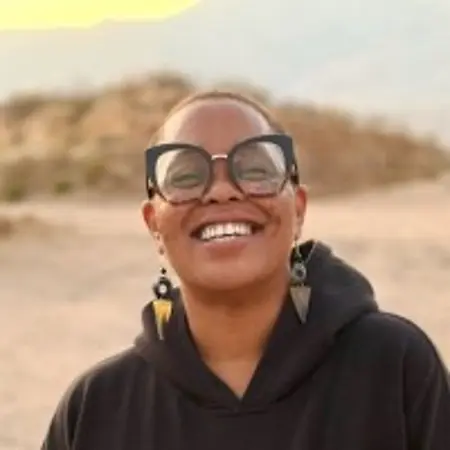
Her Story
About Tamara
I didn't start working in a traditional career until I was 30. Before that, I was a full-time spoken word artist, traveling to high schools, colleges, doing TV stuff, performing poetry. As a poet and writer, I learned to see the commonality between people and understand that folks want to be seen and validated. My poems were very vulnerable and open, which got my audience comfortable with me. When I came into tech, everything felt like it had to be rigid - work long hours, be strict, don't laugh, don't smile, just be whatever this corporate white America man thought process was. I let that go. I don't code switch. I am just a fun Black girl on your call working in tech. I work with globally distributed teams - I've had engineers in Russia, Ukraine, Mexico, Peru, and Argentina all on the same call, working through issues together. You have to find the commonalities, and I can't be fake during that time. The best way to find where everyone is in common is for someone to be just real. So I'm real, I'm myself. I don't try to act like I know it all. I tell them I don't understand, and I ask them about their families and kids. I get to know my team so that when we're done with a call and have five minutes extra, they feel comfortable telling me they have a baby on the way. I call myself a change agent, a cultural change agent. I'm constantly trying to get more - when I see a path to either more money or more understanding, I go on it. I'm still trying to get to a C-level position.
Her Interview
Ten minutes with Tamara
01What do you attribute your success to?
I attribute my success to being authentic and not code switching. Before I was 30, I was a full-time spoken word artist, traveling and doing poetry. As a poet, I learned to see the commonality between people and understand that folks want to be seen and validated. My poems were very vulnerable and open, and that got my audience comfortable with me. When I came into tech, everything felt like it had to be rigid - work long hours, be strict, don't laugh, don't smile. I let that go. I don't code switch. I am just a fun Black girl on your call working in tech. I work with teams across Russia, Ukraine, Mexico, Peru, and Argentina, and you have to find the commonalities. I can't be fake during that time. The best way to find where everyone is in common is for someone to be just real. So I'm real, I'm myself. I don't try to act like I know it all. I tell them I don't understand, and I ask them about their families and kids. I get to know my team so that when we have five minutes extra, they feel comfortable telling me they have a baby on the way. Even at this company where I've only been three months, one of the engineers in Argentina told me his wife's having a baby in June before he told anyone else, because I'm not being fake in the meetings. I'm being me. So I guess that's what I attribute it to - being honest, authentic, not trying to fake it anymore.
02What advice would you give to young women entering your industry?
My best advice for young women getting into tech is learn it. Don't bullshit. Learn it. A lot of people tend to think that they can't understand the language and that it's above them or outside of their wheelhouse because they didn't study tech or something like that, and it's not that. If you pay attention, you can learn this. You can understand what the processes are. I would say learn the product, learn whatever you're doing, and get a mentor - one of those crusty, dusty white guys. It sounds crazy, but every mentor that I've had has been a white male guy that's maybe about 10 or 15 years older than me. They're very open, very honest. My first mentor Chris, I asked him how much money I needed to make to not have to worry and put my bills on auto-pay. He said about $75,000 to $80,000. I asked what's the path to get me there, and he laid out courses I could take. Within five years, I was making $75,000, and 10 years later I'm making like $140,000 to $160,000. So get a mentor, lean into the crusty dusties, don't be stereotyped. Don't come in and be like 'oh I just need to be with girls.' No. Go ahead and get into the boys' world and learn it. Learn what they're talking about, because none of it is that hard. They talk like it's so difficult, like they're making these really big decisions, but they're not. It's the same type of things you do in normal day-to-day life. We're not doing brain surgery, there's no child's life on the line.
Join Influential Women and start making an impact. Register now.