Executive Director turnover in senior living is a critical but overlooked challenge. This article examines the complex responsibilities of the role, barriers to retention, and how organizations can better support, develop, and empower their leaders.
Her Story
About Tarita
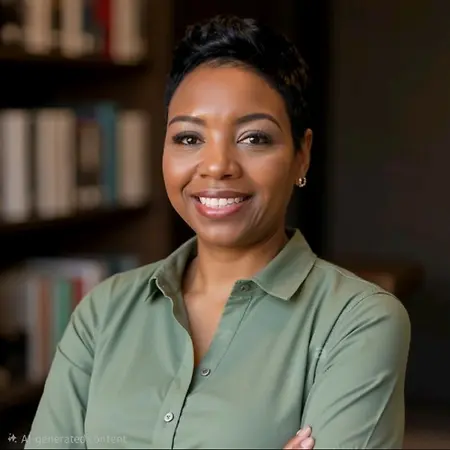
Tarita C. Dooley, MHA, LPN, is an accomplished healthcare executive, licensed practical nurse, and doctoral student with more than 20 years of experience spanning healthcare operations, senior living, clinical leadership, regulatory compliance, workforce development, and organizational performance. As an Executive Director, she provides strategic and operational oversight across clinical services, dining, life enrichment, environmental services, staffing, quality improvement, financial performance, and resident experience.
Her career has been shaped by a commitment to developing strong teams, strengthening systems, protecting those entrusted to her care, and ensuring that quality and accountability remain at the center of healthcare operations. Drawing from experience in both clinical and executive leadership, Tarita brings a practical understanding of the challenges facing healthcare organizations and the people who serve within them.
Tarita earned her bachelor's and master's degrees in healthcare administration and management from the University of Phoenix and is currently pursuing a Doctor of Business Administration. She is also a Certified Dementia Practitioner and Certified Alzheimer's Disease and Dementia Care Trainer, reflecting her continued commitment to education, professional development, and advocacy for older adults and individuals living with cognitive impairment.
Beyond her professional responsibilities, Tarita is deeply committed to community service, mentorship, and creating opportunities for others to grow. She believes leadership requires more than a title. It requires integrity, courage, accountability, compassion, and a willingness to speak up when people or systems need to be better served.
Tarita credits her faith in God, the unwavering support of her husband and family, and a lifelong commitment to personal growth for grounding her throughout her journey. As a wife, mother, grandmother, healthcare professional, and executive leader, she remains intentional about building a legacy rooted not simply in achievement, but in service and impact.
Her philosophy is simple: prepare for the opportunity before it arrives, lead with integrity when no one is watching, remain teachable regardless of the title you hold, and never become so focused on success that you forget the people you were called to serve.
Her Interview
Ten minutes with Tarita
01What do you attribute your success to?
I attribute my success first to my faith in God, which has remained the foundation of how I live, lead, and make decisions. I also credit the unwavering support of my husband and family, who have encouraged me through every season of growth, challenge, and change.
Professionally, my success has come from a willingness to keep learning, remain accountable, and never become too comfortable with what I already know. I have learned to view difficult experiences as opportunities to grow stronger, become more disciplined, and lead with greater wisdom. I believe in doing the work, treating people with dignity, speaking up when something is not right, and being willing to serve rather than simply hold a title.
Most importantly, I have never measured success solely by degrees, positions, or recognition. For me, success is reflected in the people I have helped, the teams I have developed, the individuals I have encouraged, and the difference I have been able to make in the communities I serve. I am still growing, still learning, and still striving to become better than I was yesterday.
02What’s the best career advice you’ve ever received?
The best career advice I have ever received is to show up as though I already belong in the room I am working toward entering. That does not mean pretending to know everything. It means preparing well, carrying myself with confidence, remaining teachable, and taking responsibility for the standard of work I produce.
I have also learned that growth requires being willing to do the uncomfortable things, ask difficult questions, accept correction, and keep developing even after achieving a title or degree. Opportunities may open doors, but character, consistency, and competence determine how long you are trusted to remain there.
I would add one piece of advice I have learned for myself along the way: never become so committed to your career that you neglect your health, your family, your faith, or yourself. Success should expand your life, not consume it.
03What advice would you give to young women entering your industry?
The advice I would give to young women entering this industry is simple: the sky is the limit, but give yourself permission to grow into the woman and professional you are becoming.
Professional maturity comes with time, experience, mistakes, correction, and sometimes a few hard lessons. No one should expect you to walk into your career knowing everything, and you should not expect that of yourself either. Be prepared, be accountable, ask questions, find mentors, and remain willing to learn. You do not have to be perfect to be capable.
I would also encourage young women to define success for themselves. It is easy to spend years trying to measure up to someone else's expectations, only to discover that the life you worked so hard to create is not even the life you wanted. Ambition is important, but so are your health, peace, relationships, faith, and sense of self.
Take care of yourself along the way. Rest when you need to. Learn to say no. Give yourself grace while still holding yourself accountable. Pursue excellence, not perfection. There is room for you to be successful, fulfilled, constantly evolving, and still human.
04What are the biggest challenges or opportunities in your field right now?
One of the greatest challenges in healthcare and senior living right now is workforce attrition and retention. Finding people is one thing. Finding people who genuinely understand what it means to care for another human being is something entirely different.
Some individuals come into this work with a natural servant’s heart, while others can be trained and developed into exceptional caregivers when they have the right leadership, education, support, and expectations around them. The challenge is that the demands of the industry continue to increase, and we are asking frontline professionals to carry tremendous responsibility while often giving them too little in return.
Caregivers are expected to be compassionate, dependable, clinically aware, emotionally resilient, efficient, and responsive to residents, families, regulations, and organizational expectations, often simultaneously. When people are constantly stretched without adequate support, recognition, development, or opportunity, it becomes difficult for them to consistently show up as the best version of themselves.
That challenge also creates one of our greatest opportunities. Healthcare organizations have an opportunity to rethink how we recruit, develop, compensate, recognize, and retain our workforce. We have to create environments where good people want to stay, where employees see a future for themselves, and where caring for the caregiver is viewed as essential to providing excellent care.
Ultimately, quality care begins with people. If we want exceptional outcomes for those we serve, we must be equally intentional about investing in those we depend on to provide that care.
05What values are most important to you in your work and personal life?
Honesty and integrity are at the top of my list, both professionally and personally. I believe your word should mean something. If you say you are going to do something, do it. If you cannot, communicate that honestly rather than overpromising and underdelivering.
Accountability is equally important to me. I believe in owning my decisions, learning from mistakes, and being willing to correct course when necessary. Leadership requires the ability to hold others accountable, but it also requires being willing to hold yourself to the same standard.
I have also learned to value self-care and healthy boundaries. There was a time when overextending yourself could easily be mistaken for dedication. I no longer believe that is sustainable or healthy. You cannot continually pour from an empty cup, and you should not make commitments simply because you are afraid to say no.
For me, integrity also means knowing your capacity, honoring your commitments, treating people with respect, and being consistent in who you are whether someone is watching or not. Those values shape the way I lead, the way I serve others, and the way I try to live my life.
Her Content Hub
Articles by Tarita
Who Leads the Leader?
Examining the Critical Role of Executive Director Retention and Support in Senior Living Operations

We talk constantly about turnover in senior living. We measure caregiver turnover, nursing turnover, agency usage, open positions, overtime, call-offs, and retention. We build recruitment strategies, employee-engagement initiatives, and action plans around those numbers, and we should. But there is another turnover problem sitting at the top of the building that we do not talk about nearly enough: the Executive Director.
The Executive Director is often the person expected to answer for nearly everything happening inside a senior living community. Occupancy, labor, financial performance, staffing, resident satisfaction, regulatory compliance, family concerns, dining, maintenance, clinical outcomes, sales, employee retention, culture, survey readiness, and emergency response can all eventually make their way back to one office. Depending on the organization, that responsibility does not necessarily end when the Executive Director leaves the building for the day.
I know the weight of that chair because I sit in it. I also know there are many talented people sitting in that same chair across this industry. What I have begun to question is whether senior living has become so focused on what Executive Directors are expected to produce that we have not spent enough time examining what we provide them in order to produce it.
There is evidence that this is more than an uncomfortable leadership conversation. Senior living operators have publicly described Executive Directors as particularly difficult to recruit and retain because of the complexity of the position, long hours, burnout, and the relatively limited pool of qualified candidates. At the same time, several operators have demonstrated that ED turnover can improve when organizations become intentional about selection, mentoring, compensation, career development, and support. Merrill Gardens, for example, reported reducing its Executive Director turnover from 23% to 13%, while 12 Oaks reported a substantially lower turnover rate after intentionally increasing its support of the role. These are individual company experiences, not national benchmarks, but they are worth paying attention to.
The research is even more concerning when we look at skilled nursing, where administrator turnover is better documented. A national study of nursing homes found administrator turnover rates above 50% in both 2020 and 2021. More important than the number itself was what happened around it. One administrator departure was associated with approximately 14% lower odds of achieving a higher quality star rating, while multiple departures were associated with roughly 25% lower odds. Administrator turnover was also associated with higher RN turnover.
Assisted living Executive Directors and licensed nursing home administrators are not interchangeable positions, and I do not believe in mixing statistics simply because they support a good headline. The regulatory environments are different. Still, the findings should make the broader senior living industry think seriously about leadership continuity. When the person responsible for developing department heads, maintaining family relationships, understanding the history of the building, responding to regulators, interpreting organizational expectations, and keeping operations moving walks out the door, something leaves with them that cannot simply be transferred through passwords and a handoff document. Institutional knowledge, relationships, context, and sometimes trust leave too.
The next leader does not walk into an empty building with a clean slate. They inherit whatever was there before them. That may include staffing vacancies, poor morale, compliance concerns, deferred maintenance, weak census, broken processes, dissatisfied families, financial pressures, unresolved employee issues, or leadership instability that existed long before their first day. Yet within a relatively short period, the new Executive Director may be measured on turnover, occupancy, labor, expenses, resident satisfaction, regulatory performance, and profitability as though all of those measures began when they accepted the position.
That is where I think we need to become more realistic about what stabilization actually looks like. Accountability is necessary, and I believe strongly in it. But accountability has to recognize starting conditions. If we expect a leader to repair a struggling operation while simultaneously hitting the same performance measures as a stable community, then we should at least be honest about what we are asking them to accomplish and the resources we are giving them to do it.
Training is another part of this conversation that deserves scrutiny. The expectations placed on an Executive Director are incredibly broad. We want someone who understands business operations and people, who can review a financial statement and recognize a resident-care concern, who can discuss occupancy in one meeting and regulatory risk in the next. We expect knowledge of human resources, sales, customer service, staffing, quality, crisis management, compliance, leadership, and often enough clinical understanding to know when something requires immediate attention.
Where exactly are we teaching all of that?
Assisted living administrator qualifications are not standardized nationally. Research examining administrator requirements across states found substantial variation in education, experience, training, competency testing, and continuing-education expectations, with some states having very limited qualification requirements. Industry research has raised a similar concern from the organizational side. An Argentum workforce survey found that 45.7% of respondents considered leadership development an important organizational practice, while another 30% said their organizations were investing in leadership development, but not at the level they should.
Those findings should give us pause because orientation and leadership development are not the same thing. We would never expect someone administering medication to simply figure it out because they are intelligent. We would not place an employee in front of complicated equipment without teaching them how to use it. Yet leadership onboarding can sometimes look dangerously close to receiving system access, reviewing policies, meeting department heads, attending corporate orientation, and then being expected to run the building.
That is not leadership development. That is access.
Some companies are beginning to approach this differently. Sonida Senior Living, for example, has developed a more structured first-90-day onboarding process for Executive Directors that includes sequenced learning, mentor support, in-person training, and an Executive Director training conference. Other operators are building leadership pipelines, peer mentoring, and development programs intended to prepare employees for larger roles before a vacancy forces the organization to begin searching. Perhaps the question is no longer whether intentional leadership development is valuable. The question is why it is not standard.
Then there is the education conversation. What degree makes the best Executive Director? I am not convinced there is one.
I value education. I have invested significantly in my own and continue to do so. Education can expand the way we think, strengthen our understanding of business and healthcare, improve critical thinking, and expose us to concepts we might not encounter through experience alone. I will always encourage people who want to further their education to do it.
But education is only part of what makes an effective leader.
A degree cannot manufacture common sense. It cannot automatically create empathy. It cannot guarantee good judgment or teach someone how to read a room. It cannot make a person recognize that an employee who appears frustrated may actually be overwhelmed or teach someone how to calm a frightened family member when there is no textbook answer available. A degree does not automatically teach humility, self-awareness, courage, or how to make a decision when every available option comes with consequences.
Those abilities come from some combination of education, experience, emotional intelligence, human compatibility, mentorship, exposure, mistakes, and lessons learned the hard way. Senior living needs leaders who understand the business, but it also needs leaders who understand people. The most credentialed person in the applicant pool is not automatically the person best equipped to lead a particular community.
That should change how we select Executive Directors. Instead of asking only whether a candidate possesses a certain degree or has held a certain title, perhaps we should be asking whether that individual possesses the combination of knowledge, experience, judgment, resilience, people skills, and operational understanding required for the community they are being asked to lead.
We should also be paying closer attention to who gets developed for these opportunities. The broader medical and health services management workforce is predominantly female; Bureau of Labor Statistics data for 2024 show women representing about 74% of that occupation.
Yet when we try to drill specifically into assisted living Executive Directors, and particularly Black women and other women of color, the national data become much harder to find and compare.
I think the absence of clear data is worth talking about. If the industry wants leadership pipelines that reflect the workforce and the residents being served, then we should know who is actually progressing through those pipelines. Who moves from caregiver to medication technician to supervisor? Who moves from nursing or wellness leadership into operations? Who moves from business office, sales, dining, or life enrichment into executive leadership? Who is identified early as having potential? Who receives mentoring and sponsorship? And who becomes extremely good at doing the work without ever being developed to lead it?
Those are workforce-development questions, not simply diversity questions.
There is another issue that may be even more uncomfortable: authority. If an Executive Director is accountable for employee turnover, how much influence does that person have over compensation and staffing models? If the ED is responsible for the physical condition of the building, how much authority exists over capital spending? If occupancy is a major performance measure, what sales and marketing resources are available? If resident outcomes fall under the ED's accountability, is there adequate clinical support? If an inherited community requires significant operational repair, what timeline has ownership established for stabilization?
Executive Directors should be accountable for their decisions. That comes with leadership. But there is a meaningful difference between accountability and responsibility for outcomes that someone does not have sufficient authority or resources to influence.
When accountability consistently exceeds authority, it eventually begins to look a lot like blame.
That may also help explain why some strong Executive Directors leave. Certainly, some leaders leave because they are not performing or because they discover that the role is not the right fit. Senior living is not for everyone, and the position should not be romanticized. But we should be careful about assuming every departing ED failed.
Sometimes capable leaders leave because capable leaders have options. Sometimes they leave because the expectations and available resources never matched. Sometimes they become exhausted from being available to everyone else. Sometimes every problem eventually arrives at their desk while many of the solutions still require approval from somewhere above it. And sometimes another organization simply offers an environment where they believe they can lead more effectively.
That is why the experience of operators improving ED retention is important. Senior Housing News has reported companies emphasizing mentoring, compensation, career development, stronger communication, thoughtful hiring, and greater support around the Executive Director role. Those organizations are not removing accountability. They are recognizing that support and accountability can exist together.
This conversation should not become an argument that Executive Directors have difficult jobs and therefore should be excused from results. That would be far too simple. The better question is whether senior living's investment in selecting, onboarding, developing, resourcing, and retaining Executive Directors actually matches the level of responsibility placed on the position.
The industry is facing growing resident complexity, workforce pressures, changing expectations, and continued competition for capable healthcare leaders. At the same time, organizations are beginning to place greater emphasis on leadership pipelines, mentoring, and succession planning rather than waiting until an Executive Director leaves to begin thinking about who could possibly replace them. That is movement in the right direction, but there is still more work to do.
We have spent years asking whether we can find enough people willing to work in senior living. Now we also need to ask whether we are developing enough people prepared to lead it. And once we find good leaders, we should be equally interested in understanding what makes them stay.
Compensation belongs in that conversation, but it cannot be the entire conversation.
So do onboarding, continuing education, mentorship, corporate and regional support, realistic workloads, decision-making authority, succession planning, leadership development, well-being, and reasonable expectations about what can actually be repaired in 30, 60, or 90 days.
Executive Director turnover is not simply an HR inconvenience. Leadership instability can affect employees, culture, operations, and continuity of care. Evidence from skilled nursing suggests it can be associated with both staff turnover and quality performance. Senior living should take that seriously.
Perhaps we have spent too much time asking, “Who can we hire to fill the Executive Director position?” when the more important questions are: Who are we preparing to sit in that chair? What are we giving them once they get there? What authority are we giving them to accomplish what we are holding them accountable for? And what are we doing that makes a good Executive Director want to stay?
Because if one person is expected to carry the accountability for an entire community, somebody should be equally accountable for making sure that leader is equipped to carry it.
A thought-provoking examination of why employee training alone cannot guarantee competency or performance. This article challenges leaders to move beyond sign-in sheets and explore the deeper connections between education, demonstrated ability, and accountability in the workplace.
Signed In Isn’t Trained
Why signing a training sheet isn't the same as actually being trained.
We have all seen the sign-in sheet.
Employees walk into a training room, write their names down, sit through an in-service, maybe complete a quiz, and leave. The documentation gets filed away, and somewhere in the organization there is now a record that says everyone was “trained.”
But were they?
That is a question I believe more leaders need to ask.
A signature can prove that someone was present. A certificate can prove that a course was completed. A passing quiz can tell us that someone was able to answer questions correctly at a particular moment. None of those things, by themselves, prove that the person can take what they learned and consistently apply it when it matters.
And that is where organizations can get themselves into trouble.
I have spent much of my career in healthcare and leadership, where training is a regular part of the work. Policies change. Expectations change. Employees are hired. Processes are updated. Mistakes happen, and education is often one of the first responses.
“Let’s retrain everyone.”
Sometimes that is exactly what needs to happen. But sometimes we use training as the answer to a problem that training alone cannot solve.
If an employee has been taught a process three times and continues to perform it incorrectly, the question cannot always be, “When can we schedule another in-service?”
At some point, we have to ask different questions.
Did the employee understand what was taught? Could they demonstrate it? Did someone actually observe them performing the task? Was the expectation clear? Did leadership follow up? Was the process realistic in the actual work environment? And, after education and support were provided, was the employee held accountable for meeting the standard?
Those are very different conversations.
One of the biggest mistakes organizations can make is treating education, competency, and accountability as though they are the same thing.
They are connected, but they are not interchangeable.
Education provides information. Competency demonstrates the ability to use that information. Accountability establishes the expectation that the standard will continue after the training is over.
Organizations need all three.
Think about something as simple as a new workplace procedure. Leadership sends an email explaining it. A policy is distributed. Employees attend an in-service and sign the attendance sheet. From an administrative standpoint, the organization may feel like the job is finished.
But the frontline experience may look completely different.
One employee understood the procedure immediately. Another thought they understood it but interpreted one step incorrectly. Another did not understand the reason for the change and continued using the old process. Someone else learned the correct process but noticed that nobody was enforcing it, so eventually they stopped following it, too.
All four employees technically received the same training.
They did not receive the same outcome.
That is why leaders cannot stop at “Did we train them?”
We have to start asking, “Can they do it?” and eventually, “Are they doing it consistently?”
There is another uncomfortable part of this conversation, and leadership has to own it.
Sometimes an employee performance problem is truly an employee performance problem. But sometimes what we call an employee problem is actually an organizational systems problem.
If expectations change every week, supervisors enforce policies differently, procedures do not match the reality of the work, employees receive conflicting direction, or leadership only pays attention after something goes wrong, another training session is not going to magically repair the system.
That is not a training issue.
That is a leadership issue.
Good leaders have to be willing to distinguish between the two.
We also need to stop confusing documentation with development.
Documentation matters. Organizations need records. We need to know who attended, what was taught, when it occurred, and who provided the education. In many industries, that documentation is essential.
But the paperwork should support the process. It should never become the process.
If our greatest evidence that an employee knows how to perform an important responsibility is their signature on a piece of paper, we may know that they were in the room. We still do not necessarily know what they can do.
There should be another layer.
That might mean observation. Demonstration. Coaching. Return demonstration. Follow-up conversations. Performance review. Additional education when a genuine knowledge gap is identified. And when the employee has received the appropriate education, resources, and support but continues to disregard the expectation, it may mean accountability.
Accountability is not the enemy of employee development.
Done correctly, it is part of employee development.
Employees deserve to know what is expected of them. They deserve good instruction. They deserve an opportunity to ask questions, practice, receive feedback, and improve. They also deserve consistency from the people leading them.
What they do not need is an organization that repeatedly hands them another PowerPoint while avoiding the real conversation about performance.
That does not help the employee, the leadership team, or the organization.
As leaders, I think we have to become more intentional about what happens after the sign-in sheet is collected.
Training should not simply satisfy a requirement. It should prepare someone to perform.
Competency should not be assumed. It should be demonstrated.
Accountability should not begin only after a serious problem occurs. Expectations should be reinforced throughout the process.
The goal is not to create a workplace where employees are afraid of making mistakes. The goal is to create one where people understand what is expected, receive the support necessary to succeed, and recognize that the work still has a standard.
Because ultimately, signed in does not mean trained.
And trained does not always mean competent.
The real work of leadership happens in the space between the two.
A reflective exploration of professional success beyond credentials, examining how experience, resilience, relationships, and personal integrity shape authentic leadership, particularly for women in healthcare navigating ambition and burnout.
The Degree Did Not Make Me
Beyond the degree: How experience, relationships, and personal growth shape true leadership success.
There is a lot of pressure attached to success, especially for women who are trying to grow professionally while carrying everything else life requires of them. Get the degree. Work harder. Build your résumé. Find a mentor. Network. Get promoted. Earn your seat at the table. Keep moving.
I believe in education. I have invested in mine, and I continue to do so because learning has absolutely helped shape the professional I have become. Education has expanded the way I think, strengthened my understanding of healthcare and business, and given me tools that I did not have earlier in my career. But after more than 20 years in healthcare, I can also say with confidence that a degree is only one piece of what makes someone successful.
You can have an impressive education and still not know how to lead people. You can understand theories, policies, and organizational structures and still lack common sense. You can know every regulation and still walk past an employee who is struggling because you never learned how to pay attention to people. You can have an impressive title and résumé and still lack empathy, judgment, humility, and the ability to connect with another human being.
Those things matter, particularly in healthcare. Much of what has made me successful did not come from a classroom. It came from experience. It came from working directly with people, making mistakes, having difficult conversations, learning how to navigate conflict, dealing with families, staffing shortages, regulations, budgets, employee concerns, resident needs, and situations where there was no perfect answer. It came from having to make a decision and then having the integrity to stand behind it or the humility to admit when I needed to make a different one.
There is no degree that can completely teach you that.
I did not begin my career sitting at an executive table. I know what it feels like to be the person doing the work, trying to take care of other people while also trying to build a life for yourself. I have worked while raising a family. I have gone back to school while working full-time. I have changed positions, taken chances, learned new responsibilities, questioned whether I was ready, and sometimes figured things out while I was already standing in the middle of them.
I think people sometimes look at someone's current title and assume there was a straight line between where that person started and where they are today. My journey has not been a straight line, and I do not know many successful people whose journey has been. There were times when I knew exactly what I was doing and times when I absolutely did not. There have been opportunities that excited me and opportunities that scared me. Even now, I can walk into a room prepared and confident and still have a moment when I wonder whether I am ready for what comes next.
I have learned that confidence does not mean you never have those thoughts. Confidence is being able to have the thought and keep moving anyway.
Being a Black woman has also shaped the way I have experienced leadership.
I do not believe every challenge I have encountered has been because I am Black or because I am a woman, but I would be dishonest if I pretended those things have never mattered.
There are situations where I have been very aware of how I am being perceived. Am I being too direct? Is my confidence being interpreted as arrogance? If I disagree, am I being viewed as difficult? If I speak firmly, will someone hear anger instead of leadership? If I advocate strongly for someone, will I be labeled confrontational?
There comes a point when constantly evaluating yourself through someone else's level of comfort becomes exhausting. Professional maturity has helped me understand that I can be respectful without shrinking. I can be compassionate and still hold people accountable. I can disagree without being disrespectful. I can ask difficult questions. I can say when something does not make sense. I can acknowledge when I am wrong. I can lead without constantly apologizing for having a voice.
Professional growth should refine you. It should not erase you.
Healthcare itself can also be unforgiving. It is an industry built around caring for people during some of the most vulnerable moments of their lives, but the people providing that care are often carrying extraordinary pressure themselves. Staffing shortages are real. Burnout is real. Expectations continue to grow. We ask healthcare professionals to be compassionate, dependable, efficient, clinically aware, emotionally resilient, and available, sometimes while offering very little space for them to simply be human.
Healthcare will take everything you are willing to give it if you let it. The dependable person gets called because everyone knows she will answer. The person who fixes problems gets handed another problem. The employee who always stays over gets asked to stay again. The leader who never says no eventually becomes the leader everyone expects to always say yes.
I know that person because I have been that person.
One of the most important things I have learned is that burnout does not always look like falling apart. Sometimes burnout looks like continuing to function extremely well. You answer the emails, cover the problem, attend the meetings, encourage everybody else, take care of your family, meet the deadline, and come back the next morning to do it all again. People tell you how strong you are because you are still producing, while privately you are wondering how much longer you can keep doing it.
There is a difference between being strong and being healthy.
There is also a difference between dedication and self-neglect.
I still believe in hard work. I believe there are seasons when you have to push yourself. I believe sacrifice is sometimes part of growth. But I no longer believe exhaustion should be worn as proof that you are committed. There is no prize for reaching every professional goal while becoming miserable in the process.
Self-care became important to me when I finally understood that everything will never be finished. There will always be another problem, another call, another employee who needs something, another email, another assignment, another goal. If you wait until everything is done before you take care of yourself, you may never get around to doing it.
Another lesson I have learned is that success is not simply about what you know. Who you know matters too.
I used to struggle with that because I wanted to believe good work should speak entirely for itself. Good work matters tremendously, but relationships matter too. Someone has to know your work. Someone may speak your name in a room you are not in. Someone may recommend you because they have watched how you lead and trust what you can do.
There is nothing wrong with that.
Networking does not replace competence, and relationships cannot sustain someone who cannot perform. Knowing the right person might get your name into the conversation, but eventually, people are going to experience your work for themselves. That is why I believe in developing both.
Build your knowledge, but also learn how to deal with people. Get the degree if that is part of your journey, but get experience too. Find mentors. Build genuine professional relationships. Listen to people who know things you do not know. Pay attention to the employees who have been doing the work for years.
Do not walk into a room believing your education automatically makes you the smartest person there. Some of the smartest people I have met in healthcare do not have the most impressive credentials. They understand people. They notice things. They know when something is wrong before a report tells them something is wrong. They have years of experience and judgment that cannot be reproduced in a textbook.
A strong leader recognizes that kind of intelligence instead of being threatened by it.
I am proud of my education, but my education did not make me. My experiences contributed. My failures contributed. My family contributed. The people who believed in me contributed. The people who challenged me contributed. The situations I never want to repeat contributed. My faith contributed. The times when I had to get back up and try again contributed.
All of it came with me.
That is what I think about now when people talk about having a seat at the table.
I do want the seat. I have worked for it. But I am not interested in sitting there simply so I can say that I made it. I want to contribute something. I want to ask questions. I want to challenge ideas when they need to be challenged. I want to understand the people who are affected by the decisions being made in that room, including the people who may never be invited into it.
And when I have the opportunity, I want to help someone else grow. Success cannot always be about how far I can go. At some point, it has to become about what I can do with what I have learned.
I am still learning. I am still growing. I still have goals that make me nervous. I still make mistakes. I still have days when I question myself. The difference now is that I no longer believe uncertainty means I am unqualified. Sometimes it simply means I am growing again.
If I could tell another woman anything about building a career, I would tell her to pursue education if it is part of her path, but never believe another degree will automatically turn her into the person she wants to become.
Learn people. Learn yourself. Develop common sense and sound judgment. Get experience. Listen. Ask questions. Learn how to communicate with people who are different from you. Find mentors. Build relationships without using people. Take care of yourself before your body forces you to. Protect your integrity. And never confuse having a title with knowing how to lead.
When your opportunity comes, bring your education with you. Bring your experience too. Bring your empathy, your judgment, your common sense, your mistakes, your lessons, your confidence, and even some of the fear that reminds you that what you are doing still matters.
The degree may help open the door. It is the whole person you have become who has to walk through it.
Join Influential Women and start making an impact. Register now.