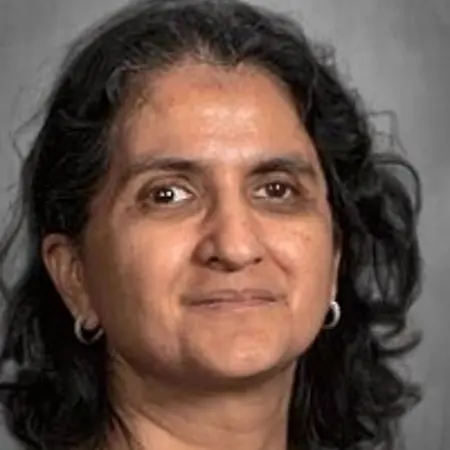
People who are not experiencing my challenges, telling me how to get getter.
Her Story
About Vaishali
Vaishali Tajpuria is an experienced educator and psychology professor with more than two decades of experience in secondary education and a background in teaching social sciences and psychology. She currently works as an educator at Irving ISD in Texas and serves as a part-time Professor of Psychology at Dallas College. Previously, she taught high school social studies at Township High School District 211 in Illinois, where she taught a range of social science subjects and expanded the Advanced Placement Psychology program from three sections to seven. Her expertise includes psychology, anthropology, sociology, economics, political science, world history, and world geography, with a focus on student engagement, curriculum development, and interdisciplinary learning. Vaishali holds a Master of Arts in Psychology from National Louis University and a Master of Arts in Teacher Leadership from Roosevelt University. She is also pursuing a doctorate in education at Texas Wesleyan University, with her dissertation completed and her defense pending, according to the supplied information. Certified and licensed to teach middle school and high school, she has contributed to academic enrichment and extracurricular learning throughout her career. One of her notable accomplishments was establishing and leading a Model United Nations program at her former school in Illinois. She also sponsored student newspaper and yearbook activities and supported cultural and student organizations, helping create opportunities for students to explore their interests and develop leadership skills. Beyond the classroom, Vaishali is committed to lifelong learning, perseverance, and supporting causes that affect people's lives. She has participated in breast cancer, leukemia, and cancer awareness initiatives and volunteered at a hospital in Chicago for approximately three to four years. She credits her family and close friends for providing the love, guidance, and encouragement that have helped her overcome challenges and pursue her goals. Her personal experience recovering from a serious brain bleed further reflects her determination to continue teaching and advance her education despite significant obstacles. Through her teaching, academic leadership, and commitment to personal growth, Vaishali strives to inspire students to remain curious, work toward their ambitions, and recognize the value of education.
Her Interview
Ten minutes with Vaishali
01What do you attribute your success to?
I attribute my success to the love, support, and guidance of my family and the people I consider family, including my closest friends. Their encouragement has helped me persevere through difficult circumstances and continue pursuing my educational and professional goals. Their influence has been an important part of my journey.
02What’s the best career advice you’ve ever received?
My advice has always been to follow your passion, because I believe that when you genuinely care about what you do, you are more likely to give it your best effort and persevere through challenges. Teaching may not always offer the highest financial rewards, but my passion for education has kept me committed to the profession. If your passion does not provide the income you need, I believe you can pursue work that supports you financially while remaining connected to what you love.
03What advice would you give to young women entering your industry?
My advice is to stay focused and never give up, even when the journey becomes difficult. Achieving meaningful goals requires hard work, patience, and perseverance. I worked hard to regain my ability to walk independently after a serious medical emergency, and I continued pursuing my master's degrees and doctorate despite the challenges. My experience has taught me that worthwhile accomplishments are rarely easy, but the effort can make them deeply rewarding.
04What are the biggest challenges or opportunities in your field right now?
One of the biggest challenges in education is the impact of state legislation and policy decisions on schools and higher education. I am concerned that education is not always given the priority it deserves, even though it is essential to our country's growth and prosperity. Secondary and post-secondary education face challenges when students are not encouraged to pursue further study or cannot afford it. I believe there is an opportunity to strengthen education by improving access to higher education, making it more affordable, and ensuring that students continue to receive encouragement and support as they pursue their goals.
05What values are most important to you in your work and personal life?
Trust and honesty are the values I consider most important. I strongly dislike dishonesty, malicious behavior, and unkindness. I believe we should treat one another with respect and make a genuine effort to be better to each other. Whether in my professional or personal life, I value integrity, compassion, and the importance of creating a more supportive environment for the people around me.
Her Content Hub
Articles by Vaishali
If You Were in My Shoes
Telling me how to heal

If you were in my shoes…
By: Vaishali Tajpuria
If you were in my shoes, would you be able to handle the stabbing pain in your head?
Would you be able to control the constant nausea?
Would you be able to overcome the constant struggle for balance and coordination?
Would you join a gym that is noisy with high intensity classes?
Still make progress despite all this?
Cope with the difficulty and heartbreak when you tried to read, but struggle?
Recognize names, faces, places?
Go and get another degree? Two?
How would cope with painful loud sounds that don’t bother most people?
Would you challenge yourself so you can improve?
Would you be able to handle crowds as you struggle not to fall?
Get back up and try again?
Move to a new state where you hardly know anyone?
Would you put yourself out there, even though you would rather introvert and sit at home?
Would you be able to cope with stress on all ends without self-destructing?
Stress over how your vision is skewed and shifted?
Cope with the shifted vision and damage to your depth perception?
Can you make it down the stairs? Without rails? Try not to fall?
Would you drive?
Would you be able to live in this damaged body?
Would you feel like giving up?
WOULD you give up?
Would you have survived?
Beat the odds?
Carry the weight of the world on your shoulders
If you were in my shoes, would you have come as far as I have?
My father's sacrifice for the family built a foundation for the rest of the family.
Daddy's Little Girl
The story of my immigrant father and his impact on me and others
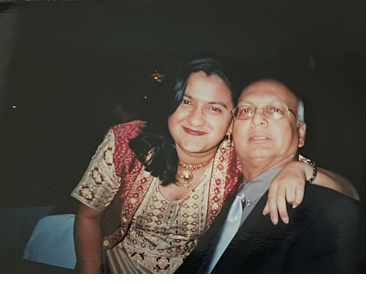
When he first came to America, he was laid off every six months. His professional engineering degree from India held no value in this new country. He worked various labor jobs to make ends meet while studying for a degree he already had. He was desperately seeking a job; his wife was about to give birth to their second child.
He was the first one on both sides of the family to move to America. He housed his brother, his sister-in-law, and his younger sister in a small apartment in Chicago. He and his wife later moved to Des Plaines, Illinois. At that time, he took in his brother-in-law and three sisters-in-law to live with them. He told everyone he housed, in Gujarati, "Don't worry, whatever we eat, we will feed you." He would give money that was supposed to be for groceries to any friend who asked for it. "He needed it more than me," He would say by way of explanation. They all lived together happily until each person built a foundation for their own life, got married, and settled on their own.
Shortly after his daughter was born, he secured a job that utilized his degree, becoming the new highway planner for the Cook County Highway Department. He felt his daughter brought him good luck; things were slowly improving. Although the job did not pay well, he made sure he set aside money for his family's future.
These were his thoughts as he gazed into his daughter's eyes, and she looked back lovingly. When she was younger, he would come into her room on weekends to lie in bed and snuggle with her. He would notice that she is awake and would ask, "Do you know how much I love you?" The child, with her eyes still closed, would smile and nod, snuggling more in his embrace.
He started to see himself in her as she grew. Her sense of humor, love for history and the social sciences, and a passion for traveling were their shared interests. They traveled the world together; he shared with her all the historical places he had visited.
As she got older, she remembered how he used to cuddle with her. So on weekends, she would wake up early to go into his room and lie next to him. She would say, "When is my dad going to wake up? I think he is still sleeping!" He would wake, smiling, and hug her. "You're up early," he'd say. "You're up late!" She'd say in return.
As time passed, his grown children became successful, educated adults. He settled in his retirement with his wife: "I am on permanent vacation!" He would say, "NOT RETIRED!". They would wait for their daughter to be on vacation from work so they could travel together and enjoy the world. Sharing this with her brought him great joy as he engaged her in historical conversations.
He acted like a big baby with minor aches and pains, but when it got serious, he downplayed it. He was suddenly diagnosed with cancer on his spine, multiple myeloma. When he went in for radiation, he would joke with the nurses and staff. He would say, "There's nothing wrong with me, I'm testing the doctors." Then, when he got home, he would ask his wife to put ointment on the radiation burns, quietly wincing as she gently applied it to his back.
Somehow, he knew his time was coming. While he was visiting a friend, he turned and said, "Do not know how much time left." When his friend asked what he meant, he dismissed it and said he didn't remember. A few days later, he said he had pain in his neck and back and stated that it went away, and not to worry. He suffered in this way for almost three months, going to the ER several times with no clear explanation or resolution.
The day he left, he made sure he silently said goodbye to his closest friends. He waited for his wife and daughter to be with him before he took his next step, closer to leaving this world. He waited for his son and daughter-in-law to enter the hospital building before he left to be their guardian angel. He did not want them to be so far and without love and support from others. He wanted his family to be together in the same building. His heart, so full of love, failed him early that morning.
As each year passes, he is by their side, helping, sending love, and feeling pride as they manage the hard tasks of life without his presence. He sends little hints to remind everyone that he is looking out for them, every step of the way.
Until we meet again…..
In loving memory:
Bipin Lalbhai Tajpuria
2/4/1944 to 8/19/2018
His service was beyond capacity. The parking lot was full of double-parked cars. There was no room to sit, and the line was out the door and down the street. The hundreds of lives he touched were demonstrated clearly.
He was a fun-loving jokester. Even when his family prepared to leave to spread his ashes, the garage door stopped before it was fully open, forcing them to call his sister in law's family to help manually open the garage And that June, his wife, son, and daughter went to Rockford, Illinois with his wife's sister and son to spread his ashes and his brother in law's ashes. His brother-in-law had passed a few months before, and his sister in law was not able to perform the rites. They went together, and as his son and daughter spread his ashes, the priest chanted mantras. His younger brother asked for a portion to take to India, his homeland and the place of his love. His final resting place is in America and India.
Whenever he misplaced something his response would be
ઠેકાણે છે, ક્યાં છે એ ખબર નથી
It is in its proper place, where that is I do not know.
I used to tease him and say:
બીપીન દાસ તારો ત્રાસ છે
Respected Bipin, you are a pain!
Special thanks to my friend, colleague, my editor, my publisher, curator of resources, curator of knowledge, and general awesomeness, Kathleen Basoco
I am the Curator. That's such a better name than Librarian. But, no one would be able to spell that either! LOL!


I had a congenital defect and an abnormal cluster of arteries that bled. Leading to several brain bleeds and nearly dieing.
Death is NOT an Option
My experience with surviving a near death experience
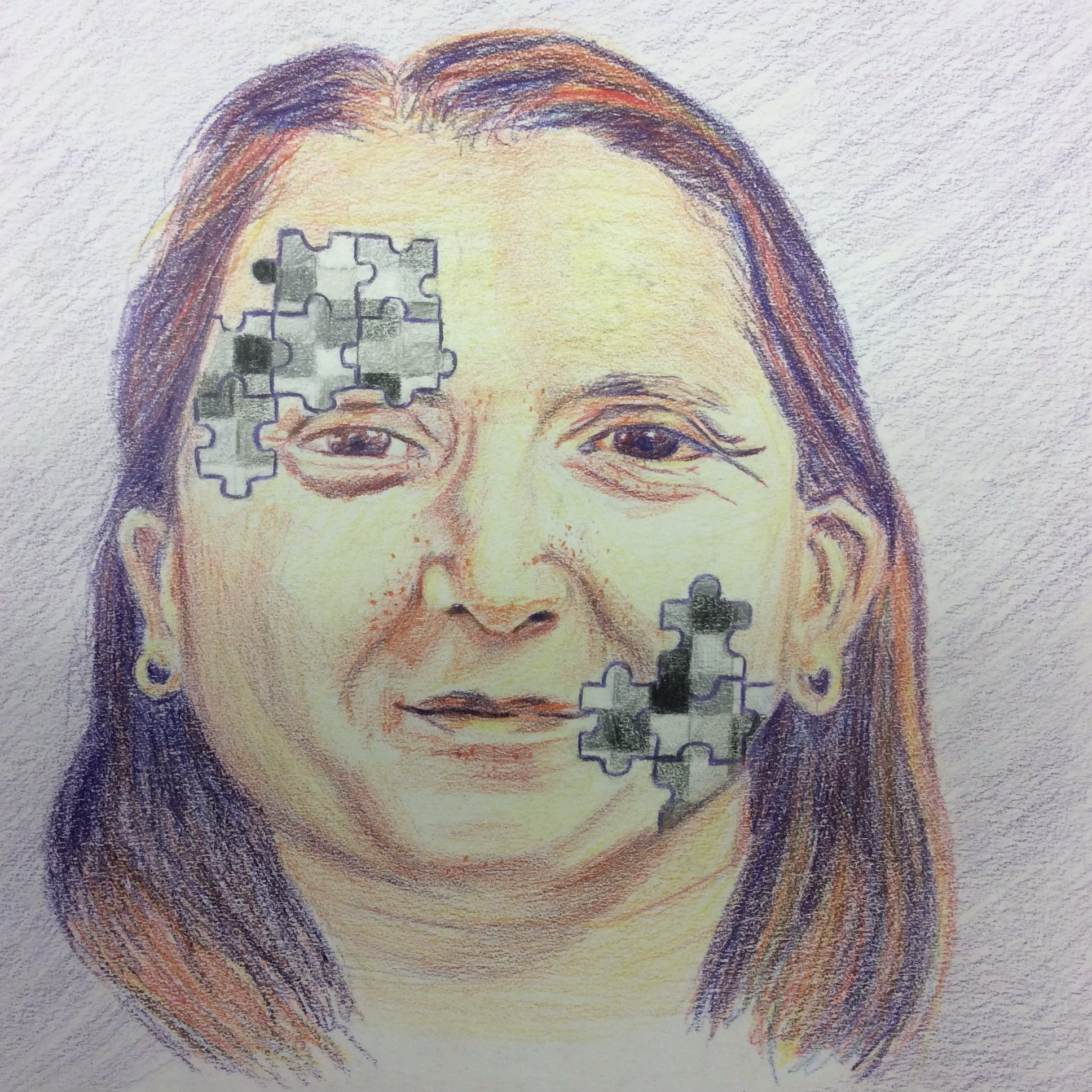
Death Is NOT an Option
I have four screws and a plate, I am titanium!
Want to feel my pulse?
By Vaishali Bipin Tajpuria
As I best remember, events
Where it all began…
In 1998, I graduated from Northern Illinois University and was subbing in the district I graduated from. Substitute teaching is not an insured position. For almost 2 years, my mom told me repeatedly to buy insurance to be on the safe side. I waved it off and didn't worry about it; I was in good health, active playing softball and tennis, and living my best life. My parents researched and sat me down to sign the forms and get health insurance. If they had not done this, I would have had a million dollars (no exaggeration) in medical bills and struggled to get insurance after all this. My parents saved me in more ways than one.
I always used to get massive headaches as a child. The doctors would say that it was a stress headache, sinus headache, or simply growing pains. I would take some Tylenol and go to sleep, and I would be fine. I had no idea that trouble was brewing in my head.
The first unmistakable sign of trouble…
I was a long-term substitute before I was hired at my school district in Illinois. I was going out with my friends like I was still in college, late nights, bars, socializing; I did not see the signs. I had several massive headaches in 1999; the ER at St Alexus Medical Center in Hoffman Estates, Illinois, said they were tension headaches and sinus headaches. I had finished the long-term substitute position for maternity leave and was getting ready for the next school year in my first teaching position. For the rest of the school year, I subbed all over the school, getting to know my new colleagues and the teacher side of the district. The headaches persisted, but they faded after a day. These headaches were blinding and intense, like none I had ever had before.
During one severe episode in 1999, I was at my friend Gayle's son's Bar Mitzvah. I was having a nice time, sitting with friends. All of a sudden, I had a blinding headache, like needles and swords were stabbing my brain. Lights hurt, I felt nauseous, and I could not move my neck. I struggled to drive home, and when I finally made it, I threw up with blood. I went to the ER again, and they once again said it was a tension headache. Well, at least they got one part of that right.
Later that summer, when I was washing my car, my parents asked me if I wanted to run an errand with them. I said yes and went up to change. As I was getting ready, a blinding headache hit me, and I lost all strength and mobility on my right side and fell to the floor. I couldn't move or say anything. A short time later, my mom came up to see what was taking me so long and found me lying on the floor, dazed and not saying anything; I could not move, talk, anything. My right side was like jello, flopping uncontrollably. I was mentally responding to my parents as they were frantically talking to me. My parents helped me to the car, and I was rushed to the ER again. This time, however, my symptoms were more severe; when I got to the hospital, they did a spinal tap. That spinal tap was not a tap, it was a STAB that hurt for days!
They found blood in the spinal fluid and determined that my brain was bleeding. St. Alexus, the hospital that was one of four in my health journey, determined that my brain was bleeding. Excessively. They were not equipped to handle this at the time. As a result, they prepared me to go to the University of Illinois Chicago, UIC, for treatment. I was loaded in the ambulance, and my family got in the car to meet me in the city. I remember that the EMT was looking at my ID and said, "we share the same birthday! Don't worry, we will take care of you." My aunt, Ajita Masi, was riding in the ambulance with me. My mom wanted her there since she has a medical background; she was a physician with her own clinic in India and would understand the terminology and relay it back to my parents.
Once I was at the hospital, they took me into surgery where they performed an embolization. They sent a catheter up from my groin and into my brain. Once it was in the appropriate area, glue was released to plug the bleeding arteries. The doctors at UIC determined that I would need three embolizations to plug the massive cluster near my corpus callosum near the left hemisphere. They said what I had was called an arterial venous malformation, an AVM. They described it as something that was not as intense as an aneurysm, but whoever said that probably never had a brain bleed. If anyone saw a copy of the first MRI's, they would wonder how a mass that large fit in my brain. I was in the hospital for more than a week. I slowly regained my mobility and then had no trouble walking.
UIC planned on three rounds of embolization to plug the arteries. After the second round, they stopped. This was because the doctor released too much glue and did not pull out the cathedral fast enough. It was glued to the artery in my brain, and they had to do an emergency craniotomy to get it out. I have a scar from my forehead to my ear and a gap in my skull where they went (you can actually feel my pulse in the gap; it's wild!) A piece of the needle remains in my head as they were unable to remove all of it without causing severe damage. They closed it all up with stitches and 15 staples.
So, the surgeon at UIC did not tell me when I needed to come back to get the staples removed from my head. The stitches had dissolved, but my skin was growing around the staples. My mom called Ajita Masi and asked her to remove it on my behalf. Since Masi is an experienced physician, I trust her completely, and I did not want to go to the city for them to yank some staples out of my head. So, one afternoon, we went to her house. Ajita Masi sent my parents, my cousin, and my uncle to my other aunt, Koki Masi's, house down the street so she could remove the staples. She sterilized everything, had a clean towel, gauze pads, rubbing alcohol, and other sterilizing solutions, and began pulling each of the staples from my head, cleaning after each one. It was well past time to remove the staples; the skin had begun to grow around them, making it a little harder to pull them out.
Hospital mishaps
So, I know no one is perfect and that mistakes happen, but… One time at UIC, I was woken up in the middle of the night or early in the morning for surgery. As far as I knew, I wasn't supposed to have any surgery. In my groggy state, I mentioned this to the person pushing my bed. The RN just kept wheeling me to surgery. Thankfully, he paused to really look at my chart and said, "OH! You are not getting your leg amputated." That would have been a disaster! The fact that the catheter was stuck in my head should not have happened, and now they wanted to cut my leg! The doctor was the best in the field for this brain-related issue. But I now have a small plate holding my skull together and a little piece of the needle still glued to my artery, but thankfully, I still have my leg. Despite all this, no additional damage was done.
Ultimately, the doctor at UIC said he could do no more. My parent was upset and furious at this medical mistake from a veteran. My parents considered suing him, but they later consulted a lawyer who said that he was near retirement and had many successful cases except for one, mine, so we would not likely win a lawsuit; after this, my parents searched for other doctors and hospitals that could help. We came across Northwestern Medical, also in Chicago, to see if they can help. The doctors we consulted there, Dr. Batjer and Dr. Getch, said that it was too risky and that if it were their daughter, they would simply carefully monitor me.
My brother, Ashish, had moved to San Fransisco 1999/2000, before I got sick. He had a friend who worked at the University of California, San Francisco (UCSF), as a radiologist. He told my brother that there was this new experimental treatment called gamma knife radiation to treat AVMs. This form of treatment would target the cluster of arteries and blast them with intense radiation. I agreed without even thinking twice. It is better to do something than nothing at all. So, I was part of a trial group; we flew in and stayed at my brother and sister-in-law's place.
The doctors put four titanium screws in my skull, all strategically placed to align where the halo would be placed. They then fit the halo on my head. It was official; I was holy! I lay on the bed, which looked like one used for MRIs, my head locked in place, and I was sent in the machine. The medical staff were fun and asked me what music I wanted to listen to and other things to put me at ease. I, in turn, asked them if I would glow in the dark and if I could put magnets on my head where the screws were. They sadly said no. What's the point of this if I can't have fun? They said titanium does not attract magnets, and airports and other places would be a nightmare if it did. But, on the plus side, you can still feel the screws in my skull.
I had two high-dosage rounds of radiation within a two-year time period. As one of their few test subjects, they called me regularly to see how I was feeling, check for side effects, and anything worth noting. I told them I was disappointed that I did not at least glow in the dark. After all this, I thought that I was fine now, I didn't get the splitting, excruciatingly painful headaches anymore. I was living life like a normal mid-twenty-year-old.
And Then I Died…
By 2005, I was engaged to a man from India. He was a family friend, and as I waited for him to come to America, I was living life in my townhouse, not far from my parents. I joined Lifetime Fitness, and my friend Nikki and I got a personal trainer there. I had gained weight from the medicine I was on, and I wanted to get back in shape. I believed that after the embolization and radiation, I was fine, and my AVM was under control.
In May, during one of my personal training sessions, I was not feeling well. Light hurt my eyes, I felt a bit nauseous and weak. I did not think too much of it since my head was not hurting as bad. I did what I could at the gym and went back to my place. I had a friend over, Allie, and I told her I was not feeling well and that I was going to lie down. When I woke up a few months later, confused, weak, disoriented, and not sure what had happened, I was in for a surprise.
I remember waking up one morning in unfamiliar surroundings. I realized I was in the hospital; I had no idea how I got there, why I was there, or what was wrong with me. I was at Northwestern Memorial Hospital, located in the heart of Chicago. My mom was there by my side, worried, praying, and sleep-deprived. I was out of consciousness, but when I was fully aware and awake, I was confused; why were my hair and nails so long?! I had trouble getting up; my right side was very weak, and I found it could not support me. The nurse had to help me get around, and I had to use a walker.
So, apparently, I saw God. At least, that is what I told my mom when I woke up. I don't remember it at all, but this is what my mom told me later on. It was early when I was in and out of consciousness, and everything was still fuzzy. I was not talking much and was pretty listless. I turned to my mom and said I saw God. She asked, "What were you both doing?" I said we were just sitting on the swing hanging out. She asked if He said anything. I said, "God said you better go. Your mom is calling you." And apparently, that's when I woke up.
I remained in the hospital for more than two months as I pieced myself together. My brain had a massive hemorrhage, and I had fallen into a coma. This happened in May of 2005; I was supposed to chaperone prom and march in graduation. I was more upset for missing all that than I was for being in the hospital! I was weak, and my senses were hypersensitive. Everything made me nauseous. Any smells, loud sounds, and my taste buds were all elevated, making me sick. I threw up constantly because of all this. My brother brought mints to the hospital, which I still use today (not the mints he bought, but mints in general) to control my stomach.
Dr. Das was on call when I was rushed to Northwestern in 2005 and airlifted; my family drove there and waited. Since my brain was bleeding heavily, he had to put a shunt in my head that led to my stomach to drain the blood out of my brain. Apparently, blood in blood vessels is ok, but blood flooding your brain is not. Who knew?
I remember bits and pieces of my stay there. I remember feeling gross, like I hadn't bathed in months. My amazing nurse got some of my other nurses who also took care of me, gave me a sponge bath, and shaved my very hairy legs and armpits. I felt like a new person, refreshed, clean, and more human.
I was taken to so many MRIs and fMRIs, x-rays, and CT scans. The worst of all the tests was the angiogram. My first angio was at UIC. They sent a catheter up from my groin to my brain. After they were done, the nurse would lean heavily on the wound to stop the bleeding; they could not use stitches for whatever reason. Then, I was not allowed to bend my legs for eight hours so they would clot. I had so many Anglos done from all the hospitals that they could no longer go in from the right side; they had to go from the left. We won't even talk about how I had the worst haircuts…
Dr. Getch, one of the doctors that had initially thought treating me would be too risky, was my doctor who completed the last rounds of treatment. He, in my opinion, will always be my savior. He decided to do very localized and highly intensive radiation to get rid of the remaining cluster in my brain. I will forever be grateful to Dr. Getch for curing and healing me. A few years later, I found out he had suddenly passed away from a massive heart attack at home, I was devastated. He was in his early 50's.
Through this journey, I was in four hospitals. St. Alexus, by my house, was the first one. I had gone to the emergency room there at least four times before they figured it out and sent me to UIC in 2000. UIC performed two of three embolizations to seal off the arteries. After the catheter got stuck in my head, they could do no more. From there, I went to UCSF for two rounds of Gamma Knife Radiation, which broke the fist-size cluster into three smaller pieces. It was later at Northwestern, where I spent most of my time.
Early on at Northwestern, after I woke up and was mostly aware, I had an adventure. One early morning, I was just sick of laying in the bed. I felt uncomfortable and wanted to get up. So, I climbed over the bed rail with my IV tubes and sat in the chair next to it. When my parents arrived, they were wondering how I had gotten there. They thought that the nurse helped me. No, I did it all by myself. That very day, they paid extra to have a nurse (baby) sit in my room at night until the morning shift came in. Well, no more adventures...
Because of this last bleed, my senses were a hot mess! My sense of smell and hearing were, and still are, hypersensitive. After I got back home, I could taste the frozen ginger and Serrano papers on the ice in the freezer at home. My mom had to cook when I was not home and air out the house. I would have to sit in the garage for a while to settle my stomach. I threw up often because of the smell and noise. The only thing that did not become super sensitive was my vision. My prescription nearly doubled, and my left eye shifted to the left. As a result, instead of seeing one image, I saw two. I later received prisms to help temporarily, and then Dr. Curnyn helped realign them through surgery, enabling me to wear contacts again. I think that this also impacted my balance, which is still wobbly
In the meantime, from 2005 to 2006, I was undergoing physical therapy to regain my ability to walk. By this time, school had started, and my friend and union president, John, made sure my job was secure. It was my tenure year when I got sick. John called my mom and asked if I could sign my contract for the position the following year. I was in no condition to do so; I had just scribbled on paper when my mom checked to see if I could sign my name. For the first semester, my classes were dispersed among my colleagues who taught the same classes. They took on an extra load to help me. When I returned the second semester, I was only there in the morning, then went to physical therapy.
Someone like me:
So, when I was in the ICU at Northwestern, there was also a young lady about my age who had the same thing happen to her. She had an AVM bleed near the same part of her brain. I am sure there were some differences, but for the most part, it was similar. Our parents comforted each other and shared their worries, heartache, and prayers. It helped my parents to have someone besides the doctors there to give support to those who were living the same nightmare. A few months after I was discharged for the last time, we found out that she had passed away. How did I survive while she did not? No one knows, but I did, and I am trying to make the most of my life.
My nurses, my angels:
I had the best nurses at UCSF and especially Northwestern. I had been in the hospital for some time. My hair, my nails, everything was long and disheveled. I felt like I had not bathed in such a long time. One afternoon, my nurse, along with a few others who had also cared for me, gave me a sponge bath, combed my hair, AND shaved my legs and armpits. I felt SO clean and refreshed. They did not have to do that for me, but they did when they were off the clock. I felt human and rejuvenated. They went above and beyond healthcare; that was the human touch.
My Friends, for life:
One of my best friends was having a baby. Payal's baby shower was at her house, and Michelle told me not to worry and that she would take me. So Michelle drove from Hoffman Estates to Downers Grove so I could be there. I had not been around many people after I got sick, and there weren't many people there. BUT…. It was sensory overload for me. I was bombarded by all the smells of food, baby gifts, people, and life. My stomach, as if it often did, got very upset. I ran (more like fast waddle) outside and threw up in her bushes. Michelle held my hair as I did this. She then went and got a pot full of water to wash that mess. This is just one example of how friends are family.
My mom is a force to be reckoned with
My parents are amazing people. Many would say parents would do anything for their son or daughter, and that is true, but no one fought like my parents. My parents are college-educated professionals. My dad was a civil engineer, and my mom was a CPA accountant. When I got sick the second time, my mom had already retired from her job as a state auditor and was working as a teacher's assistant at my old high school. My mom was by my side for as long as they would let her sit there. Her department chair told her to come on the last day of school so she could count her present and make sure she got paid. She was now officially retired.
There were days at Northwestern when I was not responsive. My mom would march to the nurse's station and demand to know why no one was checking on me, feeding me, or doing SOMETHING. My mom was a warrior on a mission; she would ask the doctors all kinds of questions and demand to know when the next test was scheduled and what the results were. She would make sure that if I did not eat, I would at least get Boost or Ensure to supplement me.
My dad had been working nights, but he got moved to days. He would come early in the morning with my mom, park in a safe spot, leave my mom in the car, and sit with me until he had to go to work. Then my mom would come up, and my dad would go. My dad would come straight from work, and my parents would stay until the hospital staff told them to leave. They often slept in the waiting room down the hall since we lived forty-five minutes away. Eventually, they discovered that the hospital had arranged accommodations for out-of-town families at a hotel down the street. They then stayed there for the most part.
In the meantime, my brother and sister-in-law moved from San Fransisco to be with us. They worked remotely in the waiting room and gave love and support to my parents. Having them there helped so much, another support in these uncertain times.
My buffet of drugs
I was on so many different medications throughout this entire time. My mom kept a schedule of what I had to take and when I needed it. She had set alarms and had me sleep in my parents' room so she could wake me up in the middle of the night to take whatever it was. I had medications for the side effects of of other medications. I was on salt pills because I was so severely sodium deficient since I was throwing up so often. I slowly got off the meds except the anti-seizure pills. I told my neurologist years later at St. Alexus that I did not need it at every appointment I had with her. Finally, she took me off the meds, but not before a promise. I pinky promised that I would tell her if I had the slightest symptom and immediately retake the medication if I needed to. I have not and will not have seizures again.
Old Lady in a Wheelchair and a Walker-2006
My balance and coordination were ruined. Whatever little athletic skills I had died with me. I could not ride a bike or play tennis, I mean I could barely walk! When I was admitted to Northwestern, my friends went to Lifetime Fitness to cancel my membership since I was not awake or capable of doing anything.
Physical therapy was the worst, not because it was hard, but because I did not do anything there. The first session was at a location that was far from our house. It was a large open space, and the physical therapist helped me to one spot to work on recognizing and identifying everyday items, coins, dollar bills, well-known pictures, and things like that. I could not identify anything. In my mind, I knew that the information was buried deep in my brain, but I couldn't reach it. I did not work on much else, and my mom felt that this place was not working and that they did not give me the attention I needed, and it was good far.
My mom found a PT place much closer to our home. They were a little bit better. My family would practice with me on everyday items to help me recognize these things. In the meantime, I used the walker to get around and the wheelchair for longer distances. This new location was ok. They did not help me with my skewed vision; I looked crosseyed, and instead of seeing one image, I saw two. They would put me on a treadmill and then help other patients. They took all the patients to the grocery store to see if we could find things on a list. This turned into a hot mess. Because of my bleed, my sense of smell was still very acute. I felt so sick near the meat department and other areas of the store. The PT made a note that I panicked. Well, you would, too, if you were hit with strong nauseating smells. When the PT saw that, they wrote down that I had an anxiety attack. They really needed to learn to recognize real anxiety and situational anxiety. Soon, I decided I did not want or need the walker, so I did not use it. I showed up one day to PT without it.
I finally got fed up with PT and not getting the help and support I needed, and I told them I was not coming back in December. They did not like that, but I was not progressing, so I did not see the point. Ultimately, I regained the majority of my physical skills; although I walk with a limp, I work regularly and make sure I am active. I still struggle on stairs. I can go up many flights, but it is coming down that I struggle. I may always have trouble with my balance, but I can walk unassisted.
The physical therapists had also told me that I could never go back to teaching. I was so devastated. I came home and cried to my parents. My mom said that she would help me with all the therapy I needed, and she did. She took me to the mall to help me navigate crowds, manage smells, and cope with sensory overload, and she kept challenging me with everything, offering so much encouragement. She was the best physical therapist. Between my mother and father, I was up and running!
However, the worst thing was that I could not read. Words were just shapes and designs. I was so heartbroken; I love to read, and I have a vast collection of books in my house. It was terrible to see letters and not know what they meant. How could I read, teach, and function? My family and friends took turns reading the latest Harry Potter book that came out. One of my brother's friends had bought me one of the books. It was one of the new releases; you can't start a series in the middle, so I bought the first two books and read them; when the Harry Potter books were delivered, I asked everyone to read them to me. My poor dad struggled the most in pronouncing the names! My friend Ashish and his wife, Nilam, had a much easier time. The strange thing is that all of a sudden, almost overnight, I was able to recognize money, read, count, and everything else.
I can see straight again
So, my brain bleed was so bad that both my eyes shifted, and my prescription nearly doubled. My left eye staryed to shake when I try to look up. I also had a hard time looking up, I would unknowingly lift my head. The physical therapists didn't even work on that. My balance was terrible, so they put me on a treadmill everyday. If they had worked on my eyes, that may have helped my balance. My parents found a place to give me vision therapy, but that was later.
In the meantime, my dad got some bug, maybe meningitis, but I am not sure. His eye skewed as a result; it looked cross-eyed. He told me that he really did not understand my complaint until that point. When you walk in someone else's shoes... He came across a doctor's office that used prisms on glasses, so that when a person looks through them, it aligns the vision into monocular vision. I went to the doctor and had two prisms put on my glasses, one on each lens. This made a huge difference! I was able to see straight!
Within the same clinic was Dr. Curnyn, my other favorite doctor. I met with her for a consultation, and she said she could help me. I went in for surgery, and she cut the muscles in both eyes, realigned them, and then stitched them in place. I was SO happy, I could wear contacts again, and I could see straight! My eyes still shift on occasion, especially when I am tired, and I wore contacts again for several years. But now I have bifocals, and my eyes dry out quickly, so I think I'm on my last batch of contacts. Oh well, at least I can see.
My parents, my saviors
As I said earlier, in 1999, I was substitute teaching and applying to what felt like a million schools. I subbed almost exclusively in the district where I graduated. I often ran into my former teachers when I was at my old high school and my friends' siblings. It was like coming home. After doing a long term sub position for a teacher on maternity leave, I was ultimately hired at one of the schools. It was at the end of that school year when I was supposed to do another long-term sub when I was admitted into St. Alexus. The school wanted me there again since I was a new hire for the following year.
After I was first diagnosed at UIC, my dad's job moved him to working days. When I was in the last hospital, Northwestern, my parents stayed the night in the waiting room every night for over a week. The hospital had rooms for out-of-town patients' families. Even though we were technically not that far from the city, it was hard for them to drive more than 45 minutes each way to come see me. That reduced a significant amount of stress and tension. My aunts would go to our house, drop off food, and my parents would come home once a week to do laundry and pick up food, then head back.
I had moved back in with my parents after selling my townhouse. After I was released from Northwestern in the fall of 2005, I was on so many medications that I had to take them at all hours of the day and night. My mom had a schedule of what I had to take and when. She woke up in the middle of the night to wake me up to take my medication. I had trouble standing and showering. So my parents put a stool in their shower. My mom would sit outside waiting for me as I showered, then help me out, dry off, and get dressed.
My mom retired and was by my side 24/7. My dad still worked and would come straight to the hospital, and they would both stay until the nurses made them leave. My mom fought for me with everyone. "My daughter has not eaten anything! Did you even bother to give her Boost?" "Why haven't you given her any pain medication? Her headache is so unbearable she is pulling at her hair!" She fought with the doctors, nurses, insurance, and physical therapists; if they were in the room and caring for me, they suffered from her wrath if I was struggling. My dad quietly stood by my side and tried to keep my mom calm. My dad's work was so understanding and flexible that they covered for him whenever he needed time to be with us without docking his pay. Without either of my parents, I would not be here.
During my recovery, I had days where I was struggling and just tired of trying. My mom heard about this author, Dr. Wayne Dyer. She went to the library and checked out several of his audiobooks. I would listen to it, not paying much attention. Eventually, some of the things he said clicked with me. It affirmed my thought that everything would be alright. I eventually wrote him a letter, never expecting he would get it, let alone respond. Almost a year later, I received a package from Hawaii. It was from Dr. Dyer. The package contained a handwritten letter, several of his books, a dvd, and some other materials. I still have everything he sent me.
Ashish and Nilam come home
My brother and sister-in-law had been living in San Fransisco for several years. In 2005, they moved in with us. They worked remotely as much as they could. One evening, after I had been home for over a month, Ashish said, "Guess what?" I said, "You are moving back to Chicago!" Shocked, he asked, "How did you know?!?
"Special powers." Was my reply. They lived in Chicago for several years, even after I got better. I will never forget that they uprooted their life to be with us, support us, help us, and simply be there.
We won't talk about how I got married
I have visited India many times. I had met someone there, a family friend. We hit it off and got to know each other. He asked; I said yes. I got the immigration process started. Then I died and went into a coma. My family gave him regular updates. He came to the U.S., and we got married. He experienced all that America had to offer, and he became a different man than the one I married, with a different agenda. I slowly realized this, but I still recovered and tried. It became painfully clear we wanted different things. We divorced, and my health instantly improved. I never looked back.
I visited Northwestern- to say thank you
For the longest time, as my health improved, I wanted to visit Northwestern to thank whoever was there at the time. My parents and I went on an afternoon visit in 2008. So many people recognized me, I was shocked! The doctor who was there when the first helicopter was admitted into the ICU was present. He looked shocked. Looking at my mom, he pointed to me, then he pointed to himself. My mom smiled and nodded. He asked about my recovery and how I was doing. He said that I was not expected to survive, let alone get a Master's in Psychology. He wanted to take a picture of me with my parents outside of the room I was in. He wanted to show a scan of my brain and asked the students what they thought the diagnosis was, then show the pictures of us. This a part of medicine that has no clear explanation; why do some people survive and recover while others do not?
There was a nurse who was there. She said that there was a time when she was taking me for a test, and for whatever reason, I said, "People are stupid." Then said nothing. I must have been annoyed about something! Everyone at this hospital was awesome. It felt great to thank everyone, share how I was doing, and express my joy and recovery. They were surprised that I defied the odds, lived, became functional, went back to teaching, and earned another degree.
We run into Dr.Das at Millennium Park
Anushka Shankar was having a free concert at Millennium Park in 2007. My parents, Ashish, Nilam, and I went. We were sitting and socializing before the concert when, all of a sudden, a familiar person sat right in front of us. "Dr. Das!!" My mom exclaimed. The attending doctor from Northwestern, the one who put the shunt in my brain to redirect the blood, was sitting right there! My mom asked what he was doing there, and he said his wife was working there. We did not ask in what capacity; we were just star-struck and so grateful. He was happy to see my progress and hear what I was doing. Everything was coming full circle.
I get another degree!
In June 2013, I earned my Master of Arts degree in Psychology from National-Louis University in Chicago. I had started the degree in 2009/2010. I quite the program when my district offered a doctoral cohort through Illinois State University at one of the high schools in the district. The instructor would come from Normal, Illinois, once a week to teach the ten of us. This was an educational doctorate, not a Ph.D. like I had wanted, but I didn't care; I just wanted to be Dr. Taj. The instructor informed us, partly during the first semester, that we had to take the GRE and do our best but not worry about the results. I bought a GRE review book and studied. I did not do well on this test. The instructor said not to worry, take the test, and see if we do better. I paid another $1,000 for the test, studied, and took it again. I did not do much better. I was told that I did not score high enough and I could not continue with the program.
I was so upset after a year in this program I was told I could not continue. My parents consoled me as I cried over a degree; they told me to go back and finish my psych master's. I saw my department chair that week and told him as well. He said what my parents said, but more aggressively, "GOOD! You do not need that BS degree! Get that Psych Masters; that is much more useful for you." So, I completed it and built a stronger foundation for my AP Psych classes. I learned more from this degree than any other; I graduated at the top of my program with a 3.8 out of 4.0 GPA.
I volunteer
Around 2014 (I do not remember exactly which year), I returned to St. Alexius, the first hospital where I was admitted, to volunteer. If Northwestern wasn't so far (downtown Chicago), I would have volunteered there, but St. Alexus was just as important. Considering that this was the first of four, the one that identified my health issue, and the one that started my healing journey, I was more than happy to volunteer there.
I worked from the desk, looking up patients' room numbers and essentially serving as the "Walmart greeter." The hospital had many volunteers, and on weekends, they were mostly high school students fulfilling their volunteer hours to meet graduation requirements. Most of them were from the high school I graduated from and not from the school I taught at. However, soon, the kids found out that I was a teacher, and then they wondered why I would volunteer. I would say, "I am doing community service…" They would shockingly ask what I did, and my response was, "Nothing, I want to volunteer." They did not need to know the real reason, but it was fun throwing them off!
Eventually, one of my students, who was actually in my class at the time, volunteered at the same time. The poor girl did not know how to react or what to say. I just let her figure it out. She never mentioned it to me in school, but I know her friends knew.
On one occasion, I saw some people from my school and department at the hospital; they were surprised to see me but understood why I was there. It was seeing people from the community, and it was especially fun to see their reactions. Most people volunteering were either high school students or retirees, which surprised many. I just felt fulfilled being there and giving back.
My long road to recovering (still)
The hardest part for me was not being able to read. I love reading and am so lucky that my family and friends would read the Harry Potter books to me. Michelle would come over and play cards with me; my dad always held my hands as I struggled to walk. Everyone in my life did their best to help me every step of the way. However, if it weren't for my mom and dad, I wouldn't be here.
I still have a limp when I walk, and I struggle going downstairs, especially when the stairs are more narrow and steep. My senses are still ultra-sensitive, but not as bad as before. There was a point where my nausea was so bad I needed ice to help get some hydration. The ice tasted like ginger and Serrano peppers (we blend and freeze them for use when cooking). I immediately tasted it on the ice and threw up. My parents cleaned the entire freezer so that I could manage to eat some ice without having to go out and buy it. I still get nauseous when exposed to strong smells, such as perfume, food, hand sanitizer, or body odor, among other things. Mints usually help with that, something Ashish gave me when I was in the hospital.
I have been a member of various gyms over the years. Lifetime was not for me. It was big with people on the same machine, reluctant to let you get a set in, with few classes, all of which cost extra. Even the classes were not convenient, too early or too late. The park district gyms were nice, but some limited machines and classes did not fit my schedule. Bally/LA Fitness offered classes, but they were always overcrowded and received little attention from the instructors. Many of the machines were damaged or in poor condition and were not very clean. Then my brother told me about Orangetheory Fitness, and that made all the difference for me. I go to Orangetheory as often as I can. The coaches are aware that I have balance difficulties. They notice even the slightest improvement and cheer me on. I have improved significantly thanks to this place, the variety of exercises, the encouragement, and the people there, which have all made a difference. I may always have a limp, and the stairs may always be a challenge, but it will be minimal as I work on this, especially with the guidance of the staff at OTF.
When the doctor first told me I had an AVM, he said that having children was very dangerous for me. He highly recommended I not conceive a child. That broke my heart; I have always wanted children, but what is the point of bearing a child if I do not survive or am left debilitated because of it? I beat the odds; I lived when I should not have. I walked when they said I would not. I went back to teach when they told me to look for something else. I am getting my dream degree, a doctorate. Tell me what I can't do, and watch me prove you wrong.
Timeline of Events:
1999/2000- Begin teaching at Township High School District 211 and first of several bleeds, go to ER at St. Alexus Hospital several times
May 2000- major bleed, loss of mobility on the right side, spinal tap, official diagnosis of Arterial Venus Malformation (AVM)
June 2000- Begin embolization treatment at the University of Illinois at Chicago (UIC)
Second treatment: catheter stuck in an artery near the right temple- emergency craniotomy to remove the catheter, the small piece still in the artery.
2002- Graduate from Roosevelt University Masters in Arts Teacher Leadership (MATL)
2004- buy a townhouse, join Lifetime Fitness, and get a personal trainer with Nikki. Get engaged
May 2005- Go to personal trainer not feeling well. Come back from class, lay down. I woke up in the hospital two months later. MISS PROM AND GRADUATION,
Physical therapy everyday, need walker and wheelchair. All senses heightened, smell and hearing are especially sensitive, causes nausea and vomiting. Physical therapist not helping with balance or other areas, quite PT in November to recover and work on balance and coordination at home.
January 2006- return to work part-time, without walker or wheelchair
February 2006- get married
Fall 2007 Return to work full-time. Get unmarried
2007- Join Prairie Stone (Hoffman Estates Park District. Get unmarried.
2008- Join Bally/LA Fitness get a personal trainer
2011- Graduate from National-Lous University in Masters in Psychology
2014ish- I go back to St. Alexus and volunteer
2018- Join Orange Theory Fitness
2020- Move to Dallas area
Teach at Irving ISD at Singley Collegiate Academy and Dallas College
2021- Begin classes for doctorate
Acknowledgements:
To everyone who helped me try to put some of the pieces back together, physically as well as memory.
Special things to Kathleen Basoco, without whom this would still be a fleeting thought.
ALL of the medical professionals who took care of me.
A copy of what my MRI might have looked like. I no longer have the MRI films. The cluster was much bigger in my brain.
