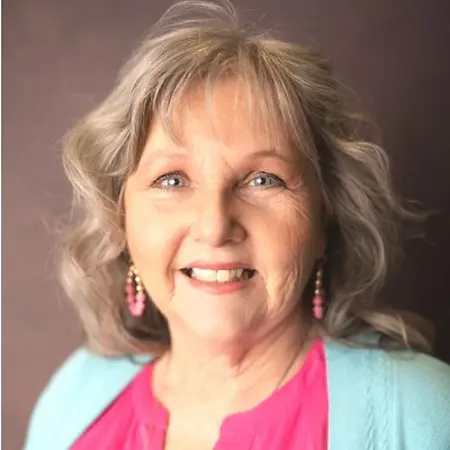
Her Story
About Wendy
As a military spouse, I was plopped into the middle of a military life I didn't know anything about, and I saw a significant need for change in helping spouses and veterans get employment. That experience jump-started me in looking at the way people communicate. The military allowed me to go back to college, and I started to really dig into how people communicate, how people don't communicate, and how people don't hear. I fell in love with the art of communication and how significantly important it is to so many things. I believe I see it and say it different - I can affect change differently in my own business than I could in somebody else's. In all the jobs I had working for someone else, I could see the implementation of what I was thinking and learning, but I couldn't use it. I had to stick to their direction or format, and I found that incredibly claustrophobic. So I decided if I don't like the way someone else is doing it, or I just want to make it a better fit for people, then I need to do it on my own and make the difference by building this consulting company. My business model is established so that companies or groups that can afford my services pay me, which allows me to do the work for people who can't afford it - like an unemployed mom with 3 kids who needs a job but can't write a resume. I want people that can afford me to pay me so I can do the work for people that can't. My goal is to work with city and state agencies, holding employment classes at local libraries where anybody can come and get their questions answered face-to-face with someone who will get to know them and help them step-by-step.
Her Interview
Ten minutes with Wendy
01What’s the best career advice you’ve ever received?
Nothing fuels you like anger sometimes. The piece of advice that has fueled me actually came from a manager when I was volunteering at Army Community Services. I had put in about 1,000 hours in a year, basically a full-time job as a volunteer, teaching and facilitating. When a job opened in that agency and I said I wanted to apply, the manager looked at me and said, 'Nope, you will never get a job in that agency. You don't have a college degree. You just won't - we won't even look at you.' I was like, wow, okay. The next day, I literally marched up the hill to the community college - I was 47, 48 - and enrolled. That's where I found my passion for communication, and it just snowballed from there. That negative piece of advice was 'hey, you're never going to get anywhere if you don't have college,' and I was like, well, whatever, that can change. It wasn't completely wrong, but it motivated me. Sometimes it's not always the person who goes 'hey, go get them' - it's the person that says 'you're never gonna do anything without doing this.' I found a complete passion for the communication field. That was the caveat that launched everything. I met a really incredible public speaker professor in junior college who started to kind of hone in on what I was good at, and that's where the idea for Speaking Up with Wendy Baird-Packard came.
02What advice would you give to young women entering your industry?
The bottom line that I would provide to people - and it's so cliche, I almost hate to say it - is you've got to just keep going and believe in yourself. Not everybody sees my vision. Not everybody sees what I'm doing. I don't have any idea if it's going to succeed on the large scale that I want it to, but I need to keep going. Because when you stop, you don't keep going. It is taking the next step, and knowing that the next step may not be easy. There are decisions to be made with every step, but you keep working through the day-to-day work of it. Every day, be intentional. Every day, I put something into my business. It's intentional. Even the process of deciding what your company's gonna look like - sole proprietor, LLC, C-Corp - that's excruciating, especially if you're a creative. If you're a creative and a talker like me, getting into the nuts and bolts of things is difficult, and you don't have the money to have someone do it for you, you gotta do it. So every day, you just keep going and conquer those little battles every day, and eventually you're making progress. Day-to-day intentionality is what will help you succeed. I listened to a lot of podcasts about women entrepreneurs, and what has given me the courage to keep going is every single one says 'yeah, nobody really thought I could do it, and I failed like 4 times, but then I figured it out and sold my company for a million dollars.' Just keep myself informed and put people and information around me that keeps me encouraged.
03What are the biggest challenges or opportunities in your field right now?
The number one challenge, I think, for a woman and an entrepreneur is themselves - is doubt. There's imposter syndrome. I'm like, what am I doing? Nobody's gonna pay attention to me? What am I thinking? And then I get a client that calls back from 5 years ago and is like, oh my gosh, Wendy, you helped me so much. You're your own worst critic. That is probably the biggest challenge. My second challenge is, once everything is in place, creating the clientele. That's going to be getting out there and talking to people, and I'm not afraid of that, it's just you don't have a time frame on that. As an entrepreneur, you want to make money, but that's not always immediate. So the secondary challenge is how do I fund a business that's not funding itself yet - looking for those creative outlets and free outlets where I can still promote the business without having to put a lot of cash into the front end of it. My business model is established so that a client will pay me, and then I provide the service. Without investors, because there's not going to be an investor in a small company, there's a lot of things I have to put up front - the money for the legal, to get all the contracts in place. The goal is to do government contracts, so getting the verbiage and all of that done, the LLC. So the short answer is: one, myself, and remembering that I can do this, I am effective, I have had success, I do have the knowledge, I am putting in the work. And the secondary is kind of unforeseen funding - figuring out how to get everything into place to legally protect yourself and to promote yourself properly without any funding, being creative on that. And then I gotta get clientele.
04What values are most important to you in your work and personal life?
It's so important to me that my client feels understood and heard. There is a spirituality that, for me, as a Christian woman, it is important that I represent myself ethically and morally according to the guidelines of my spiritual beliefs. I'm very dedicated to my clients - they mean more to me than anything. The work means more to me than the money, and that's always been kind of a thing for me. There's a lot of coaching and consulting that's like 'go get those clients for that big ticket and charge them a lot of money,' and I've never felt that was right, because what are you there for - that person or that money? Therefore, my business model has been very important for me - I will attract companies or groups that can afford my services without taxing the independent person that gets the service. If I can secure a government contract as a communications specialist or facilitator or team builder, then I can do the work that it's hard to charge for. I don't want to charge an unemployed mom who's got 3 kids that can't afford a consultant but needs a job and can't write a resume $100 an hour. I want to do that for free for her. The work is a value to me. I want people that can afford me to pay me so I can do the work for people that can't. That's been really important to me and has been sort of the crux of starting the business.
Join Influential Women and start making an impact. Register now.