
Iris Waichler Never Stopped Showing Up
Over 40 years as a licensed clinical social worker. Four nonfiction books. Twelve major awards. A new book released in 2026 on first responder trauma. At 72, the healthcare advocate and author is still writing, still reaching, and still refusing to let people face a crisis alone.
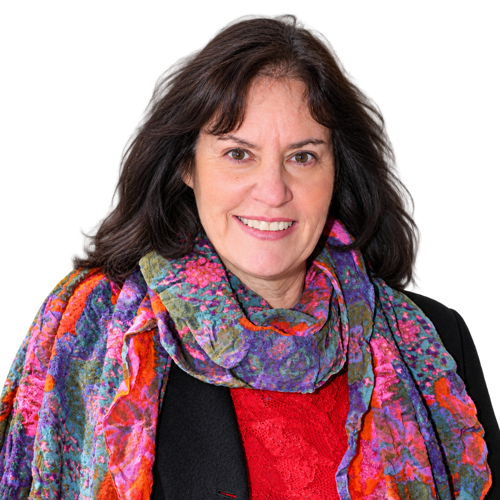
There is a version of the healthcare professional that the system trained us to expect. She sits behind a clinical desk. She speaks in diagnoses. She keeps a careful distance from the people she serves. Iris Waichler built a career of more than four decades by refusing that distance entirely, working from a conviction that people facing catastrophic illness, injury, or loss need more than a referral - they need someone who will meet them where they are, tell them what is normal, and hand them the tools to move forward.
The record built on that conviction is substantial. Waichler worked as a licensed clinical social worker for over 40 years, serving patients on physical medicine and rehabilitation units, in emergency rooms, and across four different hospitals. She rose to director of social work at a sister hospital. She trained volunteer teams to extend coverage in emergency rooms. She counseled people living through infertility, head injuries, burns, amputations, and strokes - populations that most of the healthcare system treats as clinical problems to be solved rather than human beings in crisis.
She also became a 12-time award-winning author of four nonfiction books, contributed hundreds of articles to healthcare publications, and has been featured in The New York Times, Good Housekeeping, and Next Avenue Magazine. Her third book, Role Reversal: How to Take Care of Yourself and Your Aging Parents, won eight major book awards on its own. Her newest book, Burned Out, was released in August 2026.
A calling that started near a hospital
Waichler grew up near a hospital and told herself as a teenager that she would work there one day. That promise to herself held. She began her career working with adolescents in a residential treatment center and with families accused of child abuse - cases where her team's ability to effect change determined whether children stayed in their homes. She earned her master's degree in social work in part by designing a family program at a mental health center in Cedar Rapids, Iowa, at a time when no such program existed and when the idea that family should be included in a patient's healing was not yet standard practice.
When she moved into hospital social work, the work deepened. She joined a multidisciplinary team on a physical medicine and rehabilitation unit, working alongside physicians, nurses, and therapists to give patients and their families something the clinical chart could not supply: hope, context, and a sense that what they were feeling was not unusual but entirely human. She was later promoted to director of social work at a sister hospital, a role that expanded her reach and her responsibility for the people in her care.
The moment that crystallized her purpose came when she saw a family in tears outside a patient's room. The patient was receiving a simple EKG. A resident had not explained the procedure, and the family believed their loved one was dying. That image - of preventable fear, of people left without information at the moment they needed it most - stayed with her and shaped everything that followed.
From the bedside to the bookshelf
Waichler's decision to write was not a pivot away from her clinical work - it was an extension of it. Her first book, Patient Power: How to Have a Say in Your Hospital Stay, was written in 1988, driven by the same impulse that had guided her in the hospital: give people the information they need to advocate for themselves. She had seen what happened when patients and families did not know what questions to ask, and she intended to fix that.
Three more books followed, each grounded in the areas where she had spent her professional life: infertility, aging, caregiving, and trauma. Her third book, Role Reversal, drew on both her professional expertise and her personal experience - she had helped her own parents and two friends die with dignity, and had watched her parents model caregiving throughout her childhood, when three grandparents, an uncle, and a cousin all lived in the family home. That blend of the personal and the professional, she has said, made the message more compelling and more powerful.
The awards followed. Twelve major book awards across her body of work, including the Living Now Silver Award, the Book Excellence Award, and recognition from the Florida Book Festival and the Hollywood Book Festival. She has described getting published as no easy accomplishment, and she is right - but the recognition that came with it confirmed that the audience she was writing for was real, large, and underserved.
The work that would not wait
Waichler's newest book, Burned Out, released in August 2026, turns her lens toward first responders and their family members. She interviewed them about the trauma they face on the job and how it radiates outward to everyone around them. It is a subject that sits at the intersection of every theme she has spent a career exploring: crisis, resilience, the cost of caring for others, and the systems - or lack of them - that exist to care for the caregivers.
The book arrives as she continues to write hundreds of articles on healthcare topics including infertility, aging, caregiving, and trauma, and as she actively pursues more podcasts, radio appearances, and television spots to bring her expertise to a wider audience. She spent three years writing for ChoosingTherapy.com, covering medical and psychological health crises for a platform built to connect people with mental health resources. The goal has always been the same: reach the people who need this information before they are left standing in a hospital hallway, terrified and alone.
Leading by example, teaching by presence
When Waichler led teams at the hospital, her philosophy was to collaborate and teach by example. She exposed her team members to as many healthcare diagnoses as possible, had them observe her directly with patients and families, and created a safe space for them to discuss fears, concerns, and decisions they second-guessed. She was deliberately nonjudgmental - because this type of work, she has noted, can be so subjective - and she made sure her team members knew they were not alone by connecting them with peers in similar positions.
She also gave them access to workshops and lectures, believing that learning from experts across many fields was part of becoming excellent at this one. The colleagues she built those relationships with more than 50 years ago remain her friends today. That is not a footnote to her leadership philosophy - it is the proof of it.
Her definition of success reflects the same values. Success, she has said, is creating goals and achieving them, being respected by colleagues and the people you work with, and remaining open to learning from others. It also means creating new challenges that may not seem achievable and trying to meet them anyway.
Still not done
At 72, Waichler is clear about where she stands. She is not ready to retire. She wants to do more podcasts, write more articles, and pursue radio and television opportunities to share her knowledge and experience in aging, caregiving, infertility, and trauma. She posts regularly on Facebook and X to continue educating and supporting the people who follow her work. She is actively marketing her books to reach a wider audience that can benefit from them.
The advice she would give her younger self is the advice she lives by now: believe in yourself, and do not be afraid to begin a new career later in life. She became an author without imagining she would, and she has never stopped finding it remarkable that something so unexpected became such an intricate part of her career and her body of work.
The through line across more than four decades is not a credential or an award, though she has earned both in abundance. It is the conviction she formed as a teenager growing up near a hospital and never let go of: that people in crisis deserve someone who will show up, tell them the truth, and help them find a way forward. She has been that person, in hospital rooms and in print, for over 40 years. She is not finished yet.
This profile is reported from Iris Waichler's professional biography and submitted source material. Nothing in this article is presented as a direct quotation unless it appears in quotation marks with attribution.