
On the record · Natasha Booker
From Clinical Healing to Transformational Coaching for Black Women
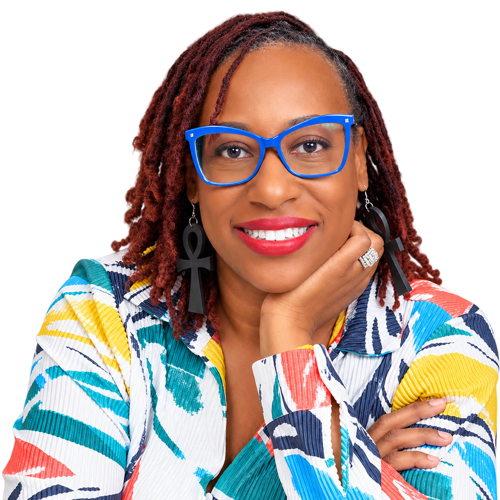
I'm Dr. Natasha Booker, a Licensed Clinical Social Worker, EMDR-trained trauma therapist, and life and business coach. My life's mission is to uplift, empower, and encourage Black women to become the fullest versions of themselves. I work with high-achieving Black women. My impact shows up as women who stop overthinking and start building, who release the "Strong Black Woman" weight they've carried for years, and who finally give themselves permission to heal, rest, and thrive.

But the achievement that matters most to me is seeing the women I've worked with heal, reclaim their voices, and step boldly into their purpose. Their transformation is my proudest accomplishment.
You began as a clinical social worker. What led you to build Pathways to Wellness as both a therapy and coaching practice?
A Calling to Serve That Grew Beyond the Therapy Room
My journey began with a calling to serve. I earned my Master of Social Work from Fordham University and began my career working in urban communities, where I saw firsthand how trauma, stress, and generational pain shaped the lives of Black women and families. I met women who were holding everything together for everyone else while quietly falling apart inside, and I knew I wanted to be part of their healing.
As I grew in my clinical work, I specialized in EMDR and trauma therapy because I wanted to offer healing that went deeper than coping. I continued my education at Walden University, earning my Master of Science and my PhD, which deepened both my expertise and my commitment to this work.
In 2018, I took a leap of faith and opened Heart to Heart Counseling. It was my way of creating a space where women could feel safe, seen, and understood. Over time, I realized many of my clients weren't just looking to heal; they were ready to grow, lead, and build. That led me to expand into Pathways to Wellness in 2020, bringing therapy and coaching together so women could move from healing into purpose. Today, more than 15 years into this work, that same calling to serve still guides everything I do
What did becoming a business owner teach you that your clinical training could not?
Trial, Error, and Growing Through Crisis
One of my biggest challenges was learning to become a business owner. Social work school prepared me to be a skilled clinician, but it didn't teach me how to market, price my services, manage finances, or build systems. When I opened Heart to Heart Counseling, I had to learn much of that through trial and error, and there were moments I questioned whether I was cut out for entrepreneurship. Those lessons became the foundation for the work I do now, helping other women turn their gifts into businesses without having to struggle the way I did.
Another defining season was expanding into Pathways to Wellness in 2020. The world was facing a pandemic, uncertainty was everywhere, and many people were pulling back. Choosing to grow during that time required faith, courage, and a willingness to adapt quickly as the way we delivered care changed almost overnight. That season taught me that crisis can also be a catalyst, and that the need for healing doesn't pause when life gets hard.
Another defining season was expanding into Pathways to Wellness in 2020. The world was facing a pandemic, uncertainty was everywhere, and many people were pulling back. Choosing to grow during that time required faith, courage, and a willingness to adapt quickly as the way we delivered care changed almost overnight. That season taught me that crisis can also be a catalyst, and that the need for healing doesn't pause when life gets hard.
How have you worked to make conversations about mental health more accessible in communities where therapy carries stigma?
Meeting People Where They Already Feel Safe
I've also had to push past the stigma surrounding mental health in many of the communities I serve, where therapy has often been viewed with suspicion or seen as something "not for us." Rather than waiting for people to come to me, I went to them, partnering with churches, nonprofits, and community organizations to meet people where they already felt safe. Overcoming that barrier has been some of the most meaningful work of my career.
Some of my most rewarding work has come through partnerships with community nonprofits and religious organizations. Collaborating with these groups has allowed me to bring mental health awareness, healing, and wellness resources directly into the spaces where people already gather and feel safe, especially in communities where therapy still carries stigma. Working alongside churches and faith leaders has been especially meaningful, because it honors the role faith plays in so many of our lives while opening the door to conversations about emotional healing that have too often gone unspoken.
Some of my most rewarding work has come through partnerships with community nonprofits and religious organizations. Collaborating with these groups has allowed me to bring mental health awareness, healing, and wellness resources directly into the spaces where people already gather and feel safe, especially in communities where therapy still carries stigma. Working alongside churches and faith leaders has been especially meaningful, because it honors the role faith plays in so many of our lives while opening the door to conversations about emotional healing that have too often gone unspoken.
What does trauma-informed leadership look like in the way you lead people and mentor other women?
Leadership Rooted in Safety, Service, and Seeing the Whole Person
My approach to leadership is rooted in who I am as a clinician: trauma-informed, relational, and purpose-driven. I believe people do their best work when they feel safe, seen, and valued, so I lead by creating environments where honesty is welcomed, mistakes become learning moments, and every person understands how their contribution connects to the bigger mission. Leadership, for me, isn't about control; it's about service, clarity, and helping others step into their own gifts.
Great leaders listen, and they see people for who they are, not just the job they do. Average leaders focus on tasks, titles, and output. They see a role to be filled or a deadline to be met. Great leaders see the whole person: their gifts, their story, their potential, and even the challenges they may be quietly carrying. When people feel truly seen, they bring their best selves to the work.
My number one piece of advice is to seek mentorship. So many talented people try to figure everything out on their own, believing they have to prove they can do it alone. I understand that instinct, especially for Black women who have often been taught that strength means carrying everything by ourselves. But the truth is, no one builds anything meaningful alone. A mentor can help you see your blind spots, avoid costly mistakes, and move faster toward your goals because they've already walked the road you're on.
What would you tell a woman who is accomplished but still feels she must carry everything alone?
You Don't Need One More Permission Slip to Step Into Your Purpose
I would tell my younger self: you don't have to carry it all alone. For so long, I believed that strength meant pushing through, handling everything by myself, and never letting anyone see me struggle. I would remind her that asking for help is not weakness, that rest is not laziness, and that healing is not optional. It's the foundation for everything she's going to build.
I would also tell her to trust her gift sooner. She will spend time second-guessing herself, waiting until she feels "ready," and wondering whether she's qualified enough to lead. I'd tell her that the calling on her life is real, that her voice matters, and that she doesn't need one more certification or permission slip to step into her purpose. And I'd remind her to know her worth and charge for it, because her gifts have value, and giving everything away for free doesn't serve her or the people she's called to help.
Finally, I would tell her to surround herself with mentors and people who see her potential, and to stay close to her faith, because every setback, every closed door, and every season of waiting is preparing her for what's ahead. She is here on purpose, for a purpose, and one day she'll help thousands of women believe the same about themselves.
What are you building next, and what impact do you hope it will have?
A Full Ecosystem From Healing to Thriving
My vision for the next season is to expand my impact beyond one-on-one work so that more Black women can access healing, clarity, and purpose, no matter where they are in their journey. My focus is on growing Pathways to Wellness into a full ecosystem that meets women at every stage, from healing to building to thriving.
On the clinical side, I'm developing EMDR intensives that offer concentrated, deeper healing in a shorter time frame, including Permission to Grieve, an EMDR grief and loss intensive for women who have been strong for everyone else and never had space to process their own loss. Intensives allow women who don't want years of weekly therapy to experience meaningful breakthroughs, and I'm excited to bring this model to the women I serve.
What motivates me most is the need to see others win. Every time a woman I've worked with breaks through a barrier, heals a wound she's carried for years, or finally steps into her purpose, I'm reminded why I do this work. Her win becomes fuel for me to keep learning, keep stretching, and keep becoming better, because I know the more I grow, the more I have to pour into others.
The last word
Closing Perspective
Dr. Natasha Booker's work sits at the intersection of clinical expertise, faith, and business. Through Pathways to Wellness, she brings healing, clarity, and purpose to Black women at every stage of their journey, guided by the belief that the more she grows, the more she has to pour into others.
Connect with Natasha