A Brush with Tinnitus: Listening Through Beethoven’s Ears
A pianist's journey through tinnitus and hyperacusis reveals new meaning in Beethoven's struggle with hearing loss.
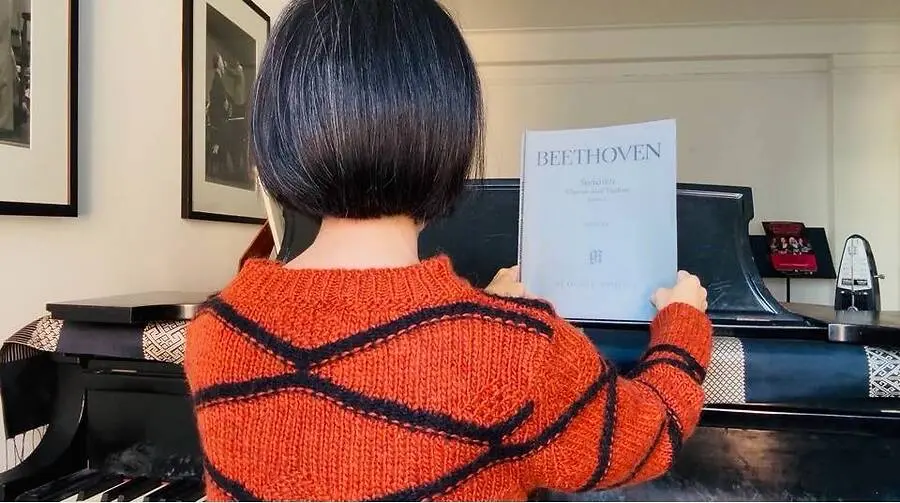
For performing artists, hearing is everything - which is why physical vulnerabilities are often kept behind closed doors.
For the last couple of years, I kept something to myself. After my first COVID vaccination, I developed severe tinnitus and hyperacusis. A constant ringing in my ears echoed and resounded loudly with certain sounds, particularly in specific registers, making normal acoustics painful and overwhelming. As a pianist, it was deeply unsettling to navigate what I could hear versus what I could no longer comfortably tolerate.
At the time, I chose to keep this a complete secret. I worried that if people knew, they might question my musical instincts. On my doctor's advice, I paused further vaccinations, and over time, the inflammation subsided and my hearing gradually recovered.
During that year of uncertainty, I spent a great deal of time reading about Ludwig van Beethoven's own experience with tinnitus and hyperacusis - symptoms that preceded his complete hearing loss and became most evident in his compositions from 1801 to 1805. That period produced some of his most defining works: the piano works including the "Moonlight", "Tempest" and "Waldstein" sonatas, alongside the violin/piano sonatas "Spring" and the "Kreutzer".
I decided to relearn several of those piano sonatas, most notably the "Waldstein." As I practiced, memories of studying the piece on Beethoven's own Broadwood piano decades earlier came back to me, and the radical, long pedal markings in the final movement suddenly made far more sense. Experiencing that penetrating, chaotic internal noise first hand made me realize that the physical limitations of the instruments he worked with, combined with his acute hyperacusis, likely created a specific sound world in his ears - one he wanted his audience to experience too. His sudden, sharp dynamic shifts and long, bleeding pedal textures felt less like abstract choices and more like a direct translation of his acoustic reality.
Not knowing whether my hearing would return was frightening at the time. Looking back, however, the experience gave me a completely new perspective on how I listen to and perform Beethoven's music. What began as a quiet professional fear became a meaningful lesson in empathy - both for the composer and for what it truly means to listen.
This January, I will be performing the "Spring" Sonata with violinist Frank Huang, and I hope to bring a small measure of that hard-won insight into the music.
About the Author
Donna Weng Friedman is an award-winning pianist, producer, and filmmaker whose career spans international concert performances, innovative cross-disciplinary projects, and advancing diversity in the arts through education and mentorship. Named one of Musical America's Top 30 Professionals of 2024 and inducted into the Steinway & Sons Teacher Hall of Fame, she is the creator of the acclaimed short film Never Fade Away and serves on the piano faculty at Mannes Prep at The New School.
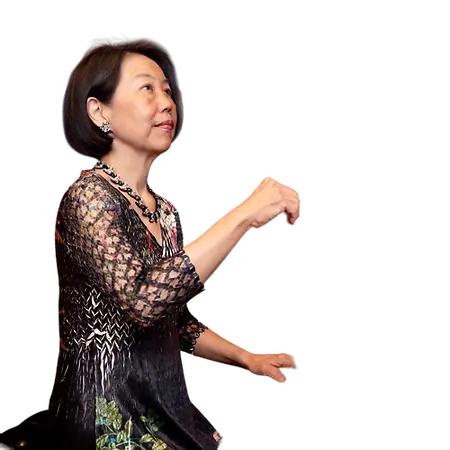
Donna Weng Friedman is a pianist, filmmaker, and creative producer recognized as one of Musical America Worldwide's Top 30 Professionals of the Year for 2024. She is the writer, director, and producer of the award-winning short film Never Fade Away, and the inaugural recipient of the Women Who Innovate Grant from The International Alliance for Women in Music. Donna is also the Creator of Heritage and Harmony in…