A Leader’s Journey: Your Calling Is Bigger Than Your Title
Discovering Your Leadership Identity Beyond the Title

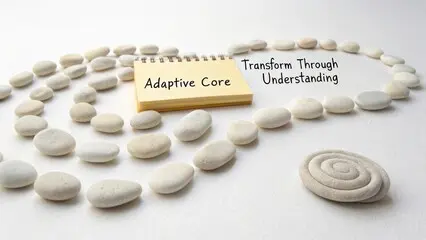
What happens when the title that once defined your leadership no longer defines your next chapter?
After more than three decades in public education, I have learned that some of our most consequential leadership lessons emerge not when everything goes according to plan, but when the plan changes. The position may end. The organization may move in a different direction. The next opportunity may be uncertain. And suddenly, the question is no longer simply, "Where will I lead next?" It becomes, "Who am I as a leader?" when the role I have known is no longer mine.
I believe this is one of the most important questions an educational leader can confront and one we rarely discuss openly enough.
My advice to educational leaders, especially those aspiring to executive leadership, is this: Never allow your position to become your identity or your circumstances to define your worth. Your calling is bigger than your title.
Throughout my career, I have had the privilege of serving in campus and district leadership roles spanning student services, curriculum and instruction, specialized programs, and districtwide leadership. Each experience taught me something different about the complexity of public education and the responsibility we carry as leaders. I learned that meaningful progress depends not only on strategy and systems but also on relationships, trust, communication, and a genuine commitment to the people we serve.
I also learned that leadership does not always unfold as planned.
Some professional transitions are carefully chosen. Others arrive unexpectedly through organizational changes, new opportunities, or circumstances beyond our control. When those moments come, it is easy to question our next steps, our value, or even our place in the profession. But a transition is not necessarily a setback. Sometimes, it is an invitation to reflect on what we have learned, rediscover what matters most, and consider how our experience might serve others in a new way.
My doctoral research examined how novice executive leaders transition into high-performing P-12 organizations. Through this work, I developed the Adaptive Leadership Transition Theory (ALTT), which emphasizes the importance of honoring an organization’s history, understanding its culture, building trust through intentional communication, and adapting leadership to sustain progress.
One of the most meaningful lessons from this research is that successful leadership requires us to respect what came before us while remaining courageous enough to move forward. We must listen before we change, build relationships before we expect trust, and recognize that every organization has a history, a culture, and people whose experiences deserve to be understood.
I believe these principles apply just as powerfully to our own careers.
When a chapter closes, take time to reflect before rushing to the next one. Identify the lessons worth carrying forward, the beliefs that need to be challenged, and the values you will never compromise. Be honest about what you need from your next opportunity—not simply in salary or title, but also in alignment with your purpose, your leadership philosophy, and the difference you hope to make.
Do not confuse a change in your circumstances with a loss of your capacity to lead. Your experience, integrity, relationships, and wisdom travel with you. A position may provide a platform, but it does not create the leader. That work happens over years of serving others, making difficult decisions, learning from mistakes, and choosing to grow.
For women pursuing educational leadership, I would add this: Do not wait until you feel completely ready to pursue the opportunity that calls you forward. Confidence often grows through action, not before it. Your voice belongs in the conversation. Your experience has value. And when you step into a role that others may not have imagined for you, you may make the path more visible for someone who follows.
Be loyal to the people and organizations that helped shape you, but do not let that loyalty prevent you from embracing a new chapter. Honor your past without becoming anchored to it. Celebrate the leaders who invested in you, and become the kind of leader who invests in others. The greatest measure of our influence is not simply what we accomplish during our tenure, but what continues because we were there.
Above all, remember why you entered this profession. For most of us, it was never just about a position. It was about students, educators, families, communities, and the belief that our work could make a difference.
But your calling does not expire when your position does.
Keep learning. Keep leading. Keep growing. Have the courage to begin again when necessary, and never underestimate what your experience has prepared you to do next.
Your leadership journey is still unfolding. Make the next chapter count, not because of the title you hold, but because of the lives you touch and the legacy you leave.