AB12 Matters: Creating Brighter Futures for Foster Youth
Extending Foster Care Support to Age 21 and Transforming Outcomes for California's Transition-Age Youth

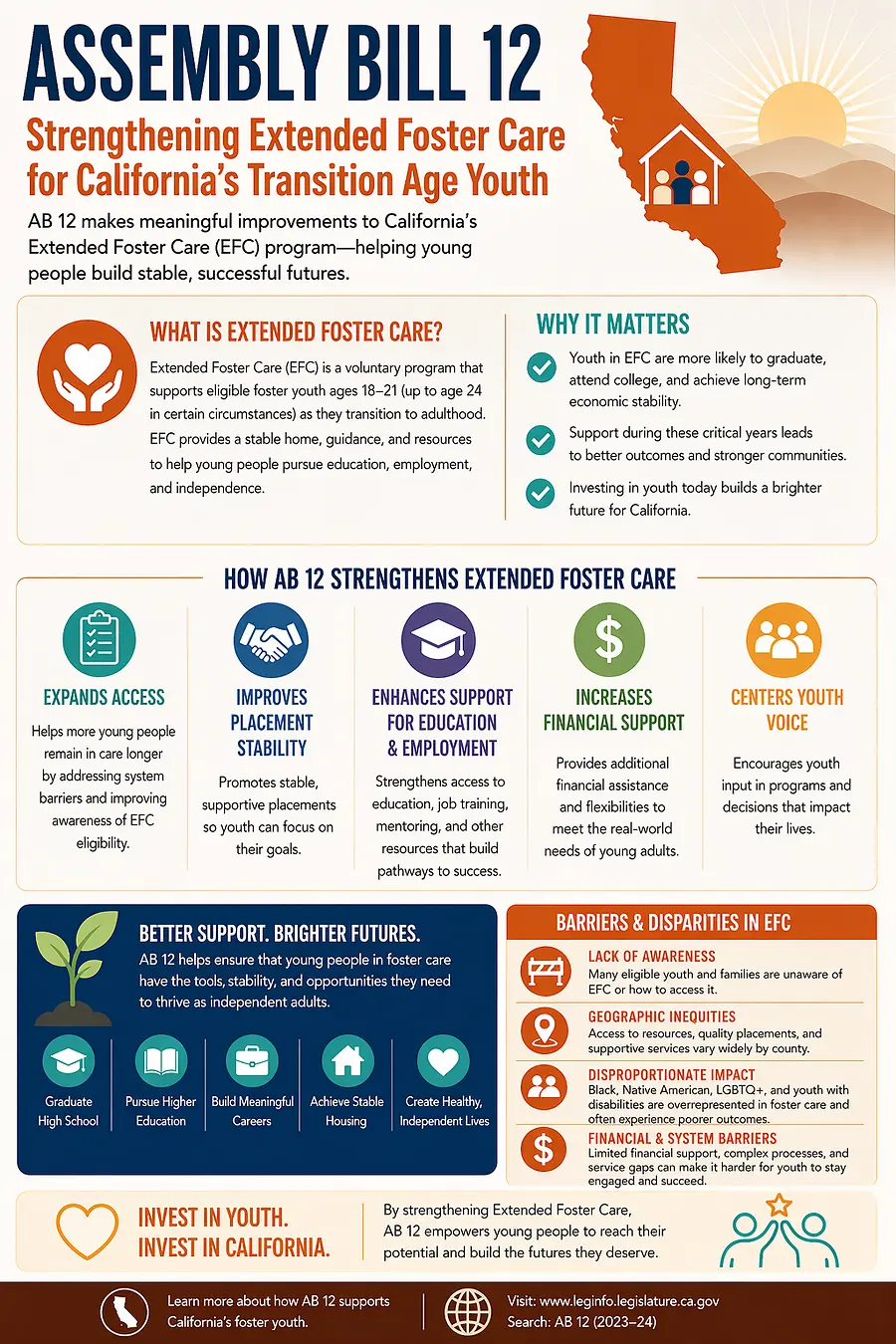
A Lifeline for Transition-Age Youth: Understanding AB12's Impact
Every year, thousands of young people in California face a critical turning point as they age out of foster care. Without stable support systems, many struggle with housing insecurity, educational disruptions, and emotional challenges during this transition. AB12, a landmark piece of legislation, was designed to change that trajectory by extending foster care services up to age 21. This policy shift recognizes that adolescence does not end at 18, especially for youth who have experienced trauma, instability, and systemic inequities.
AB12 opens the door to vital resources, including continued placement options, educational assistance, mental health services, and independent living programs tailored to young adults. For transition-age youth (TAY) across California, this means more time to finish school, secure employment, and build essential life skills with guidance and stability.
In this article, readers will explore how AB12 reshapes long-term outcomes, the types of support available under the law, and practical steps caregivers, advocates, and youth themselves can take to access these benefits. By understanding AB12's framework, communities can better uplift those navigating one of life's most vulnerable transitions.
How AB12 Transforms Support for Transition-Age Youth in California
California's Assembly Bill 12 (AB12) marked a pivotal shift in how foster care services support young adults approaching adulthood. Designed to reduce the abrupt transition out of care, AB12 allows eligible youth to remain in foster care until age 21, providing critical stability during a vulnerable stage of life. This extension is not simply about providing shelter; it expands access to comprehensive services that promote long-term independence.
Key provisions include continued financial support, access to supervised living arrangements such as transitional housing and college dormitories, and eligibility for specialized programs like THP-Plus (Transitional Housing Plus). Youth can receive ongoing case management, educational support, mental health services, and life skills training tailored to their individual needs. Importantly, participation is voluntary, empowering young adults to make informed decisions about their care.
For families and advocates across California, AB12 offers a framework that allows youth to pursue higher education, vocational training, or employment without losing essential safety nets. By aligning services with developmental needs beyond age 18, the law addresses systemic gaps that previously contributed to increased risks of homelessness, unemployment, and incarceration. Understanding these provisions enables communities to better guide youth toward sustainable, self-directed futures.
Championing Nationwide Foster Care Extension Through Federal Advocacy
Representative Judy Chu has emerged as a leading voice in the effort to expand foster care support beyond age 18 across all 50 states, building on successful state-level models such as California's AB12.
Recognizing that transition-age youth in foster care often face housing instability, educational disruption, and limited employment opportunities, her advocacy emphasizes extending services through age 21. This critical window allows young people to access mentorship, healthcare, academic support, and workforce readiness programs during a pivotal developmental period.
Chu's strategy focuses on federal incentives that encourage states to adopt similar extensions, particularly in regions where current policies leave youth unsupported once they reach adulthood. Her efforts seek to close geographic disparities, ensuring that a young adult in rural Appalachia receives the same level of support as one in Los Angeles or Chicago.
By integrating trauma-informed care standards and equity-centered frameworks into proposed legislation, she advocates for systems that adapt to each youth's unique needs.
Communities, service providers, and advocates can support this movement by aligning local programs with these best practices, prioritizing continuity of care, youth engagement, and cross-agency collaboration. When systems work together, outcomes improve not only in foster care but also in education, mental health, and long-term economic stability.
Five Ways Extended Foster Care Transforms Youth Outcomes
For transition-age youth navigating life after foster care, access to extended support can mean the difference between thriving and merely surviving. As states align with reforms like AB12, which expand care beyond age 18, young people gain critical time to build stability in education, housing, and employment.
1. Stronger Educational Attainment Through Continued Support
Extended care provides access to academic advising, tutoring, and financial aid navigation, increasing the likelihood of high school completion and college enrollment. Youth participating in supported programs are more likely to pursue vocational training or higher education, with services often including assistance with scholarship applications and school-related expenses.
2. Stable Housing Reduces the Risk of Homelessness
Transitional housing options and rental assistance provide youth with time to learn budgeting, tenant rights, and lease responsibilities. Rather than facing eviction or overcrowded living situations, they can reside in supervised settings while gradually developing independence.
3. Employment Readiness Through Real-World Training
Workforce readiness programs offered through extended care provide résumé workshops, interview preparation, and internship opportunities. These services connect youth with employers and workforce development initiatives, helping them build confidence, skills, and professional networks.
4. Integrated Mental Health and Case Management Support
Trauma-informed case planning ensures that youth receive consistent therapeutic support and life skills coaching. This holistic approach addresses barriers to success, such as anxiety, unresolved trauma, or unstable relationships, that might otherwise derail progress.
5. A Smoother Transition to Adult Services
Youth learn how to access public benefits, healthcare, and community programs before fully exiting the foster care system. This preparation fosters long-term self-sufficiency and reduces reliance on emergency support systems.
Your Questions About AB12 and Foster Care Reform—Answered
What is AB12, and who qualifies for extended foster care in California?
AB12 allows eligible youth in California's foster care system to remain in care until age 21 if they meet specific criteria, such as being enrolled in school, participating in employment programs, working toward a secondary diploma, maintaining employment, or meeting eligibility requirements related to a documented medical condition. This extension promotes stability during the transition to adulthood by helping youth access housing, healthcare, education, and mentoring.
How does federal foster care policy impact state programs like AB12?
Federal legislation, including the Fostering Connections to Success and Increasing Adoptions Act and the John H. Chafee Foster Care Program for Successful Transition to Adulthood, provides funding and guidance that enable states to offer extended services. California's AB12 operates within these federal frameworks, helping ensure eligible youth receive consistent support.
What are common challenges youth face when aging out of foster care?
Many transition-age youth experience housing instability, limited access to mental health services, financial hardship, and educational barriers. Without strong support networks, navigating complex systems can increase the risk of homelessness or disconnection from care. Trauma-informed interventions and equity-centered planning are critical to addressing these challenges.
How can advocates support foster care reform nationwide?
Advocates can champion policies that extend care beyond age 18, strengthen access to permanent relationships, and invest in evidence-based programs. Community-based strategies such as peer mentoring, life skills training, and policy coalitions help amplify youth voices and shape more inclusive systems.
What role do local organizations play in implementing AB12?
Local agencies coordinate housing resources, educational support, and case management services. These organizations bridge the gap between policy and practice by ensuring youth understand their rights and are connected to services tailored to their needs.
How can families and caregivers get involved in reform efforts?
Caregivers can attend county child welfare meetings, support youth-led advocacy organizations, and participate in cultural competency training. Remaining informed about policy developments enables them to help youth navigate eligibility requirements and access critical resources.
What steps can youth take to prepare for life after foster care?
Youth should collaborate with their case teams to develop transition plans that outline educational goals, employment pathways, and housing options. Utilizing Independent Living Program (ILP) services and connecting with mentors can build confidence, resilience, and long-term stability.
The Path Forward: Turning Advocacy Into Lasting Change
Supporting youth transitioning from foster care is not a one-time intervention; it is an ongoing commitment that requires coordinated advocacy, inclusive policy expansion, and community-wide engagement.
As AB12 reshapes access to care and services across California, it becomes increasingly clear that equitable outcomes depend on consistent support systems that address housing, education, mental health, and workforce readiness. Transition-age youth need more than eligibility. They need navigation support, trauma-informed guidance, and personalized resources that honor their lived experiences.
To create lasting impact, stakeholders must prioritize continuity of care beyond age 18, strengthen cross-agency collaboration, and ensure culturally responsive services are accessible in both urban and rural communities. Advocacy does not end with the passage of legislation; it evolves through implementation, ongoing feedback, and youth-centered program design.
You can contribute by staying informed, supporting local initiatives, or volunteering with youth-serving organizations in your community. Explore the resources available through your organization or local agencies to access toolkits, training opportunities, and regional partnerships designed to equip advocates and practitioners alike.
Every action—big or small—helps build a future in which every young person leaving foster care has the tools, support, and confidence to thrive.
Keep pushing forward. The journey matters.


