Agency of the Ignored
Reclaiming Agency: One Family's Journey from the Ashes of History to the Heart of Europe

In the early 1930s, Germany was beautiful—comparable to Paris in culture, sophistication, and influence. Then came a man of average height, mediocre build, and a strange mustache, freshly released from prison, railing against Jews, communists, and trade unionists and blaming them for Germany’s defeat in the First World War. That man was Adolf Hitler. Though Austrian by birth, he lived in Munich.
In an effort to appease Hitler’s growing movement and stabilize the political climate, President Paul von Hindenburg appointed Hitler Chancellor of Germany. Soon after, Hindenburg died. Hitler consolidated the powers of the presidency and chancellorship through the Enabling Act, ultimately assuming the title of Führer (“Leader”).
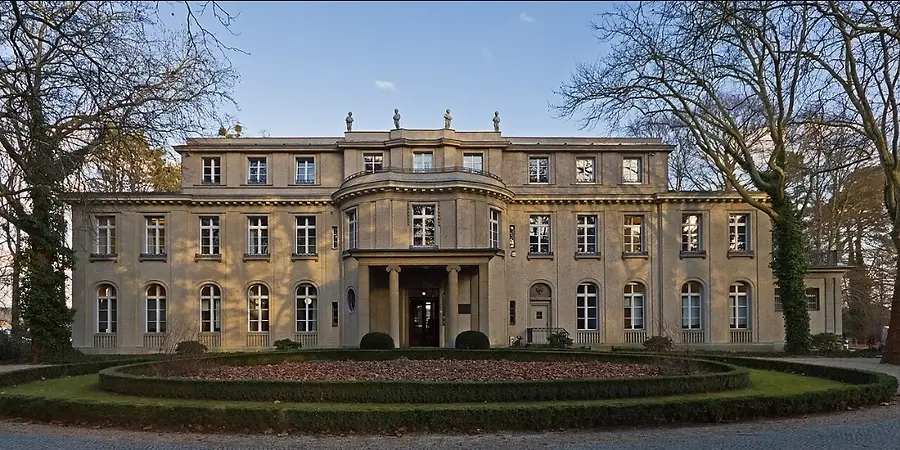
By 1942, the Nuremberg Laws were being fully enforced. On January 20, fifteen members of the SS and representatives from various government ministries gathered at a villa in Wannsee, a suburb of Berlin. The purpose of the meeting was to discuss the Endlösung der Judenfrage—the “Final Solution to the Jewish Question.”
The session was cold, bureaucratic, and clinical; they might as well have been reviewing quarterly spreadsheets. Dr. Hannah Arendt later captured this horrifying normalcy in her book Eichmann in Jerusalem, where she introduced the concept of “the banality of evil.” In roughly ninety minutes, fifteen people discussed and formalized policies that would contribute to the deaths of millions.
I emphasize this because among the victims was my great-grandmother. My grandmother and mother always taught me never to surrender my agency to anyone or anything. Always remain in control of your own life.
For me, travel is about reclaiming freedom and agency. It is the ability to move, adapt, and refuse confinement—physical, emotional, or institutional.
In Frankfurt am Main, the city regarded as the financial heart of Europe, there is a wall bearing the names of 12,000 Jewish residents who were marked for erasure. My family’s names are among them. They were deported to Dachau concentration camp and reduced to entries on transport manifests, treated as cargo rather than human beings.
In a matter of months, I will be moving back to Frankfurt to reclaim the future they were denied. I am choosing to live just a few miles from Frankfurt Airport—one of the world’s most important aviation hubs—because mobility, independence, and self-determination matter deeply to me. I am taking the German language, the German system, and the German skies and turning them into instruments of agency rather than fear.
History tried to erase my family in Frankfurt in 1943. In 2028, I am returning to Frankfurt am Main—not as someone fleeing history, but as someone determined to build a future beyond it.