Bridging Care and Community: The Evolving Role of Nurses in Assisted Living
How nurses are transforming assisted living into a high-acuity care model that rivals skilled nursing facilities.

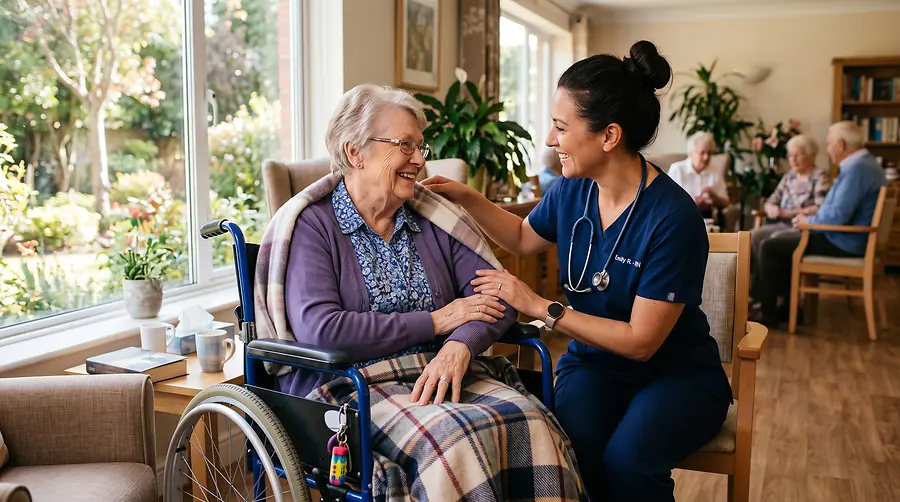
Bridging Care and Community: The Evolving Role of Nurses in Assisted Living and Healthcare
Assisted living was once considered the middle ground between independent living and nursing home-help with meals, medication reminders, and activities of daily living (ADLs). That definition no longer fits. Residents are arriving older, sicker, and with more complex chronic conditions than ever before, and nurses are at the center of that shift.
In 2026, the nurse in assisted living is no longer just a clinical safety net. She is a care coordinator, technologist, educator, mental health advocate, and operational leader.
1. From Custodial Support to High-Acuity Clinical Care
The biggest driver of change is acuity. As nursing homes close and hospital stays shorten, assisted living is becoming what operators now call an "intermediate care facility."
Residents who would have been in skilled nursing five years ago are now in assisted living with heart failure, COPD, diabetes with insulin management, early-stage Parkinson's, Alzheimer's, dementia, and complex polypharmacy.
That means the RN and LPN role has expanded far beyond medication pass:
- Chronic Disease Management: Titrating care plans for multiple co-morbidities and monitoring for subtle changes that could trigger hospitalization.
- Infection Control and Wound Care: Post-acute skills once reserved for SNFs.
- Medication Complexity: The average assisted living resident takes 8-10 prescription medications, requiring careful reconciliation and adverse event monitoring.
- Assessment as Prevention: Nurses are now expected to catch a UTI, dehydration, or medication interaction 48 hours before it becomes an ER visit.
This clinical pressure is reflected in workforce data-assisted living communities rely heavily on RNs and LPNs for daily clinical care, and those staffing levels have changed since 2020.
2. The Nurse as Care Quarterback
In the hospital, a patient has a team around the bed. In assisted living, the nurse is the team builder.
Today's assisted living nurse coordinates:
Families who want daily updates, primary care physicians who may be off-site, physical therapists, home health, hospice, and non-clinical caregivers-certified nursing assistants (CNAs) who provide 90% of hands-on care.
The American Assisted Living Nurses Association (AALNA), one of the newest professional organizations in long-term care, was formed specifically to define this quarterback role as assisted living becomes more healthcare-oriented.
Effective nurses now spend as much time on communication and documentation as on direct care: building individualized service plans, translating physician orders into daily routines for CNAs, and leading family care conferences.
3. Technology Is Now Part of the Job Description
The 2026 care model is no longer optional or experimental-nearly 9 in 10 nurse leaders embraced a new care model in the last year. Much of that is tech-enabled.
- Remote Monitoring and Wearables: Fall detection sensors, smart watches tracking heart rate and sleep, and in-room sensors alerting to changes in movement.
- Telehealth: Nurses facilitate virtual visits, present physical findings, and execute orders in real time.
- EHR and Predictive Analytics: Flagging residents at risk for falls or rehospitalization.
- Med-Tech: Automated dispensing systems and eMARs that reduce medication errors.
Nurses are expected to be digitally literate, troubleshoot devices, and interpret data without losing the human assessment. The skill set is part IT, part clinician.
4. From Task-Doer to Whole-Person Advocate
Regulations are catching up to what good nurses already knew: health is not just labs and vitals.
Modern assisted living nursing emphasizes:
- Person-Centered Care: Knowing that Mrs. Johnson refuses morning meds because they make her dizzy during her walk, not just that she is "non-compliant."
- Mental and Cognitive Health: Depression, anxiety, isolation, and dementia-related behaviors are new core nursing concerns. Nurses are leading non-pharmacologic interventions, reminiscence therapy, and de-escalation.
- Health Literacy and Autonomy: Helping residents make informed choices about diet, end-of-life, and lifestyle-respecting independence while ensuring safety.
This is a philosophical shift. The best communities are moving from "What is wrong with you?" to "What matters to you?"
5. Leader, Educator, and Retention Anchor
The staffing crisis is real and persistent. The 2025-2026 Assisted Living Salary & Benefits Report puts turnover at 31.8% for RNs, 34.4% for LPNs, and 38.4% for CNAs, and projections show 660,000 more long-term care workers will be needed by 2030.
Where It's Going Next
1. Specialization Within Assisted Living
Expect dedicated memory care RNs, chronic care-certified LPNs, and nurses certified in palliative and gerontological care.
2. Hybrid Roles
Home health nurse coordinators and internal float nurses are already being hired by 2 in 5 leaders. The line between assisted living, home health, and primary care will continue to blur.
3. A Stronger Voice in Policy
As more Medicaid and federal dollars flow toward assisted living and oversight grows, nurses will be critical advocates for realistic staffing ratios, scope-of-practice clarity, and reimbursement for clinical work done in residential settings.
The Bottom Line
The assisted living nurse of 2015 could focus on being competent, kind, and organized. The assisted living nurse of 2026 has to be all of that and more, plus a chronic disease specialist, a tech interpreter, a team leader, and an advocate for dignified aging.
It's a harder job. It's also a more essential one. As our senior population grows more complex and wants to age outside of institutional nursing home-like living, with hospital-level vigilance, the nurse is not just support staff-she is the reason the model works at all.