Canceling the “Dirty Words”: Reframing Layoffs, Loss, and Personal Value
Why the language we use after job loss shapes perception, identity, and the way we rebuild

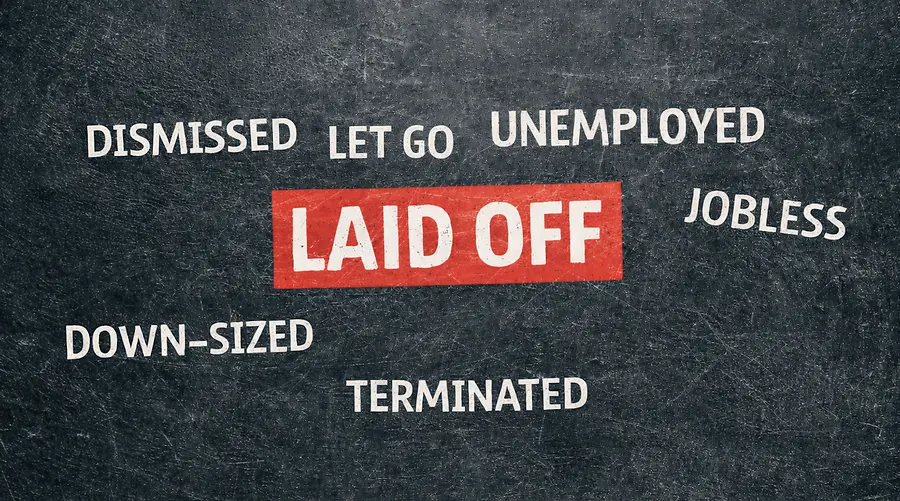
There are certain words people hesitate to say out loud, not because they are inaccurate, but because of what they have come to represent. Words like “laid off,” “unemployed,” or “let go” often carry a weight that extends far beyond their definitions. They are treated less like descriptions of circumstance and more like reflections of personal failure, and that perception has shaped how many people respond to their own experiences.
At the same time, job loss is a real loss and should be acknowledged as such. It affects income, but it also disrupts routine, identity, and a sense of stability. For many people, work is closely tied to how they see themselves and how they are seen by others, so when that changes unexpectedly, the impact is more than logistical. If there is a need to pause, reflect, or even mourn that shift, that response is valid and necessary for moving forward in a grounded way.
Where the issue begins is in the meaning attached to the language. A layoff is often the result of organizational decisions, economic shifts, or structural changes that have little to do with individual performance. However, people frequently internalize it as something personal, allowing a situational outcome to influence how they view their own value. Over time, that interpretation can affect confidence, decision-making, and the willingness to pursue new opportunities.
At one point, I was told that I was “brave” for using the words “laid off” publicly. While I understood the intent behind the comment, it highlighted something deeper about how these experiences are perceived. Speaking honestly about a professional transition should not require bravery, yet the reaction reflected how much weight people place on these labels. It became clear that the discomfort was not in the experience itself, but in the meaning attached to it.
For me, using that language was not an act of courage, but an act of clarity. It reflected an understanding of my work ethic, my contributions, and the value I bring regardless of circumstance. There was no need to soften the truth or replace it with something more acceptable, because the word itself was never the issue. The issue was always the interpretation.
This is where reframing becomes necessary. Canceling the idea of these “dirty words” is not about denying the experience, but about removing the assumption that the experience defines personal worth. When that assumption is removed, the same situation can be understood as a transition rather than a limitation. That shift creates space to focus on what can be built next.
In my own experience, being laid off became an unexpected turning point. It created the opportunity to evaluate where my skills were most effective and how I wanted to apply them moving forward. That clarity developed through intentional effort rather than immediate certainty, and it led me toward work that is both practical and meaningful.
I began building and delivering programs that help people better understand technology and feel more confident using it. This includes working directly with communities, teaching foundational digital skills, and creating resources that meet people where they are. In one setting, I am now known as “the computer lady,” a title that reflects both accessibility and trust, and represents a different kind of impact than I had previously defined.
Rebuilding did not happen through a single moment of success, but through consistent and deliberate action. It involved stepping into opportunities as they emerged, even when they did not follow a traditional path or come with immediate recognition. Some progress was visible, while other efforts remained behind the scenes, but each step contributed to a larger direction that continues to develop.
One of the more challenging aspects of job loss is the narrative that often follows it. There is a tendency to assume that being without a traditional role places someone at a disadvantage, and that assumption can influence both self-perception and external perception. However, transitions are not indicators of failure, but indicators of change, and in many cases, they create space for growth that would not have occurred otherwise.
When the focus shifts away from the perceived meaning of certain words and toward intentional action, the narrative begins to change. The same experience that once felt limiting can become a foundation for alignment and forward movement. This does not remove the difficulty of the experience, but it does change how it is understood and how it is used.
The words themselves do not need to be avoided or replaced. What needs to change is the interpretation attached to them. A layoff is not a conclusion and does not diminish value. It is a transition point that can lead to new direction, stronger clarity, and more intentional work.
For anyone navigating a similar experience, it is important to recognize that you are not defined by a single moment or label. You are in a period of adjustment, and that period has the potential to lead somewhere meaningful. Removing the stigma from these so-called “dirty words” is a step toward reclaiming both clarity and confidence, and it allows you to move forward without carrying unnecessary weight.


