Cash Feels Safe — But Is It?
Why keeping all your money in cash might be costing you more than you realize.

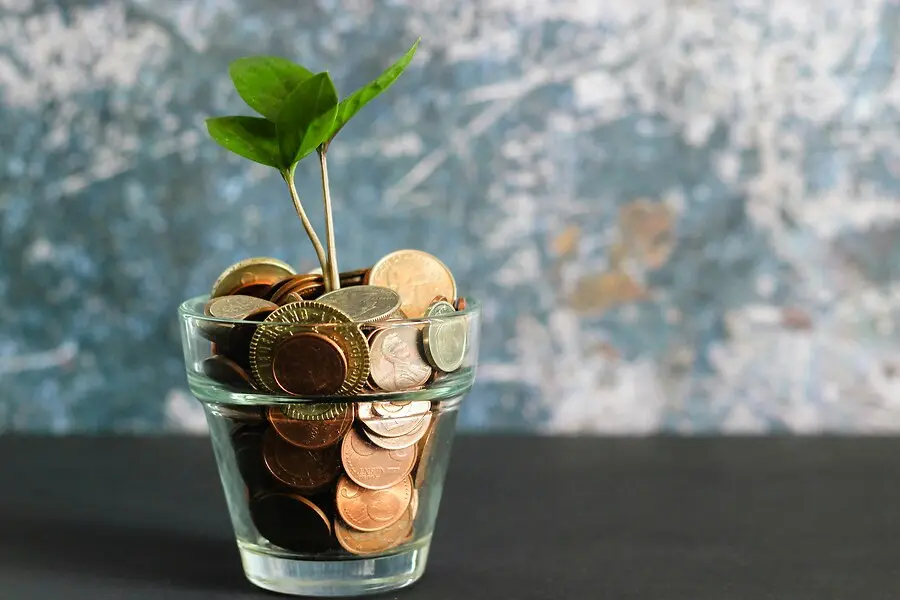
Cash Is Not the Same as Safety
We tend to think of cash as the safest place for our money. It’s liquid, familiar, and available whenever we need it.
But I think that idea deserves a closer look.
Money, at its core, is a tool. We created currencies to make the exchange of goods and services easier. Dollars, euros, pesos, and even newer forms of currency all serve essentially the same purpose: They allow us to transfer value.
That makes cash incredibly useful. But useful and safe are not necessarily the same thing.
And when I say “cash,” I don’t only mean physical bills sitting in a drawer. I mean money that remains in cash or cash-like accounts instead of being allocated toward long-term assets.
One of the biggest risks is inflation. Your account may still show $100,000 ten years from now, but that does not mean those $100,000 will buy what they buy today.
For a simple illustration, imagine $100,000 sitting in cash while inflation averages 3% annually. Ten years later, its purchasing power would be equivalent to roughly $74,000 in today’s dollars.
Now imagine instead that $100,000 was invested and hypothetically grew at an average of 7% per year. After ten years, it would be close to $197,000.
That isn’t a promise of investment returns. Markets fluctuate, investments carry risk, and no return is guaranteed. But it illustrates something important:
Doing nothing with your money is also a financial decision.
This is why I believe every dollar should have a job.
Some dollars should protect you today. Others should be working toward your future.
I absolutely believe in keeping cash available for emergencies. A major home repair, a medical expense, an unexpected job loss, a business slowdown—or even something as disruptive as another pandemic—can happen without warning. We already lived through COVID, and if that period taught us anything financially, it’s that circumstances can change very quickly. Liquidity matters when life becomes unpredictable.
As a general framework, I like the idea of having approximately 3–6 months of essential expenses available for someone with stable employment, and closer to 6–9 months for a business owner or someone with less predictable income.
Enough to give yourself time to get back on your feet.
But beyond that, keeping excessive amounts in cash because investing feels scary can create another problem: opportunity cost.
People often wait for the “perfect” moment. They want the market to fall before they invest, or they worry that prices are already too high.
For a long-term investor, consistently finding the perfect entry point is far less realistic than building a disciplined habit.
Investing month after month means some purchases will happen at higher prices and others at lower prices. What matters more is giving your money time to work for you. Over the years, the growth generated by your investments can begin generating additional growth of its own. That is how consistent investing can turn time into one of your biggest advantages.
There is a saying I’ve always liked: The best time to invest was yesterday. The second-best time is today.
Not because everyone should immediately invest every dollar they have. They shouldn’t.
The point is to stop confusing liquidity with wealth.
Cash is not the destination. It is the bridge between what we earn today and what we choose to build tomorrow.
Every dollar should have a job: some protect you today, and others should be working for your future.