From Purpose to Impact: How The Blox Challenged Us to Reinvent MenoPalz
How MenoPalz Discovered That Purpose Requires the Right Business Model to Create Measurable Impact at Scale

What If Your Business Model Isn't Built to Solve the Problem at Scale?
That's the question we found ourselves confronting as the founders of MenoPalz.
We started with a mission to change how women experience menopause, particularly in the workplace. We knew the subject was underrepresented in employee education, leadership development, and organizational policy. We knew women needed better resources, and we believed employers could play a much more meaningful role.
But we also had to confront an uncomfortable entrepreneurial reality:
Having a compelling mission doesn't automatically mean you've identified the right customer, the right product, or the right business model.
That distinction became the foundation of our reinvention.
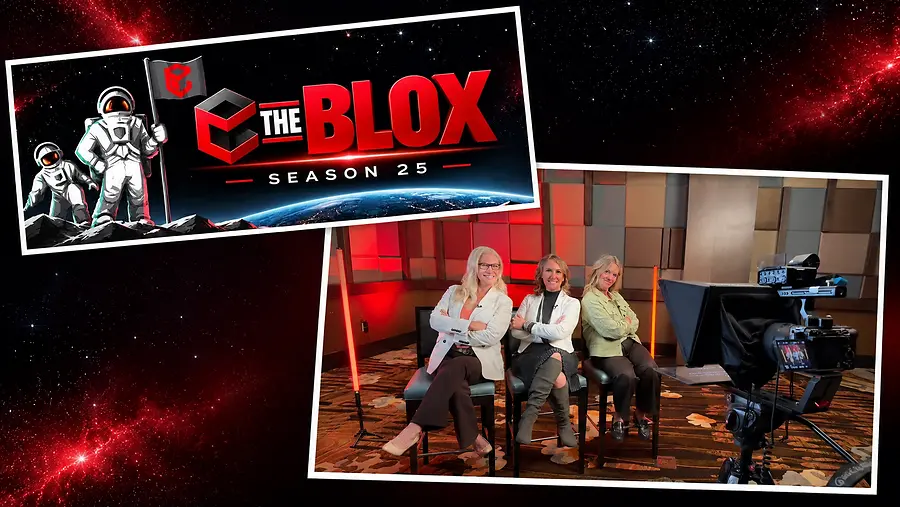
And it ultimately took us to The Blox, an entrepreneurial reality show and documentary where we were challenged to rethink how we build, market, and grow our company.
The Business Problem Behind the Mission
For years, menopause has largely been treated as an individual health experience rather than an issue with potential implications for workforce management.
But the research tells a broader story.
A 2023 Mayo Clinic study estimated that menopause-related symptoms contribute to approximately $1.8 billion in lost work time annually in the United States, with a combined annual economic burden of approximately $26.6 billion when medical expenses are included.
Among the employed women surveyed, 13.4% reported at least one adverse work outcome associated with menopause symptoms.
These findings don't suggest that every woman experiencing menopause will face workplace difficulties. They do demonstrate that the issue can have measurable economic and organizational consequences.
Source: Faubion et al., Mayo Clinic Proceedings, 2023.
The implications extend beyond absenteeism.
Experienced employees carry institutional knowledge, customer relationships, technical expertise, and leadership capabilities that organizations spend years developing.
When workplace conditions contribute to disengagement, reduced performance, or premature departure, employers may lose far more than one position on an organizational chart.
Research from the UK's Chartered Institute of Personnel and Development reinforces the concern. In its 2023 survey, 17% of respondents who had experienced menopause symptoms reported considering leaving work because of inadequate support, while another 6% reported having left work.
Source: CIPD, Menopause in the Workplace: Employee Experiences, 2023.
For employers, this raises an important question:
If experienced talent is one of our most valuable organizational assets, how prepared are we to support that talent through a predictable stage of life?
That question became central to our business strategy.
Our First Assumption: Awareness Would Create Demand
Like many mission-driven startups, we initially focused on the people most directly experiencing the problem.
We explored business-to-business and business-to-consumer approaches, including educational resources, community engagement, and direct support for women navigating menopause.
Our consumer-facing efforts created opportunities to connect with women who understood the issue firsthand.
The need was visible. The stories were compelling. The engagement reinforced why the work mattered.
But we began recognizing a distinction between engagement with a problem and willingness to purchase a particular solution.
An individual might deeply value menopause education without being the customer best positioned to purchase organizational training, policy development, or workforce readiness consulting.
Meanwhile, employers had the ability to make changes that could affect hundreds or thousands of employees.
Our initial hypothesis had been that greater awareness would naturally lead to greater demand.
As we refined the business, we realized that awareness was only one part of a much larger equation.
We needed to understand who had the authority, budget, and organizational responsibility to act.
The Pivot: From Serving Individuals to Equipping Employers
Our decision to refocus MenoPalz on B2B workplace solutions wasn't a rejection of our original mission.
It was an effort to pursue that mission through a different mechanism.
The women experiencing menopause remained central to our purpose.
But employers became our primary customers because they influence the policies, management practices, educational resources, and workplace environments that shape employees' experiences.
The research also suggested a gap between recognizing the issue and taking organizational action.
A 2024 AARP survey found that 73% of surveyed employers believed organizations needed to do more to support employees experiencing menopause.
Separately, a 2024 UK government employer survey found that only 18% of respondents reported having a menopause-related workplace policy.
Sources: AARP Research, 2024; UK Department for Work and Pensions Employer Survey, 2024.
These are different populations and studies, but together they illustrate a relevant challenge: awareness and organizational readiness are not necessarily the same thing.
That insight helped us clarify our positioning.
We weren't simply building a menopause awareness company.
We were building a workplace readiness and talent retention company specializing in menopause-related workforce challenges.
That distinction changed how we communicated our value.
Instead of leading exclusively with the importance of menopause education, we began asking employers about workforce continuity, management capability, employee experience, organizational risk, and talent retention.
The issue remained menopause.
The business conversation became workforce effectiveness.
Working Backward From the Impact We Want to Create
One of the most valuable questions we confronted during our business evolution was deceptively simple:
What measurable change do we want our customers to experience because they work with us?
Not what products do we want to sell.
Not how many webinars can we deliver.
Not how many people can we reach on social media.
What actually needs to change inside an organization?
For MenoPalz, we identified several potential outcomes worth pursuing and measuring:
- Greater manager knowledge and confidence in responding appropriately to menopause-related workplace needs.
- Better employee awareness of available support and resources.
- Improved organizational readiness through clearer practices, policies, and communication.
- Stronger employee perceptions of support and workplace inclusion.
- Ultimately, evidence of whether those changes contribute to improved engagement, retention, and workforce continuity.
These are the outcomes we are working toward, not results we claim to have already achieved.
That distinction matters.
As founders, we have a responsibility to separate the impact we envision from the impact we've validated.
It also gives us a more disciplined way to develop our products.
If the desired outcome is stronger workplace readiness, we first need to understand an employer's current readiness.
If the desired outcome is better manager capability, we need to identify what managers know, what they don't know, and what behaviors need to change.
If the desired outcome is improved retention, we need to establish relevant baseline measures and understand the many factors influencing employee decisions.
Start with the desired outcome. Work backward to the organizational gaps. Then design the solution.
That became our guiding principle.
Our Minimum Viable Product: Start With the Assessment
At The Blox, we were challenged to identify a minimum viable product rather than continuing to build a comprehensive collection of services based primarily on assumptions.
For MenoPalz, we selected our Workplace Readiness Assessment as the starting point.
The concept is straightforward.
Before recommending a training program, policy initiative, or broader workplace solution, we want to help employers understand where they stand.
The assessment is intended to explore areas such as organizational awareness, manager preparedness, employee resources, workplace practices, and opportunities for improvement.
From there, we can develop a more informed roadmap for action.
This creates a different relationship with the customer.
Rather than beginning with a list of services, we begin with an organizational question:
Where are your gaps, and what would meaningful improvement look like?
The assessment also creates an opportunity for us to test the business model itself.
Will employers complete it?
Will they find the results useful?
Will the findings lead to meaningful conversations with HR and leadership teams?
Will those conversations generate demand for additional workplace solutions?
Those are hypotheses we intend to validate through real customer engagement.
And they're more valuable than simply assuming that because we believe in the product, the market will purchase it.
What The Blox Taught Us About Growth
The theme of The Blox Season 25 was reinvention.
We arrived expecting to refine our business strategy. What we experienced was a much more comprehensive examination of how entrepreneurial assumptions influence decisions.
Across the competition, we explored minimum viable products, customer acquisition, organic social media, lead nurturing, and sales.
Each lesson pushed us to consider a different stage of the customer journey.
We learned to distinguish between building something valuable and validating that customers want it.
We examined acquisition channels through the lens of scalability, sustainability, and repeatability.
We reconsidered the role of organic social media—not simply as a way to generate awareness, but as a way to establish trust with qualified prospects who are already considering our services.
And we explored how a deliberate nurturing and sales process can turn initial interest into a meaningful customer relationship.
For MenoPalz, these lessons connected into a clearer operating model.
Our Workplace Readiness Assessment provides a potential entry point.
Paid social media and business development partnerships offer channels to test for reaching HR leaders and employers.
Our organic content helps demonstrate expertise, establish credibility, and remain visible while prospects evaluate their options.
Personalized consultations help translate assessment findings into practical recommendations.
And our workplace education, manager development, and HR solutions provide opportunities to help employers take action.
The lesson wasn't to do more marketing. It was to create a more intentional path from customer need to customer outcome.
The Difference Between Awareness and Action
Consider two hypothetical employers.
Both have 500 employees.
Both recognize that menopause may affect members of their workforce.
The first employer schedules an awareness webinar, receives positive feedback, and considers the initiative complete.
The second employer begins by examining its readiness.
It identifies gaps in manager knowledge, reviews existing employee resources, and considers whether workplace practices are meeting employee needs.
It then prioritizes specific actions, provides targeted education, and evaluates whether those interventions improve knowledge, confidence, and employee perceptions of support.
Both employers have taken a step.
But the second has established a clearer path toward measurable organizational change.
That's the distinction we want MenoPalz to help employers understand.
Awareness is valuable.
Education is valuable.
But neither should automatically be mistaken for organizational impact.
Impact requires connecting an intervention to an outcome—and measuring whether meaningful change occurs.
Why Employer Readiness Matters Now
There is another reason we believe the employer-focused approach deserves attention.
Workplace needs are not always visible through traditional HR reporting.
Employees may experience challenges without formally disclosing them. Managers may notice changes in performance or attendance without understanding the underlying circumstances. Organizations may lack clear information about whether employees feel supported.
In a 2024 international survey, Catalyst found that 72% of respondents had hidden menopause symptoms at work, while 84% believed more workplace support was needed.
Source: Catalyst, Menopause Workplace Support Global Survey, 2024.
For employers, this suggests that the absence of complaints or formal requests does not necessarily mean the absence of unmet needs.
It also reinforces the importance of thoughtful, privacy-respecting approaches.
Employees shouldn't have to disclose personal medical information to receive fair treatment, appropriate workplace flexibility, or access to relevant resources.
A well-prepared organization builds knowledge, practices, and systems that make support more accessible without relying on individual disclosure.
That's a much broader organizational opportunity than simply increasing awareness.
What Winning Meant—and What Comes Next
Our experience at The Blox culminated in an exciting milestone.
MenoPalz was recognized among the Season 25 winners and received a monetary award.
We celebrated that moment.
But the greater value came from what the experience challenged us to do.
We had to examine our assumptions publicly.
We had to explain our business model clearly.
We had to identify the difference between what we believed and what we could demonstrate.
And we had to make decisions about where to focus our limited time and resources.
Those are disciplines we intend to carry forward.
As we continue developing MenoPalz, we're focused on testing our assessment-led approach, building relationships with employers and HR partners, and learning which solutions create the greatest value for our customers.
We expect our strategy to continue evolving as we gather more evidence.
That's not a weakness in the business model.
It's part of building a stronger one.
A Lesson for Every Organization: Define the Impact, Then Work Backward
Our experience offers a lesson that extends beyond menopause workplace support.
Organizations frequently invest in programs because the subject is important, the content is compelling, or the initiative appears aligned with their values.
Those can all be valid reasons to begin.
But they aren't sufficient reasons to assume the initiative will deliver meaningful results.
Whether you're launching a new business, implementing leadership development, improving employee experience, or addressing workforce retention, the discipline is the same.
Begin with the outcome.
Understand the people and systems influencing that outcome.
Identify the gaps.
Design the smallest meaningful intervention.
Measure what changes.
And refine your approach based on what you learn.
For us, that process meant recognizing that the greatest opportunity for MenoPalz might not be reaching more individual consumers.
It might be helping employers build workplaces where experienced women can continue contributing, leading, and advancing throughout their careers.
We didn't change our purpose.
We changed how we intend to deliver it.
Because purpose tells us why the work matters. But measurable impact tells us whether the work is making a difference.
About MenoPalz
MenoPalz is a workplace readiness and talent retention company specializing in menopause-related education, manager development, organizational assessments, and practical HR solutions.
Founded by Raquel Riggle, Debbie McCarthy, and Morgan Massie, MenoPalz works to help employers identify workplace readiness gaps and build more informed, supportive organizational practices.
Learn more: www.menopalz.com
Research Referenced
Mayo Clinic (2023). Faubion, S. S., et al. Impact of Menopause Symptoms on Women in the Workplace. Mayo Clinic Proceedings. https://pubmed.ncbi.nlm.nih.gov/37115119/
CIPD (2023). Menopause in the Workplace: Employee Experiences in 2023. https://www.cipd.org/en/knowledge/reports/menopause-workplace-experiences/
AARP Research (2024). The Economic Impact of Menopause: A Survey of Women 35+ and Employers. https://www.aarp.org/pri/topics/work-finances-retirement/employers-workforce/menopause-workplace/
UK Department for Work and Pensions (2024). DWP Employer Survey 2024. https://www.gov.uk/government/publications/dwp-employer-survey-2024/dwp-employer-survey-2024
Catalyst (2024). Women Call for More Menopause Support in the Workplace. https://www.catalyst.org/en-us/about/newsroom/2024/menopause-workplace-support-global

Morgan Massie is a leadership development strategist and CEO of Leadership and Training Concierge, serving organizations and entrepreneurs globally. With over 20 years of experience, she is a TEDx speaker, bestselling author, and Forbes contributor recognized for translating leadership challenges into actionable solutions. Morgan champions women's advancement through board service at She Means Business and as Chief…