Nobody Warns You About the Boxes.
How an engineer built a fulfillment company to solve the operational chaos that founders face.

The Business I Never Expected to Build
I spent fifteen years across five continents in male-dominated mining, construction, and energy industries. Big industries where a shipment is a spreadsheet with consequences, and everybody knows exactly what a delay costs.
I was good at it.
I was also, by the end, running on a resting heart rate that regularly hit three digits while I sat still at a desk—a number I chose not to look at for a long time, until I was forced to.
Eight years ago, I was a Fortune 50 company's first pregnant expat, navigating weeklong travel across Asia at eight weeks postpartum. I'm an engineer who found a way to solve a breast milk storage problem and then built a company around it almost by accident, in the margins of my corporate job. I designed it, patented it, and grew it into a six-figure side hustle.
What I discovered I was surprisingly good at wasn't creating the perfect Instagram-trending reel. It was the operations behind it.
Here is the part nobody told me: Most founders spend a year on the product. They obsess over the design, manufacturing, packaging, photography, and branding. Then an order comes in, and they realize they are also the fulfillment department.
Suddenly, they're spending more time picking, packing, labeling, and driving to the post office at night than growing their brand. And it scales with their success, which means the better things go, the worse life gets after dinner.
Having been an operations director during COVID for Fortune 50 warehouses, I knew this was an industry built for brands a hundred times my size. Minimums a small brand can't meet. Contracts written for people with a logistics team to read them. Invoices with twelve line items and no explanation of what an additional $2 charge per item is for.
The message underneath all of it was the same: Bring a big bag of money to tie up in receiving and storage costs if you need 3PL support.
So I built the thing I knew small founders couldn't find.
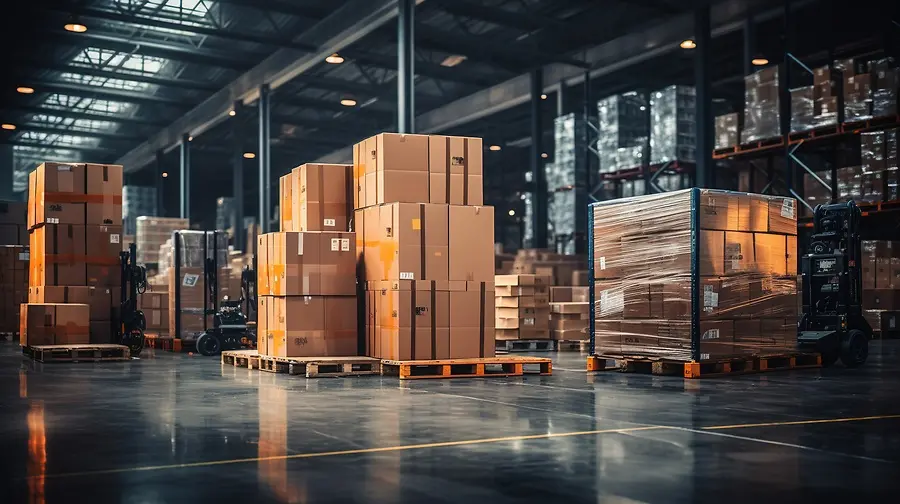
Our Warehouse ships for small product brands out of a building in Denver. Two years of tracked data puts our accuracy at 99.8%, against a 99.5% industry benchmark—a figure most fulfillment companies will not disclose about themselves, including to the clients paying them.
As an engineer, I've realized that what I actually do is design solutions for problems everyone else overlooks—for every company I have started.
What I did not expect is how much I would love the work.
- Showing a founder her real unit cost. Most people calculate their margin based on what they paid the manufacturer. The real number includes inbound freight, duty, packaging, pick and pack, postage, storage, returns, platform fees, payment processing, and the discount they ran last month. Add it all up, and the gap is often thirty or forty percentage points. There is a specific silence on the other end of the call when someone sees it for the first time. It is not a fun silence. But every good decision she makes afterward starts there.
- Finding a savings of $0.25 per unit just by redesigning the packaging a bit. Extrapolate that across 1,000 units per month, and it starts to add up quickly.
- Explaining why a profitable year left nothing in the bank. Inventory is a savings account you cannot withdraw from. You can have a record quarter and no money because the money is sitting on a pallet in a building. Founders think this means they are bad at business. It actually means they are running a product business and need to watch cash flow like a hawk.
- Decoding a fulfillment invoice. I have sat with founders and gone through an old 3PL bill line by line, watching them discover fees they had been paying for two years without ever knowing what they were for. Nobody had offered to explain them.
- Telling someone it is time to stop shipping from her house. There is an actual point at which doing it yourself costs more than paying someone else. It is calculable. Almost everyone blows past it by about a year because the real cost is their evenings, and evenings do not appear on a profit-and-loss statement.
None of this is glamorous. It is freight and forecasting and reorder points and knowing what a unit really costs.
But it is the difference between a founder who is building something and a founder who is being slowly consumed by her own success.
The women I work with saw a problem nobody had bothered to solve and solved it themselves. They built the product. They are inventive and stubborn and usually tired. They did the hard creative part already.
What they need is someone to take the boxes—and spreadsheets are my love language.
Here is the thing I would not have believed while I was still sitting at that desk with my heart rate keeping score: The thing so many people are drowning in turned out to be the business.
Not the product I had invented, but the mess that came after it—the part I assumed was overhead. I had spent fifteen years becoming an expert in exactly that and had never once thought of it as something anyone would need me for.
Turns out I was wrong.
My founders and I have built some amazing partnerships over the past two years.
If you are the founder in this story—the one with boxes where the dining table should be—and you have been told to bring a big bag of money before anyone will help you ship them, you are exactly who I built Our Warehouse for.
Come tell me what you are making. I will read your invoice, tell you what a unit actually costs you, and happily take the boxes when you are ready.
iloveourwarehouse.com