Rare Doesn't Mean Insignificant
Understanding why diseases affecting millions still struggle for recognition and treatment.
Rare Doesn't Mean Insignificant
The Hidden Impact of Orphan Diseases on Medicine and the People Left Waiting
By Stacey Fisher
Imagine visiting your doctor because something isn't right.
You know your body. You know something has changed. Yet the tests come back normal, or your symptoms don't seem to fit any familiar diagnosis.
You're referred to a specialist. Then another. You undergo more testing, take medications that don't help, and hear explanations that never quite make sense.
Months pass. Perhaps years.
Eventually, someone recognizes what everyone else has missed.
You have a rare disease.
For some patients, receiving that diagnosis brings relief. Finally, there is a name for what they've been experiencing.
But for others, the diagnosis leads to an entirely different question.
Now that we know what's wrong, can medicine do anything about it?
That question lies at the heart of one of healthcare's most complicated challenges: rare diseases, sometimes called orphan diseases.
Rare Diseases Aren't So Rare
In the United States, a disease is generally considered rare if it affects fewer than 200,000 people.
That sounds like a small number.
Until you look at the bigger picture.
More than 10,000 rare diseases have been identified, and collectively, they affect over 30 million Americans.
That's approximately one in ten people.
Think about that for a moment.
The person sitting beside you at church, the child in your neighborhood, your coworker, or someone in your own family may be living with a condition that most physicians will encounter only rarely, if ever.
Each disease may be uncommon, but its collective impact is enormous.
And that creates an uncomfortable contradiction.
How can conditions affecting millions of people collectively still struggle to receive adequate attention?
The Long Road to a Diagnosis
One of the greatest challenges associated with rare diseases begins long before treatment.
It begins with recognition.
Physicians are trained to consider common explanations for symptoms before investigating unusual ones. In many circumstances, that's a reasonable medical approach.
But what happens when the uncommon explanation is the correct one?
Rare diseases can produce symptoms that resemble those of far more familiar conditions. Fatigue, headaches, joint pain, digestive problems, weakness, and changes in appearance can have dozens of possible causes.
Patients may visit multiple specialists, undergo repeated testing, and receive treatments directed at symptoms rather than the underlying disease.
Within the rare disease community, this experience has a name.
The diagnostic odyssey.
For many patients and families, that odyssey stretches across years.
And the consequences extend well beyond frustration.
Delayed diagnosis can mean disease progression, missed opportunities for treatment, unnecessary procedures, financial hardship, and emotional exhaustion.
Meanwhile, physicians face their own challenge: recognizing conditions they may never have encountered during their training.
A rare disease may be described in a medical textbook, but recognizing it in a living patient is another matter.
That is why education and awareness matter.
A physician doesn't have to know everything about every rare disease. But recognizing when a patient's symptoms don't fit the expected pattern and knowing when to seek additional expertise can make an extraordinary difference.
What Does It Mean to Be an Orphan?
The word orphan usually brings to mind a child without parents.
In medicine, it means something different.
Historically, some diseases were described as orphan diseases because they attracted little commercial interest in developing treatments. Their patient populations were simply too small to offer the financial returns pharmaceutical companies typically sought.
Developing a medication can require years of research, extensive testing, specialized facilities, and significant financial investment.
When a disease affects millions of people, a company may have a large potential market.
When it affects only a few thousand, or even a few hundred, the economics become much more complicated.
But the need for treatment doesn't diminish just because the patient population is small.
A condition affecting 500 people can be just as devastating to those individuals as one affecting five million.
The human cost isn't measured by market size.
In 1983, Congress passed the Orphan Drug Act to encourage the development of treatments for rare diseases.
The law created incentives intended to make research and development more financially feasible, including certain tax benefits, fee exemptions, and the possibility of market exclusivity after approval.
It acknowledged that ordinary market forces were not always enough to meet medical needs.
But decades later, enormous gaps remain.
The vast majority of rare diseases still have no specifically approved treatment.
For many patients, receiving a diagnosis doesn't mean receiving a solution.
It means beginning another search.
The Impact on the Medical Field
Rare diseases present challenges throughout healthcare, from the examination room to the research laboratory.
- For physicians, they complicate diagnosis and treatment decisions.
- For hospitals, they may require specialized teams, unfamiliar procedures, and coordination among multiple departments.
- For insurers and healthcare systems, they raise difficult questions about coverage, access, and the costs of specialized care.
- For researchers, they present scientific problems that traditional approaches aren't always designed to solve.
A clinical trial for a common disease may recruit hundreds or thousands of patients.
But what happens when only a few hundred people worldwide have the condition being studied?
Some patients may live thousands of miles from the nearest research center. Others may be too ill to travel. Their symptoms may vary considerably, making it difficult to measure whether an experimental treatment is working.
Even understanding how a rare disease progresses can be challenging when so few patients have been studied.
These difficulties don't make research impossible, but they demand creativity, collaboration, and carefully designed scientific methods.
Researchers may need international partnerships, patient registries, shared data, and innovative clinical trial designs to answer questions that larger studies would ordinarily address.
Rare diseases challenge medicine to think differently.
And sometimes, those challenges lead to discoveries that reach far beyond the original condition.
What Rare Diseases Can Teach Medicine
Here is something I find particularly fascinating.
Research into rare diseases doesn't benefit only the people living with those conditions.
It can also help scientists understand biological processes involved in more common illnesses.
A rare genetic disorder may reveal how a particular protein functions. Studying an unusual metabolic condition may help researchers understand a biological pathway that affects thousands of other patients.
Discoveries made while investigating one rare disease can contribute to new diagnostic methods, treatments, and scientific approaches relevant to other conditions.
In other words, rare disease research isn't simply an investment in a small patient population.
It's an investment in medical knowledge.
The human body doesn't organize its biology according to how many people share a diagnosis.
The mechanism behind a rare condition may hold clues that are valuable across medicine.
When we overlook rare diseases, we may also overlook opportunities for discovery.
The Cost of Being Rare
Rare diseases have an enormous economic impact, although that burden is often difficult to see.
There are medical appointments, specialist consultations, laboratory tests, hospitalizations, medications, and travel expenses.
But those are only part of the cost.
Consider a parent who must leave work to care for a child with a complex condition.
Or an adult whose symptoms make full-time employment impossible.
Consider the family traveling across several states because the nearest specialist is hundreds of miles away.
Then there are insurance denials, complicated authorizations, medical equipment, home modifications, and the countless hours spent arranging care.
The financial burden can be staggering.
Unlike medical bills, the cost of lost opportunities is hard to calculate.
How do you put a dollar value on an interrupted education, a career abandoned, or years spent searching for a diagnosis?
The consequences extend far beyond individual medical charts, affecting families, workplaces, communities, and the broader economy.
The healthcare system bears substantial costs, but patients and caregivers often carry the heaviest personal burden.
When the Patient Becomes the Expert
Rare disease medicine has another unusual aspect.
Sometimes the patient knows more about the day-to-day realities of a condition than the healthcare professional sitting across from them.
That doesn't mean the patient has greater medical training.
It means lived experience carries a kind of knowledge you can't learn entirely from textbooks.
Patients may recognize patterns in their symptoms, understand how treatments affect their daily routines, or identify complications that aren't immediately obvious during an appointment.
Many become extraordinarily knowledgeable about their diagnoses.
They read medical literature, attend conferences, join patient organizations, and follow emerging research.
Some help establish registries, connect researchers with patients, and participate in clinical studies.
Others become advocates, writers, educators, or organizers.
I've witnessed the power of those connections through the acromegaly community.
People who might never have met under ordinary circumstances become collaborators in something larger than themselves.
They exchange information, share experiences, and help one another navigate an often complicated medical system.
And they remind healthcare professionals of something essential.
Behind every diagnosis is a person who has to live with it.
Patient experience should never replace scientific evidence, but it can help researchers and clinicians ask better questions.
The strongest approach brings both forms of knowledge to the table.
Medicine Needs Collaboration, Not Isolation
If rare diseases teach us anything, it's that no single physician, hospital, research center, or patient organization can solve every problem alone.
Progress requires collaboration.
- Primary care physicians need access to specialists who recognize unusual disease patterns.
- Specialists need opportunities to share knowledge across disciplines.
- Researchers need reliable information about how rare diseases develop and affect patients over time.
- Pharmaceutical companies need workable pathways for testing treatments in small populations.
- And patients need meaningful opportunities to participate in decisions that affect their care.
Technology may help bridge some of these gaps.
Advances in genetic testing, data analysis, telemedicine, and research networks are creating new possibilities for diagnosis and treatment.
But technology alone isn't enough.
Medical records still need to be understood in context. Specialists need to communicate. Patients need affordable access to appropriate testing and care.
And when an answer isn't immediately available, someone needs to remain curious enough to keep searching.
The Responsibility of Being Heard
A patient who repeatedly seeks medical care isn't necessarily asking for an extraordinary answer.
Sometimes that patient is asking a physician to recognize that the ordinary answers haven't worked.
Listening carefully doesn't mean accepting every proposed diagnosis or ordering every possible test.
It means taking symptoms seriously, acknowledging uncertainty, and reconsidering an explanation when the evidence no longer supports it.
The ability to say, "I don't know, but let's investigate further," can be one of medicine's most valuable qualities.
I've spent years thinking about the importance of being heard, both as a patient and through my work as a writer and advocate.
And I believe healthcare offers one of the clearest examples of why listening matters.
A person's account of their symptoms is not a substitute for medical testing.
But it is information.
Important information.
Sometimes it contains the clue that connects seemingly unrelated findings.
And sometimes it reveals a problem that deserves another look.
Rare disease patients shouldn't have to become medical detectives simply to receive appropriate attention.
They deserve healthcare professionals willing to investigate what they don't yet understand.
The Future of Rare Disease Medicine
There is reason for hope.
Researchers, clinicians, patient organizations, and regulatory agencies are working to improve rare disease diagnosis and treatment development.
New scientific tools and international collaborations are helping researchers investigate conditions that once received very little attention.
Patient advocacy organizations are creating communities where none previously existed.
Greater awareness is challenging the assumption that rare diseases are too uncommon to be a major public health concern.
But hope must be accompanied by continued investment.
Earlier diagnosis matters. Medical education matters. Research funding matters. Access to treatment matters.
And patients must remain part of the conversation.
We cannot measure the value of medical progress solely by how many people benefit from a single discovery.
We must also consider what those discoveries teach us and what they make possible.
A breakthrough for a handful of patients may create knowledge that eventually benefits thousands more.
Even when it doesn't, those few patients still matter.
Rare Doesn't Mean Insignificant
Imagine being told that your condition is so rare that there is little research, no approved treatment, or no specialist nearby.
Now imagine hearing that the reason is simply that too few people have it.
Would that make your suffering less real?
Would it make your life less valuable?
Of course not.
The word rare describes how frequently a disease occurs.
It doesn't describe the worth of the people living with it.
It doesn't measure the severity of their symptoms, the devotion of their families, or the importance of finding answers.
And it certainly shouldn't determine whether their experiences deserve attention.
Rare disease research can improve medical understanding far beyond individual diagnoses. But even if a discovery benefits only a small number of people, that achievement still matters.
Healthcare is ultimately about people.
Not just statistics, research budgets, or market opportunities.
People.
Every patient deserves to be taken seriously. Every family deserves access to reliable information. Every researcher deserves the opportunity to pursue discoveries that could change lives.
And every rare disease deserves consideration—not because it affects millions, but because it affects someone.
Rare doesn't mean insignificant.
And no patient should feel orphaned by the medical system simply because their disease is uncommon.
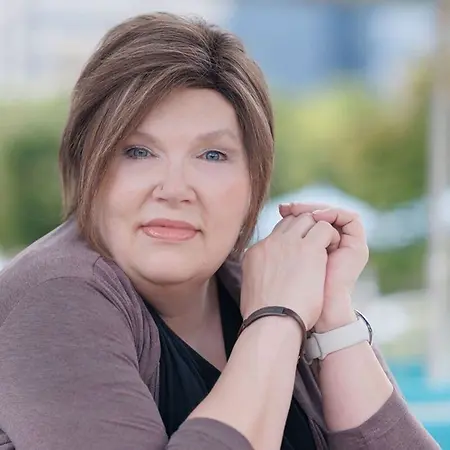
Stacey Fisher is a Tennessee-based author, speaker, and advocate who founded The Blueberry Spoon Press publishing company. She authored "Unbroken: Journeys of Acromegaly," incorporating 36 patient voices across 10 countries, and leads the Radical Listening™ initiative promoting empathy in healthcare. Committed to amplifying overlooked stories and helping others share their narratives, Stacey combines professional…