
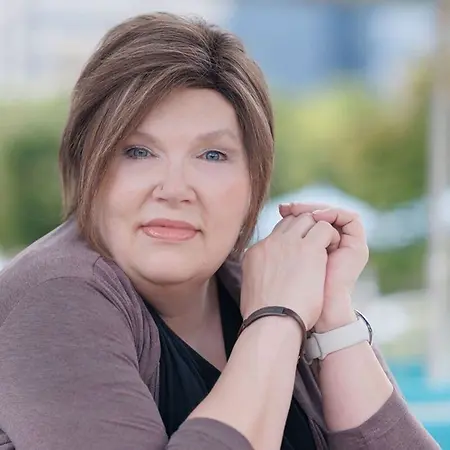
Two transformative journeys—one through Arizona's stunning landscapes with a dear friend, and another to a patient leadership summit in San Diego—reignite Stacey Fisher's passion for storytelling and launch her mission to help others share their voices through The Kintsugi Effect™.
“
Kristi witnessed the camaraderie, humor, and genuine love within my Acro family and started calling us "cousins" connected not by blood, but by something that had changed every one of our lives.
Stacey Fisher · In Her Own Words
Her Story
About Stacey
Stacey Fisher is an author, speaker, advocate, and artist based in Tennessee, dedicated to amplifying patient voices and creating space for stories that are often overlooked. As the founder and Chief Executive Officer of The Blueberry Spoon Press, she leads an independent publishing company focused on meaningful, human-centered storytelling. Her professional background spans healthcare, insurance, entrepreneurship, writing, and publishing, complemented by experience as a home health care assistant, personal care assistant, and business owner.
Stacey is the author of Unbroken: Journeys of Acromegaly, a braided memoir and advocacy project examining medical misdiagnosis, diagnostic delays, resilience, and the experience of being unheard within healthcare systems. The book incorporates 36 voices from patients, caregivers, and families across 10 countries and 24 states, combining lived experiences with education, reflection, and advocacy. Through this work and her Radical Listening™ initiative, Stacey explores the importance of empathy, curiosity, and truly listening to people navigating illness, loss, change, and other life challenges.
Beyond her professional endeavors, Stacey is deeply committed to family, service, and helping others share their stories through writing and publishing. She homeschooled her four children from kindergarten through high school, an accomplishment she considers one of her greatest achievements, and has supported philanthropic efforts through organizations including the Jordan Hackett Foundation, Ronald McDonald House, and her church. Guided by a belief that meaningful work should be rooted in genuine passion, Stacey continues to use storytelling, advocacy, and publishing to help people feel seen, heard, and understood.
Her Interview
Ten minutes with Stacey
01What do you attribute your success to?
I attribute my success to the support and encouragement of my family. They inspire and motivate me, especially throughout my health journey, and have consistently encouraged my writing and publishing work.
02What’s the best career advice you’ve ever received?
The best career advice I’ve received is to pursue work you genuinely love. Passion makes the challenges worthwhile and gives you the motivation to keep growing.
03What values are most important to you in your work and personal life?
Family is one of the most important values in my life, and homeschooling my four children from kindergarten through high school is one of my greatest achievements. I also value listening to others and helping people share their stories through writing and publishing.
Her Content Hub
Articles by Stacey
One Last Spark
How two journeys reignited my purpose and reminded me that my story was far from over.

One Last Spark
Two Journeys That Changed My Life
By Stacey Fisher
Some trips change your scenery. Others change your life.
Sometimes, it takes more than one.
In 2024, I took two journeys that would change the direction of my life in ways I never could have imagined.
The first was a two-week adventure through Arizona with my friend Kristi, filled with breathtaking scenery, wonderful food, laughter, friendship, and an opportunity for her to experience a part of my life she'd only heard me describe.
The second took me to San Diego, California, for the Crinetics Patient Leadership Summit. There, a seemingly ordinary conversation at a hotel bar would reignite a dream I'd nearly abandoned.
One journey helped me see my life through someone else's eyes. The other reminded me that I still had a story to tell.
Together, they changed my future.
The Cousins
For years, my friend Kristi had heard me talk about acromegaly, a rare hormonal disease caused by excess growth hormone, usually from a pituitary tumor.
She knew about my surgeries, medications, and the challenges I'd faced. She also knew I'd found an extraordinary community of people living with the same disease.
But hearing about my world and stepping into it were two very different things.
When Kristi finally accompanied me to an international acromegaly conference, she met people from around the world who shared my diagnosis. We came from different countries, different cultures, and different walks of life, yet in so many ways, we were remarkably alike.
Kristi noticed that almost immediately.
She watched people greet me with hugs and affection. She listened to conversations about surgeries, symptoms, medications, and experiences that most people couldn't begin to understand. She witnessed the camaraderie, the humor, and the genuine love we had for one another.
And she started calling us "cousins."
I loved that.
We weren't related by blood, but we were connected by something that had changed every one of our lives.
I'd always called them my Acro family. Now Kristi understood why.
The conference gave her a firsthand education in the medical realities of acromegaly, including the opportunity to watch a live pituitary tumor surgery.
She was enthralled.
For someone who had listened to me describe years of treatments and procedures, watching a surgeon operate on the very part of the body responsible for so much upheaval in my life was extraordinary.
But the conference wasn't all medical discussions and educational sessions. Every meal was catered, and I'm not exaggerating when I say the food was some of the best I'd ever eaten.
We gathered around tables, shared stories, laughed, and enjoyed being together. For a little while, we weren't simply patients managing a complicated disease. We were people enjoying good food and good company.
And Kristi was getting to know my cousins.
Two Women and a Jeep
Our Arizona adventure gave us two weeks to explore, and we intended to make the most of every opportunity.
We rented a Jeep with removable hardtop roof panels, and whenever the weather was sunny and warm, we took them off.
There's something wonderful about driving through Arizona with the open sky above you, surrounded by mountains, desert, and seemingly endless possibilities.
We had places to go and things to see, and we certainly weren't going to waste those two weeks.
We explored Scottsdale, including its aquarium, and visited the botanical gardens with friends from the acromegaly community.
That outing was particularly special because Kristi was seeing my Acro family in an entirely different setting. We weren't sitting in conference rooms discussing medications or treatments. We were out enjoying the desert's beauty together.
The disease had brought us together, but our friendships extended far beyond it. Kristi was discovering that firsthand.
And then there was the food.
Oh, the food!
One of our favorite discoveries was Elote Café in Sedona.
I'd never eaten there before, and goodness, was it delicious! We'd already enjoyed some fabulous catered meals, but that restaurant may have topped them all. It was one of the best meals of the entire trip.
We also went on a mission to find Navajo bread.
I'd told Kristi she absolutely had to try it. We simply couldn't come all that way without finding some.
Eventually, we spotted a little roadside stand seemingly in the middle of nowhere. We stopped, bought some, and she loved it.
I was delighted.
Sometimes the best memories aren't made at grand attractions or expensive restaurants. Sometimes they're made at a little stand on the side of the road, sharing something wonderful with someone you love.
We even stopped to see two unusual McDonald's restaurants, one black and one blue.
Because why not?
The Beauty of Sedona
I'd visited Sedona before, and I remembered how I felt the first time I saw those magnificent red rocks. The beauty had taken my breath away.
Now I got to watch Kristi experience it for herself.
There's something special about returning to a place you love with someone who's never seen it. You get to experience it all over again through their eyes.
One of our adventures was a Pink Jeep Tour through Sedona's spectacular red-rock landscape.
The sun was shining, but a light drizzle fell around us, and it was cold. We bundled ourselves into rain jackets and ponchos before climbing into the Jeep.
I sat in front, and Kristi sat behind me. We couldn't really see each other's expressions, but I could certainly hear hers.
"Oh, how beautiful!"
"Oh, I love this!"
And then, as the Jeep bounced over another rocky stretch:
"Oh, this is so bumpy!"
We laughed and talked back and forth, trying our best to take videos while being jostled around in our seats. Between the bumps, the drizzle, and the magnificent scenery, it was quite an adventure.
At the end of the tour, we climbed out and took pictures together against a breathtaking backdrop.
Two friends, a little cold, a little damp, and having the time of their lives.
But not every adventure was quite so easy.
We also visited Montezuma Castle and the Chapel of the Holy Cross, that remarkable chapel nestled into Sedona's red rocks.
Getting to the chapel presented a problem. I was too weak to climb the steep hill leading up to it, so Kristi pushed me in a wheelchair.
All the way up.
By herself.
It was no small undertaking, and I haven't forgotten it.
That's something people don't always understand about living with a chronic illness. You can have all the desire in the world to experience life, but sometimes your body refuses to cooperate.
I wanted to see that chapel and enjoy the beautiful surroundings. Kristi wasn't about to let that hill stop us.
She pushed. I rode. And together, we made it.
Somewhere during those two weeks, I also managed to fracture my foot.
Don't ask me how. I never did find out.
No dramatic accident or spectacular tumble. Just a fracture.
As if I needed another complication!
But we kept making memories.
Sharing the Sky
One of the most extraordinary adventures of our Arizona trip was flying in a helicopter over the Grand Canyon.
It wasn't Kristi's first helicopter ride, but it was her first time seeing the Grand Canyon from the air.
Below us, the earth opened into an enormous expanse of cliffs, valleys, shadows, and layers of ancient stone.
Some places in this world make you feel very small while reminding you how wonderful it is to be alive.
The Grand Canyon is one of them.
But when I think about that helicopter ride now, my favorite part wasn't a particular view or anything either of us said.
It was simply being up there together.
For a little while, we were just two friends having a remarkable adventure. We weren't thinking about medical appointments, medications, or all the ways illness had complicated my life.
We were simply enjoying the moment.
Two friends, sharing the sky.
What Kristi Saw
Throughout our Arizona adventure, Kristi saw parts of my daily life she'd never experienced firsthand.
She watched me give myself injections and take the medications I depend on. She saw the routines that accompany me everywhere, even on vacation.
She saw how quickly my strength could disappear, how I sometimes needed help, and how even a beautiful day of sightseeing could become physically challenging.
But she also saw something else.
She saw that I still wanted to live.
I still wanted to explore, laugh, try new foods, see beautiful places, and share wonderful experiences with the people I loved.
And I think that was one of the greatest gifts of our journey.
Kristi wasn't simply learning about acromegaly. She was learning what living with acromegaly could look like.
It wasn't all medical appointments, medications, and limitations. There were friendships, adventures, laughter, and an extraordinary community of people she'd come to call cousins.
For me, having a friend witness that part of my life meant a great deal. I didn't have to explain everything.
She'd seen it for herself.
Our Arizona adventure gave us memories I'll treasure for years. But another journey would give me something I hadn't realized how badly I needed.
A Different Trip, a Different Kind of Discovery
On a separate trip in June 2024, I traveled to San Diego for the Crinetics Patient Leadership Summit.
Current and former Patient Leadership Council members had gathered for a weekend of connection and advocacy. It was another opportunity to be surrounded by people who understood acromegaly, people whose stories and experiences had become so important to me.
For years, I'd carried around an idea for a book.
I wanted to write my memoir, but I didn't want it to be only my story. I wanted to weave in the voices of others whose lives acromegaly had changed.
I'd already collected stories, talked about writing the book, and imagined what it might become. But somewhere along the way, the idea had stalled.
Writing a memoir isn't easy, particularly when it means revisiting some of the most painful chapters of your life.
It's one thing to survive something.
It's another to sit down and write about it.
One evening, I was sitting at the hotel bar talking with friends when Kelly B., part of my Acro family, looked at me and asked,
"What happened to your book idea?"
Then she reminded me,
"I already gave you my story."
Her words hit harder than I let on.
Jill Sisco was there, too. She smiled and said,
"Anything that gets the word about acromegaly out there is a good idea."
No fireworks or dramatic speeches. Just two women reminding me of something I'd nearly forgotten.
The book wasn't only about me.
Other people had trusted me with their stories. They believed those stories deserved to be heard.
And perhaps I was finally ready to believe that mine did, too.
I couldn't stop thinking about that conversation. It followed me home.
When I returned from San Diego on June 14, 2024, something had changed.
By June 16, I'd scheduled twenty-two interviews.
Twenty-two.
Suddenly, the book I'd carried in my heart for years wasn't just an idea anymore.
It was happening.
And it all began with a simple question at a hotel bar.
That was my spark.
From a Memoir to a Mission
Looking back, I can see how those two separate journeys changed my life in different but equally meaningful ways.
The Arizona trip with Kristi reminded me of the extraordinary people who had become my family because of one rare disease. It reminded me that even a life complicated by illness could still be filled with beauty, laughter, friendship, and adventure.
Kristi got to see my world, and I got to see it through her eyes.
The San Diego trip gave me something different.
A renewed sense of purpose.
That conversation with Kelly and Jill encouraged me to return to a book I'd been postponing for far too long.
That book became Unbroken, a memoir woven together with stories from others affected by acromegaly.
But what started as a desire to write one book eventually grew into something much larger.
I began to understand that I didn't simply want to tell my own story. I wanted to help other people tell theirs.
I founded Blueberry Spoon Press LLC and began creating books, journals, and other projects centered on storytelling, reflection, listening, and the importance of being heard.
When I first shared this vision with Influential Women, I called it Radical Listening.
My goal was to encourage people to do something that sounds so simple, yet has become increasingly rare: truly listen to one another.
Not simply wait for our turn to speak. Not rush to offer advice or try to fix everything.
Just listen.
But as my work developed, I realized I wanted a name that expressed something deeper.
I found it in the Japanese art of kintsugi.
Kintsugi is the practice of repairing broken pottery with lacquer and gold, making the cracks part of an object's beauty rather than something to conceal.
That concept resonated deeply with me.
I'd spent years feeling as though illness, loss, and circumstances beyond my control had broken my life into pieces. But I was beginning to understand that our broken places don't make our stories less valuable.
They're part of what makes those stories ours.
And I saw the same truth reflected in the stories others shared with me.
Sometimes, the simple act of telling our stories can begin the process of mending. And sometimes, being truly heard can help us heal.
So Radical Listening evolved into The Kintsugi Effect™.
I like this concept even more because it fits my purpose so much better. It embraces both sides of what I've been trying to accomplish: the courage it takes to tell our stories and the compassion it takes to hear them.
Mending in the telling. Healing in hearing.
The name changed, but the purpose didn't. It became clearer.
What began as the dream of writing one memoir has grown into Blueberry Spoon Press, The Kintsugi Effect™, and a growing collection of books and journals designed to encourage reflection, connection, and storytelling.
And I still have more stories to tell.
The Things We Bring Home
When I think about Arizona, I remember the sunshine streaming through the open roof of our Jeep, the red rocks of Sedona, and the drizzle on our Pink Jeep Tour.
I remember the little roadside stand where Kristi tried Navajo bread, the unforgettable meal at Elote Café, and the Grand Canyon stretching beneath our helicopter.
I remember Kristi pushing me uphill when I couldn't climb. I remember watching her discover the extraordinary people I'd come to call my Acro family.
And I remember how she gave them a new name.
Cousins.
But when I think about San Diego, I remember something very different.
A hotel bar. A conversation with friends. Kelly asking me what had happened to my book idea, and Jill reminding me that sharing our stories could make a difference.
And the quiet realization that perhaps I wasn't finished writing mine.
Those journeys didn't happen at the same time or in the same place, but both changed something inside me.
One helped me appreciate the life I was still living.
The other helped me imagine the life I could still create.
Sometimes I wonder what would have happened if Kelly hadn't asked that question, if Jill hadn't encouraged me, or if Kristi hadn't come along to experience a part of my world that most people never see.
Would I have found my way back to writing?
I'd like to think so.
But I know this much: those experiences helped change the direction of my life.
I learned that friendship sometimes means having someone willing to push you uphill when you can't make the climb yourself.
I learned that illness may change the life we imagined, but it doesn't have to take away our capacity for wonder, adventure, or joy.
And I learned that the stories we carry inside us sometimes need someone else to remind us they're worth telling.
I'd traveled through some of the most magnificent landscapes in America, but the greatest discovery I made wasn't at the Grand Canyon or among the red rocks of Sedona.
It was realizing my story wasn't finished.
Not even close.
Sometimes changing your life doesn't require a grand revelation. Sometimes it takes a friend willing to push you uphill, a community that reminds you where you belong, and two women who believe in a dream you've almost abandoned.
Sometimes all it takes is one last spark.
And that spark didn't just help me write a book. It helped me begin a whole new chapter of my life.
Acromegaly Resources & Support
Jill Sisco
Professional email address and website to be added before publication.
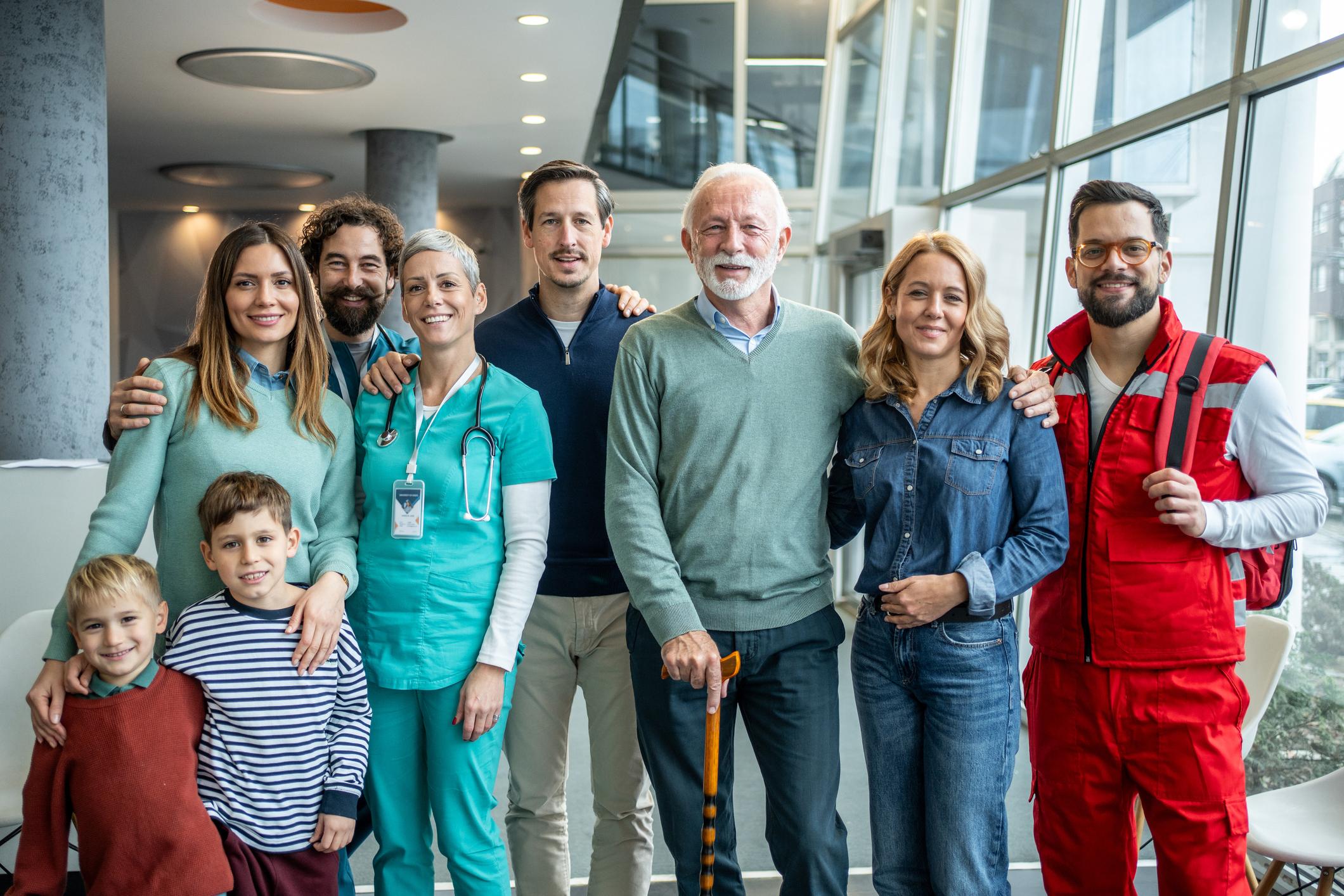
This article explores the profound impact of rare and orphan diseases on medicine and patients, examining the diagnostic challenges, research obstacles, and human costs of conditions affecting fewer than 200,000 people.
Rare Doesn't Mean Insignificant
Understanding why diseases affecting millions still struggle for recognition and treatment.
Rare Doesn't Mean Insignificant
The Hidden Impact of Orphan Diseases on Medicine and the People Left Waiting
By Stacey Fisher
Imagine visiting your doctor because something isn't right.
You know your body. You know something has changed. Yet the tests come back normal, or your symptoms don't seem to fit any familiar diagnosis.
You're referred to a specialist. Then another. You undergo more testing, take medications that don't help, and hear explanations that never quite make sense.
Months pass. Perhaps years.
Eventually, someone recognizes what everyone else has missed.
You have a rare disease.
For some patients, receiving that diagnosis brings relief. Finally, there is a name for what they've been experiencing.
But for others, the diagnosis leads to an entirely different question.
Now that we know what's wrong, can medicine do anything about it?
That question lies at the heart of one of healthcare's most complicated challenges: rare diseases, sometimes called orphan diseases.
Rare Diseases Aren't So Rare
In the United States, a disease is generally considered rare if it affects fewer than 200,000 people.
That sounds like a small number.
Until you look at the bigger picture.
More than 10,000 rare diseases have been identified, and collectively, they affect over 30 million Americans.
That's approximately one in ten people.
Think about that for a moment.
The person sitting beside you at church, the child in your neighborhood, your coworker, or someone in your own family may be living with a condition that most physicians will encounter only rarely, if ever.
Each disease may be uncommon, but its collective impact is enormous.
And that creates an uncomfortable contradiction.
How can conditions affecting millions of people collectively still struggle to receive adequate attention?
The Long Road to a Diagnosis
One of the greatest challenges associated with rare diseases begins long before treatment.
It begins with recognition.
Physicians are trained to consider common explanations for symptoms before investigating unusual ones. In many circumstances, that's a reasonable medical approach.
But what happens when the uncommon explanation is the correct one?
Rare diseases can produce symptoms that resemble those of far more familiar conditions. Fatigue, headaches, joint pain, digestive problems, weakness, and changes in appearance can have dozens of possible causes.
Patients may visit multiple specialists, undergo repeated testing, and receive treatments directed at symptoms rather than the underlying disease.
Within the rare disease community, this experience has a name.
The diagnostic odyssey.
For many patients and families, that odyssey stretches across years.
And the consequences extend well beyond frustration.
Delayed diagnosis can mean disease progression, missed opportunities for treatment, unnecessary procedures, financial hardship, and emotional exhaustion.
Meanwhile, physicians face their own challenge: recognizing conditions they may never have encountered during their training.
A rare disease may be described in a medical textbook, but recognizing it in a living patient is another matter.
That is why education and awareness matter.
A physician doesn't have to know everything about every rare disease. But recognizing when a patient's symptoms don't fit the expected pattern and knowing when to seek additional expertise can make an extraordinary difference.
What Does It Mean to Be an Orphan?
The word orphan usually brings to mind a child without parents.
In medicine, it means something different.
Historically, some diseases were described as orphan diseases because they attracted little commercial interest in developing treatments. Their patient populations were simply too small to offer the financial returns pharmaceutical companies typically sought.
Developing a medication can require years of research, extensive testing, specialized facilities, and significant financial investment.
When a disease affects millions of people, a company may have a large potential market.
When it affects only a few thousand, or even a few hundred, the economics become much more complicated.
But the need for treatment doesn't diminish just because the patient population is small.
A condition affecting 500 people can be just as devastating to those individuals as one affecting five million.
The human cost isn't measured by market size.
In 1983, Congress passed the Orphan Drug Act to encourage the development of treatments for rare diseases.
The law created incentives intended to make research and development more financially feasible, including certain tax benefits, fee exemptions, and the possibility of market exclusivity after approval.
It acknowledged that ordinary market forces were not always enough to meet medical needs.
But decades later, enormous gaps remain.
The vast majority of rare diseases still have no specifically approved treatment.
For many patients, receiving a diagnosis doesn't mean receiving a solution.
It means beginning another search.
The Impact on the Medical Field
Rare diseases present challenges throughout healthcare, from the examination room to the research laboratory.
- For physicians, they complicate diagnosis and treatment decisions.
- For hospitals, they may require specialized teams, unfamiliar procedures, and coordination among multiple departments.
- For insurers and healthcare systems, they raise difficult questions about coverage, access, and the costs of specialized care.
- For researchers, they present scientific problems that traditional approaches aren't always designed to solve.
A clinical trial for a common disease may recruit hundreds or thousands of patients.
But what happens when only a few hundred people worldwide have the condition being studied?
Some patients may live thousands of miles from the nearest research center. Others may be too ill to travel. Their symptoms may vary considerably, making it difficult to measure whether an experimental treatment is working.
Even understanding how a rare disease progresses can be challenging when so few patients have been studied.
These difficulties don't make research impossible, but they demand creativity, collaboration, and carefully designed scientific methods.
Researchers may need international partnerships, patient registries, shared data, and innovative clinical trial designs to answer questions that larger studies would ordinarily address.
Rare diseases challenge medicine to think differently.
And sometimes, those challenges lead to discoveries that reach far beyond the original condition.
What Rare Diseases Can Teach Medicine
Here is something I find particularly fascinating.
Research into rare diseases doesn't benefit only the people living with those conditions.
It can also help scientists understand biological processes involved in more common illnesses.
A rare genetic disorder may reveal how a particular protein functions. Studying an unusual metabolic condition may help researchers understand a biological pathway that affects thousands of other patients.
Discoveries made while investigating one rare disease can contribute to new diagnostic methods, treatments, and scientific approaches relevant to other conditions.
In other words, rare disease research isn't simply an investment in a small patient population.
It's an investment in medical knowledge.
The human body doesn't organize its biology according to how many people share a diagnosis.
The mechanism behind a rare condition may hold clues that are valuable across medicine.
When we overlook rare diseases, we may also overlook opportunities for discovery.
The Cost of Being Rare
Rare diseases have an enormous economic impact, although that burden is often difficult to see.
There are medical appointments, specialist consultations, laboratory tests, hospitalizations, medications, and travel expenses.
But those are only part of the cost.
Consider a parent who must leave work to care for a child with a complex condition.
Or an adult whose symptoms make full-time employment impossible.
Consider the family traveling across several states because the nearest specialist is hundreds of miles away.
Then there are insurance denials, complicated authorizations, medical equipment, home modifications, and the countless hours spent arranging care.
The financial burden can be staggering.
Unlike medical bills, the cost of lost opportunities is hard to calculate.
How do you put a dollar value on an interrupted education, a career abandoned, or years spent searching for a diagnosis?
The consequences extend far beyond individual medical charts, affecting families, workplaces, communities, and the broader economy.
The healthcare system bears substantial costs, but patients and caregivers often carry the heaviest personal burden.
When the Patient Becomes the Expert
Rare disease medicine has another unusual aspect.
Sometimes the patient knows more about the day-to-day realities of a condition than the healthcare professional sitting across from them.
That doesn't mean the patient has greater medical training.
It means lived experience carries a kind of knowledge you can't learn entirely from textbooks.
Patients may recognize patterns in their symptoms, understand how treatments affect their daily routines, or identify complications that aren't immediately obvious during an appointment.
Many become extraordinarily knowledgeable about their diagnoses.
They read medical literature, attend conferences, join patient organizations, and follow emerging research.
Some help establish registries, connect researchers with patients, and participate in clinical studies.
Others become advocates, writers, educators, or organizers.
I've witnessed the power of those connections through the acromegaly community.
People who might never have met under ordinary circumstances become collaborators in something larger than themselves.
They exchange information, share experiences, and help one another navigate an often complicated medical system.
And they remind healthcare professionals of something essential.
Behind every diagnosis is a person who has to live with it.
Patient experience should never replace scientific evidence, but it can help researchers and clinicians ask better questions.
The strongest approach brings both forms of knowledge to the table.
Medicine Needs Collaboration, Not Isolation
If rare diseases teach us anything, it's that no single physician, hospital, research center, or patient organization can solve every problem alone.
Progress requires collaboration.
- Primary care physicians need access to specialists who recognize unusual disease patterns.
- Specialists need opportunities to share knowledge across disciplines.
- Researchers need reliable information about how rare diseases develop and affect patients over time.
- Pharmaceutical companies need workable pathways for testing treatments in small populations.
- And patients need meaningful opportunities to participate in decisions that affect their care.
Technology may help bridge some of these gaps.
Advances in genetic testing, data analysis, telemedicine, and research networks are creating new possibilities for diagnosis and treatment.
But technology alone isn't enough.
Medical records still need to be understood in context. Specialists need to communicate. Patients need affordable access to appropriate testing and care.
And when an answer isn't immediately available, someone needs to remain curious enough to keep searching.
The Responsibility of Being Heard
A patient who repeatedly seeks medical care isn't necessarily asking for an extraordinary answer.
Sometimes that patient is asking a physician to recognize that the ordinary answers haven't worked.
Listening carefully doesn't mean accepting every proposed diagnosis or ordering every possible test.
It means taking symptoms seriously, acknowledging uncertainty, and reconsidering an explanation when the evidence no longer supports it.
The ability to say, "I don't know, but let's investigate further," can be one of medicine's most valuable qualities.
I've spent years thinking about the importance of being heard, both as a patient and through my work as a writer and advocate.
And I believe healthcare offers one of the clearest examples of why listening matters.
A person's account of their symptoms is not a substitute for medical testing.
But it is information.
Important information.
Sometimes it contains the clue that connects seemingly unrelated findings.
And sometimes it reveals a problem that deserves another look.
Rare disease patients shouldn't have to become medical detectives simply to receive appropriate attention.
They deserve healthcare professionals willing to investigate what they don't yet understand.
The Future of Rare Disease Medicine
There is reason for hope.
Researchers, clinicians, patient organizations, and regulatory agencies are working to improve rare disease diagnosis and treatment development.
New scientific tools and international collaborations are helping researchers investigate conditions that once received very little attention.
Patient advocacy organizations are creating communities where none previously existed.
Greater awareness is challenging the assumption that rare diseases are too uncommon to be a major public health concern.
But hope must be accompanied by continued investment.
Earlier diagnosis matters. Medical education matters. Research funding matters. Access to treatment matters.
And patients must remain part of the conversation.
We cannot measure the value of medical progress solely by how many people benefit from a single discovery.
We must also consider what those discoveries teach us and what they make possible.
A breakthrough for a handful of patients may create knowledge that eventually benefits thousands more.
Even when it doesn't, those few patients still matter.
Rare Doesn't Mean Insignificant
Imagine being told that your condition is so rare that there is little research, no approved treatment, or no specialist nearby.
Now imagine hearing that the reason is simply that too few people have it.
Would that make your suffering less real?
Would it make your life less valuable?
Of course not.
The word rare describes how frequently a disease occurs.
It doesn't describe the worth of the people living with it.
It doesn't measure the severity of their symptoms, the devotion of their families, or the importance of finding answers.
And it certainly shouldn't determine whether their experiences deserve attention.
Rare disease research can improve medical understanding far beyond individual diagnoses. But even if a discovery benefits only a small number of people, that achievement still matters.
Healthcare is ultimately about people.
Not just statistics, research budgets, or market opportunities.
People.
Every patient deserves to be taken seriously. Every family deserves access to reliable information. Every researcher deserves the opportunity to pursue discoveries that could change lives.
And every rare disease deserves consideration—not because it affects millions, but because it affects someone.
Rare doesn't mean insignificant.
And no patient should feel orphaned by the medical system simply because their disease is uncommon.
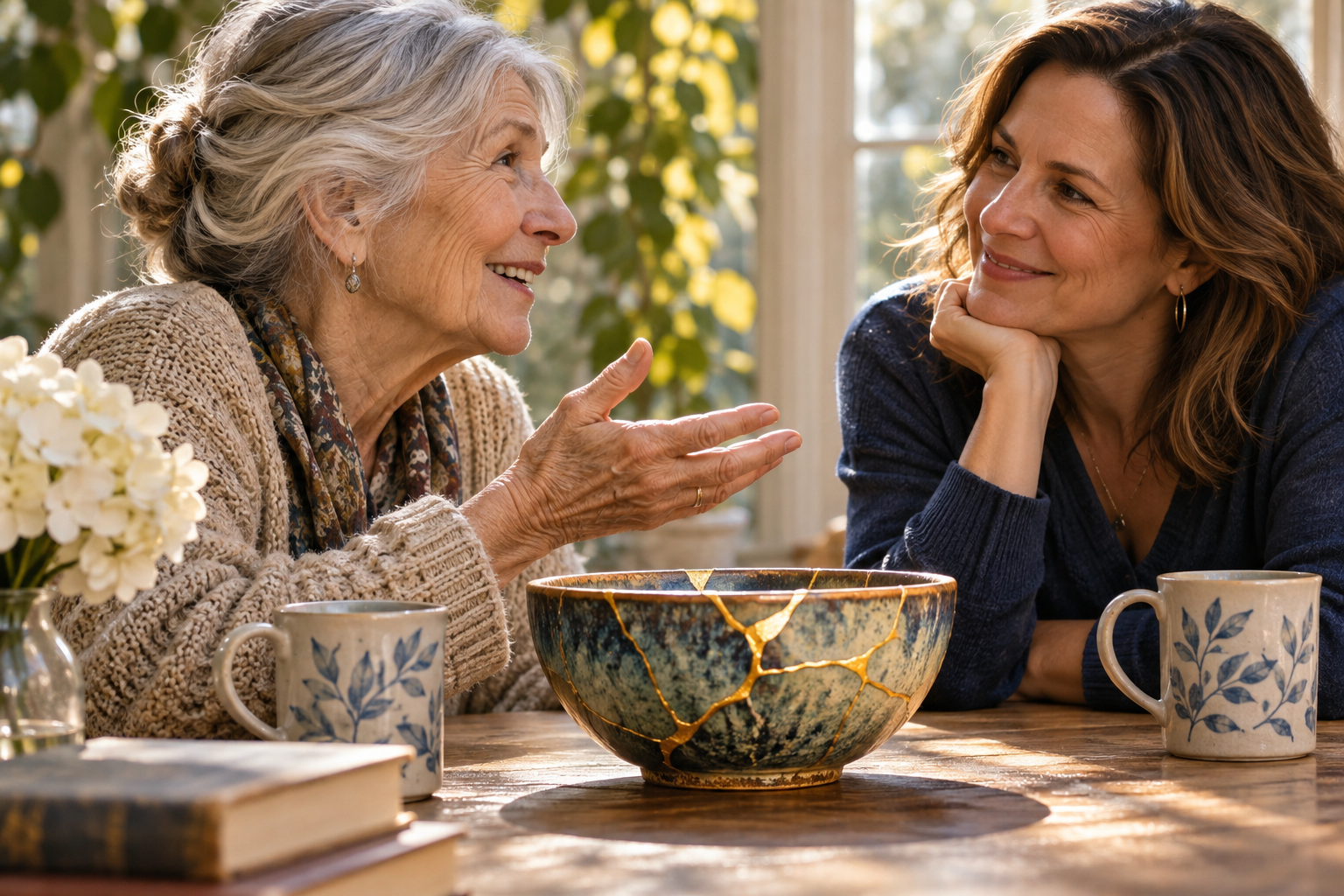
Discover The Kintsugi Effect™, an original philosophy that celebrates the power of storytelling and compassionate listening to create meaningful human connection. Learn how truly hearing one another can transform relationships and help us see the beauty in each other's stories.
The Kintsugi Effect™
Discover how listening and storytelling can transform our connections and help us see the beauty in each other's experiences.
The Kintsugi Effect™
An Original Philosophy of Storytelling and Connection
By Stacey Fisher
Have you ever walked away from a conversation feeling like someone heard every word you said but didn't really listen?
Or perhaps you've experienced the opposite: someone gave you their undivided attention. They didn't interrupt, judge, or rush to offer advice. They simply listened.
And somehow, you walked away feeling a little lighter.
Something extraordinary happens when you're truly heard.
We can send messages around the world in seconds, yet a meaningful conversation can still leave us feeling more connected than a hundred messages ever could.
What makes the difference? Sometimes it's the space we give another person to tell a story—and our willingness to receive it.
That idea became the foundation of my original philosophy, The Kintsugi Effect™: everyone has a story worth telling, and everyone deserves to be heard.
The Beauty of Kintsugi
The Kintsugi Effect™ takes its inspiration from the Japanese art of kintsugi, the practice of repairing broken pottery with lacquer and powdered gold or other precious metals.
Rather than hiding the cracks, the repairs become visible features of the piece. Its history isn't erased. It becomes part of what makes the object unique.
I've always found that idea fascinating.
Because people have histories, too.
Every one of us carries experiences that have shaped who we've become. Some are joyful. Others are difficult. Some have changed us in ways we never expected.
We've celebrated accomplishments, made mistakes, experienced disappointments, formed friendships, lost relationships, and discovered strengths we didn't know we possessed.
And we carry those experiences into every conversation.
But here's something I believe is important.
We don't always need to be repaired. Sometimes we simply need to be understood.
That's where my philosophy begins.
The Kintsugi Effect™ isn't a philosophy about broken people. It's about human connection and the value of the stories that make us who we are.
The Stories We Carry
Think about the people you encounter throughout an ordinary day.
The cashier at the grocery store. The neighbor walking her dog. The coworker who always arrives early. The elderly gentleman sitting alone at a restaurant.
Every one of them has a story.
The cashier may be putting herself through college. Your neighbor may have spent years caring for someone she loves. Your coworker may have an extraordinary talent nobody knows about. The gentleman at the restaurant may have lived through experiences that would fill several books.
We rarely know.
We see people for a few minutes, sometimes only a few seconds, and form impressions based on the smallest pieces of their lives.
But what if we became a little more curious?
What if we asked more questions?
And what if, when someone answered, we actually listened?
I've discovered that people often have remarkable stories waiting just beneath the surface of an ordinary conversation.
Sometimes all it takes is someone who genuinely wants to hear them.
From Radical Listening to The Kintsugi Effect™
When I first began developing these ideas, I called them Radical Listening. That's the name I used when I first shared my work with Influential Women. I still believe in the importance of paying attention without judging, interrupting, or rushing to offer solutions.
But I began to realize the conversation had two equally important sides: the person willing to tell a story and the person willing to receive it.
The Japanese art of kintsugi offered a more complete metaphor. Just as a piece of pottery holds the visible history of its repair, we carry memories and experiences that become part of who we are. When we share them with someone who listens, we can sometimes see those experiences in a new light.
So Radical Listening evolved into my original philosophy, The Kintsugi Effect™. I prefer this concept because it embraces the whole exchange, not just the listener's role. It more fully expresses my belief in the power of storytelling and compassionate listening to bring people together.
Mending in the telling. Healing in hearing.
Mending in the Telling
Have you ever started telling a story and realized, halfway through, that you understood it differently than you did before?
Perhaps you were remembering a childhood summer, a friendship, or a decision that changed your direction. Finding the words can reveal connections we hadn't noticed.
Storytelling isn't limited to hardship. It can preserve joy, humor, family traditions, and the small details that might otherwise vanish.
A grandmother's first job, the recipe nobody thought to write down, or the story of how two people met can become a gift to someone who wasn't there.
As we tell and retell these memories, we often discover what matters most. We might recognize someone's kindness more clearly or finally understand why a particular moment stayed with us.
A story can change in meaning as we grow, even when the facts remain the same.
Not every experience is ready to be shared, and no one owes anyone their private history. We choose what to tell, when to tell it, and whom to trust.
But when we do choose to share, we give someone the chance to know us beyond the surface.
This is what I mean by mending in the telling. We aren't necessarily repairing something that is broken. Sometimes we're simply gathering the pieces of our experiences and discovering how they fit together.
Stories That Connect Generations
I think about how easily family histories can disappear.
We may know our grandparents' names without knowing what made them laugh, what frightened them as children, or what they dreamed of becoming.
Then one day, we wish we'd asked.
When someone tells us about a first home, a hard-won accomplishment, a favorite holiday, or an ordinary day that became unforgettable, the memory doesn't have to end with them.
It can become part of a family's shared understanding.
Listening across generations can also surprise us. The people we think we know best have lived whole chapters before we entered their stories.
Younger people have experiences and perspectives older relatives may never have considered. Listening allows everyone to be more than the role we've assigned them.
My philosophy invites us to make room for those exchanges while there's still time—not only to preserve the past but also to deepen relationships in the present.
We cannot go back and ask every question we wish we'd asked.
But we can begin asking them today.
Healing in Hearing
Now consider the other person in the conversation: the listener.
The most meaningful listeners I know don't treat a story as a problem to solve. They make room for it. They ask what happened next. They remember the names. They notice what matters to the person speaking.
A listener may learn something about a relative that years of ordinary conversation never revealed or discover that a friend sees the same event in an entirely different way.
Sometimes the gift flows both ways: the storyteller feels understood, and the listener leaves with a broader view of the world.
We don't always need someone to fix us. Sometimes we simply need someone to hear us.
Listening doesn't mean agreeing with everything or abandoning our own boundaries. It means making an honest effort to understand a person before deciding what to say next.
It can be a small act, but its meaning can last for years.
That's the healing in hearing that I hope The Kintsugi Effect™ will encourage.
The Gift of Being Seen
A special kind of loneliness comes from feeling invisible.
You can be surrounded by people, join conversations, and go through an entire day without feeling like anyone has truly noticed you.
And then someone asks a thoughtful question.
They remember something you told them weeks ago. They notice that you've been unusually quiet. They ask about a project that's important to you.
And they listen to the answer.
Suddenly, you feel seen.
I've felt that myself, and I've seen it in others.
While writing my memoir, Unbroken, I had the privilege of hearing stories from people whose experiences were very different from my own, even when we shared some common ground.
Those conversations reinforced something I'd been coming to understand for years.
People don't always need someone to tell them what their experiences mean.
Sometimes they need the freedom to discover that meaning for themselves, with someone willing to listen.
There's a difference between being the center of someone's attention and being the recipient of their genuine interest.
One can be fleeting.
The other can stay with you for years.
Learning to Listen to Ourselves
Another important part of my philosophy is learning to listen to ourselves.
Our memories aren't only things we pass along to others. They're also ways of discovering what matters to us.
What stories do we tell about ourselves again and again? Which details do we leave out? What delighted us as children? Which people helped us become who we are? When did we change our minds about something important?
A notebook, a quiet walk, or a few minutes of reflection can help us notice the answers.
That is part of why I created the Kintsugi Yourself journals.
With 365 guided prompts for listening and reflection, they invite readers to explore their experiences, remember meaningful moments, and preserve stories they might otherwise overlook.
The magazine includes an edition for women and a separate men's edition, each offering its own opportunities for reflection.
The prompts encourage readers to consider their relationships, memories, experiences, hopes, and the many people who have influenced their lives.
Not every reflection needs to become a revelation.
Sometimes remembering a favorite meal, a family saying, or an ordinary afternoon is enough.
Those moments belong to our stories, too.
And I believe learning to recognize the value of our own experiences can help us recognize that same value in others.
Bringing The Kintsugi Effect™ Into Everyday Life
You can practice my philosophy at a kitchen table, at work, or during a long drive with someone you love.
You don't need a special qualification. You need curiosity, patience, and a willingness to give someone room.
Ask a parent or grandparent what their neighborhood was like when they were young.
Invite a child to explain something that excites them without steering the answer.
Ask a friend what a particular memory means to them now.
When someone begins a story you've heard before, listen for a detail you may have missed.
You can also make space for stories in families where generations rarely have time to sit together.
Record a conversation, write down a recipe alongside the memory attached to it, or save a few lines from a loved one's recollection.
Ask permission before recording or sharing, and let people decide what should remain private.
The point isn't to collect stories as though they were possessions. It's to honor the people telling them.
A question asked with genuine interest can say, "Your life matters to me."
Be curious. Be patient. Be present.
A Philosophy for Everyone
The Kintsugi Effect™ grew from my experiences as a writer, interviewer, and someone who has spent years thinking about what it means to be heard.
Through Blueberry Spoon Press LLC, I've continued developing my philosophy and exploring these ideas in books, journals, and conversations that encourage reflection and connection.
But I don't think The Kintsugi Effect™ belongs only to writers, speakers, or people who have experienced extraordinary hardships.
It belongs in ordinary life.
It belongs in the conversations we have every day, with people we've known for decades and people we've only just met.
Because everyone has a history.
Everyone has experiences that have shaped them.
And everyone has something worth sharing.
We may never know which conversation will become a turning point in someone else's life.
A few thoughtful words might encourage someone to pursue a dream they've set aside. A question might bring back a cherished memory. A moment of patient listening might help someone feel less alone.
We can't always predict what our attention will mean to another person.
But we can choose to offer it.
That's what I hope my original philosophy, The Kintsugi Effect™, will encourage.
Not perfect conversations.
Not perfect people.
Simply a greater willingness to recognize the value of one another's stories.
The art of kintsugi reminds us that an object's history need not be erased for it to remain beautiful.
And our lives, with all their changes, discoveries, mistakes, joys, and unexpected turns, are worthy of the same respect.
We don't have to hide every imperfection.
We don't have to possess all the answers.
And we certainly don't have to fix everyone we encounter.
Sometimes, we can simply sit beside another person and listen.
Perhaps the next person you speak with has a story they've been waiting years to tell.
Perhaps you do, too.
Imagine what might happen if we gave one another the opportunity.
Mending in the telling. Healing in hearing.
Because being heard changes everything.
Join Influential Women and start making an impact. Register now.