Tapestry
The Tapestry of Life: Weaving Connection, Legacy, and Transformation Through Our Shared Stories

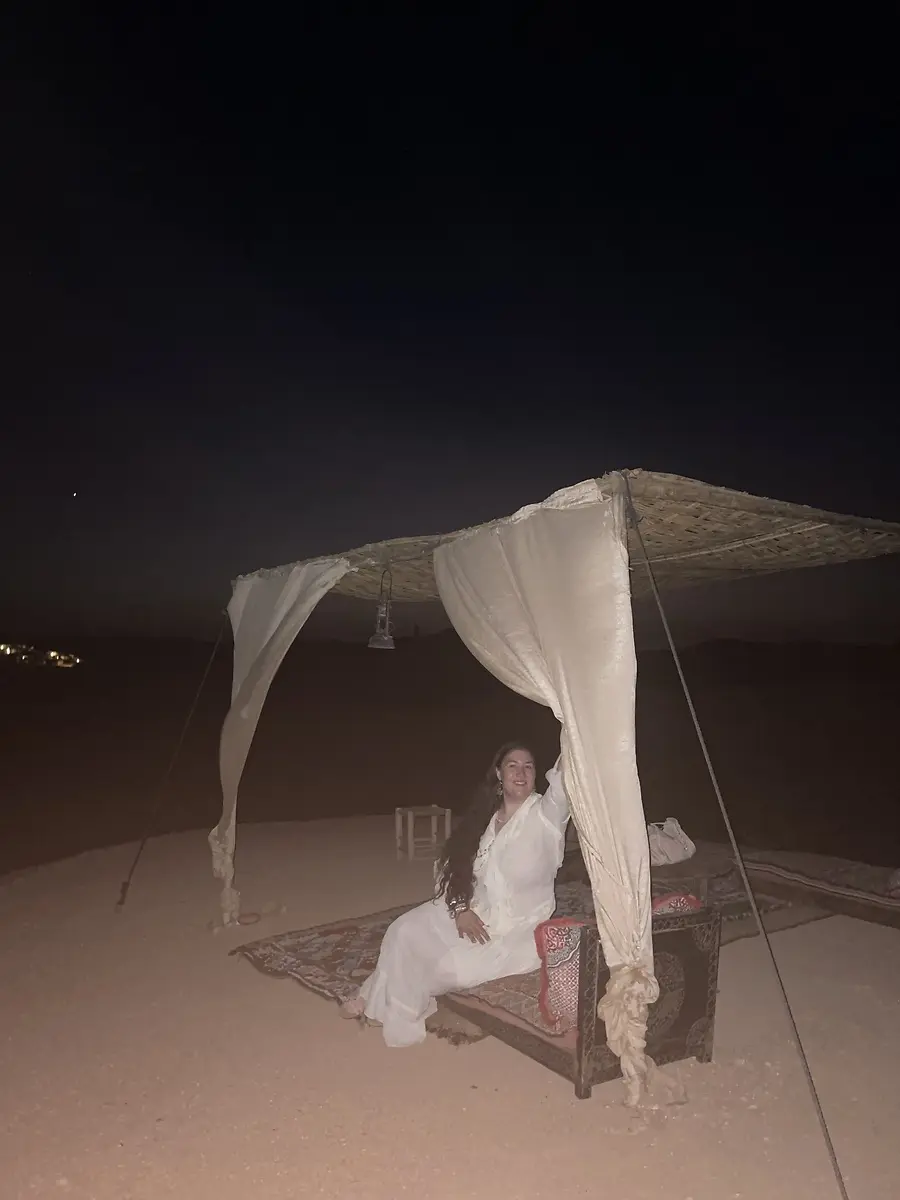
Caption: Rest when roaming in an Arabian desert.
Location known as "a guest house."
Photo Lady Hajira Buser known colloquially in the sea of sand as the Desert Rose.
✨
Our lives are like a tapestry—the texture of connection.
We weave threads on the loom of our ancestry. While some are born to ornate looms in gilded rooms, most of us refine our craft as we go. Sometimes we weave tightly; sometimes with abandon, out in the sunshine. We select a joyful mixture of colors; at other times, we curate ombré gradients of grief.
Whenever I walk into the erstwhile mill-cum-French café, with its 200-year-old floorboards worn smooth by time, I am reminded of the tinkling of my mother’s laugh as we untangle life’s small confusions together, accompanied by the soft sound of silver against fine china. Anytime the steam of an affogato curls toward me, I am reminded of my Sicilian friend’s late-night passion for nocturnal feasts after a ballroom dance party. Everytime I step out with sprezzatura, I am transported to my time under the Tuscan sun, hunting truffles. When I put on my great-grandmother’s shawl, I feel wrapped in the scent of roses she planted long before I was even a dream—petals I tuck away with the garment in a velvet storage box.
What color is sorrow?
Is it the hue of pain, shot through with the remembrance of beauty lost?
In times of sorrow, I seek support in the weaving. I ask for guidance from master weavers—those who have lived the authentic life I aspire to. In these seasons, we find strength when others step in to help us hold the tension of the ties that bind.
We cast threads with intention—sometimes pulled taut with discipline, other times trailing with wild, fraying ends, woven through with jewels. We curate our palette carefully, blending vibrant hues with the somber, quiet shades of reflection. Some sections we return to time and again, the memory an old friend. Sometimes there are sections we fold beneath other layers—hidden, perhaps to forget—like when the sun returns and we barely recall the rain that once fell as heavily as regret. Some people try to rip out a few threads. But unraveling does not leave the rest undisturbed. To undo one stitch is to shift the tension of the whole; we are forever changed by what—and who—has been woven into us.
Some people plan every detail of their tapestry. Others let creative winds guide their shuttle. I remember the threads of departed friends by the layers they added to my life; they remain visible in the patterns I weave today. How I do my chignon--a lesson from an intimate no longer close. My favorite brand of lipstick introduced to me by a mentor who diverged to a path better trodden.
As we weave, repair, and tend to unraveling ends, Rumi reminds us that the materials of our lives—the emotions and encounters—are ephemeral:
The Guest House
By Jalaluddin Rūmī (Translated by R. A. Nicholson)
This body is a guest house: every morning a new guest arrives unexpectedly.
Do not say, “This guest is a burden to me,” for presently he will fly back into non-existence.
Whatever comes into your heart from the invisible world is your guest—entertain it well.
Every day, at every moment, a different thought comes like an honored guest into your being.
O soul, regard each thought as a person, for every person derives value from thought and spirit.
If the thought of sorrow comes, it is preparing the way for joy.
It sweeps your house clean, making space for new gladness from the source of good.
It shakes the yellow leaves from the branches of the heart so that fresh green leaves may grow.
It uproots old joy so that new delight may enter from beyond.
Sorrow pulls up the hidden root of decay.
Whatever sorrow removes from the heart, it replaces with something better.
May we all be blessed to lean into the joy of weaving alongside others, no matter the depth or breadth of our tapestry. Having inherited the knowledge of legacy, there comes a moment when we realize we have been not only the student, but also the learned. May we seek to share our gifts—to improve the looms, the rooms, and the tapestries of those within our weaving circles.
🙏🏻
How blessed we are for the losses!
Blessed for the love we were blessed to have! Blessed the room they left for us to expand...
a new friendship | a new community | a new way of being
You are welcome to connect on LinkedIn if you would like to discuss what you are excited to weave next.
Weavers Unite ❤️