The Advantage of Being a Woman in Construction
How Being a Woman in Construction Changed My Approach to Safety Leadership

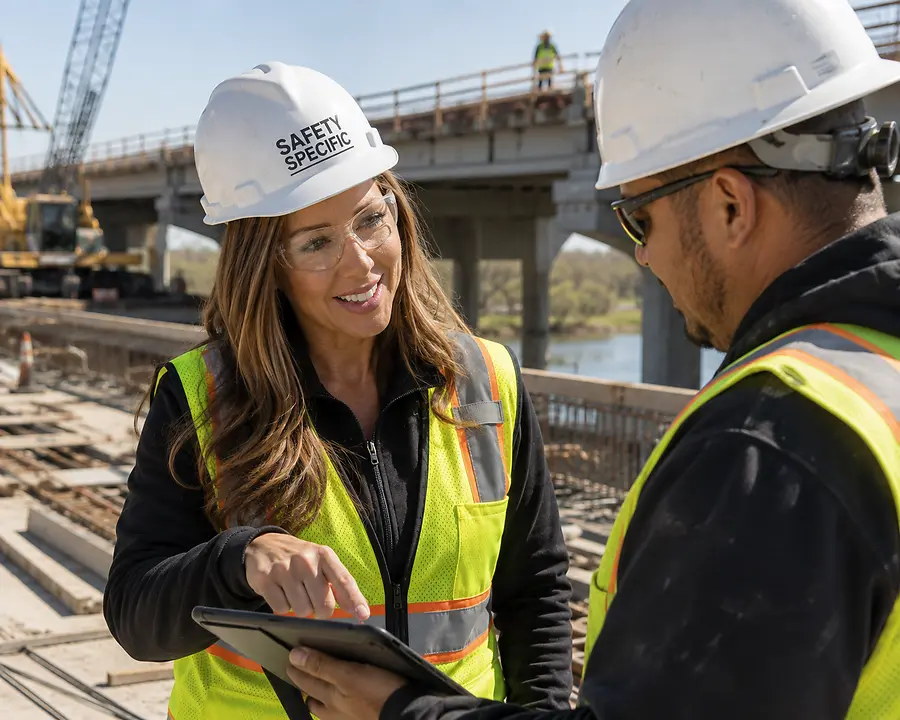
Being a woman in construction has taught me that safety leadership is not about being the loudest person on the jobsite.
It is not about flexing authority, bossing people around, or walking into the field looking for someone to correct.
The Best Safety Professionals Are Resources
We are there to help people solve problems, remove obstacles, and make the job safer and easier to complete. We are there to help the project run smoothly—not create another problem for the people already trying to get the work done.
That mindset has served me well throughout my career.
When I walk into the field, I want people to know I am part of their team. I am not there to catch them doing something wrong. I am there to understand what they are dealing with, help find a workable solution, and make sure everyone goes home safely.
There Can Also Be an Advantage to Being a Woman in a Traditionally Male-Dominated Field
Sometimes people communicate differently with you. They may be less defensive or less likely to turn a conversation into a confrontation. That creates an opportunity to ask better questions, listen more closely, and address problems before they become arguments.
It does not mean women are not capable of being direct. We absolutely are.
It means that collaboration can sometimes open doors that authority alone cannot.
A worker may be more willing to explain what is really happening when they do not feel like they are being interrogated. A supervisor may be more receptive when the conversation begins with, "How can we make this work?" instead of, "You are doing this wrong."
That is not weakness. That is influence.
Safety professionals are also often in a position to speak up for the people who are afraid to speak up for themselves. Someone may see a hazard, disagree with a decision, or feel pressured to do something unsafe, but remain silent because they are worried about retaliation, losing hours, disappointing a supervisor, or being labeled difficult.
We have a responsibility to create enough trust that people feel safe bringing those concerns forward. And when they cannot, we need to speak up.
That does not mean embarrassing someone in front of their crew. It does not mean creating unnecessary conflict. It means having the courage to address the issue respectfully and make sure the person is not left to carry the risk alone.
The Goal Is Not to Win an Argument
The goal is to improve the outcome. Whether we are reviewing a procedure, correcting a hazard, planning a difficult task, or helping a crew find a safer way to work, our role is to support the people doing the job.
We are there to make their jobs easier. We are there to help remove confusion. We are there to connect the field with management and make sure important concerns do not disappear between the two.
A strong safety culture is not built through fear. It is built through trust, consistency, communication, and follow-through.
Being a woman in construction has given me a unique perspective. I have had to earn credibility, but I have also learned that credibility is not maintained by constantly proving how much you know.
It is maintained by being useful.
Show up. Listen. Help solve the problem. Follow through. Protect people who may not feel comfortable protecting themselves. Treat the workforce like a team.
At the end of the day, safety is not supposed to stand on the sidelines judging the work. Safety is supposed to be part of the work. And when people understand that we are there to help them succeed—not simply to catch them failing—the entire conversation changes.