The Emotional Algorithm: The Invisible System Quietly Running High Achievers
Understanding the invisible emotional patterns that quietly shape how we function, connect, and move through life.

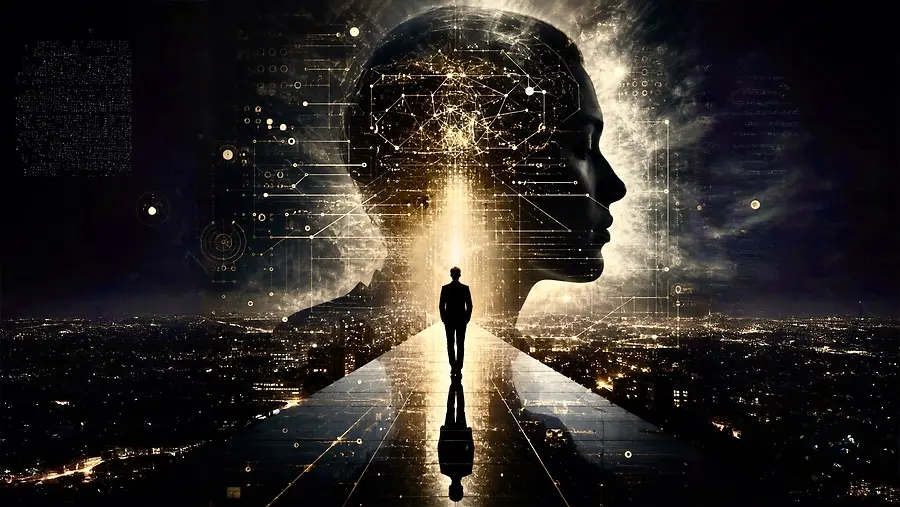
Some people are not emotionally exhausted because they are doing too much.
They are exhausted because they have spent years unconsciously calculating who they need to be in order to maintain everything around them.
And despite how the phrase is often used, high achievers are not limited to titles, income levels, leadership positions, or public success.
High achievers also look like:
- the person holding an entire family together
- the one everyone depends on emotionally
- the caregiver
- the resilient friend
- the parent navigating pressure quietly
- the person rebuilding after difficult seasons
- the individual who learned how to function while carrying emotional weight no one else could see
Many people have become exceptionally skilled at surviving, adapting, producing, stabilizing, and continuing.
Somewhere along the way, many developed an internal emotional algorithm.
One that quietly determines:
- how much emotion is acceptable
- when vulnerability feels dangerous
- when silence feels safer than honesty
- how to remain effective while overriding themselves
- how to stay respected, needed, successful, composed, or emotionally safe
Most people believe they are making conscious emotional choices.
Many are actually operating from deeply practiced emotional programming they no longer even notice.
The Emotional Algorithm Was Never Created. It Was Adapted.
The emotional algorithm often begins long before adulthood.
It develops in environments where emotional strategy becomes more rewarding than emotional honesty.
Where people unconsciously learn:
- how to read rooms quickly
- how to regulate reactions for safety
- how to become emotionally manageable
- how to suppress discomfort in order to maintain connection, peace, image, achievement, or belonging
Over time, adaptation becomes identity.
Not because people are inauthentic.
But because survival is often subtle.
Many people never realize how much of their personality was shaped around maintaining functionality.
Especially those who became:
- the dependable one
- the calm one
- the accomplished one
- the resilient one
- the emotionally composed one
The emotional algorithm rewards functionality.
Even when that functionality quietly disconnects people from themselves.
Why People Rarely Notice It
The reason many people do not question these emotional patterns is because they often work.
They help people:
- succeed
- lead
- stabilize environments
- maintain relationships
- build careers
- perform under pressure
- remain emotionally useful to others
Externally, life can appear successful.
Internally, many people are experiencing:
- emotional exhaustion
- over-functioning
- invisible pressure
- chronic emotional recalibration
This is where the emotional algorithm begins to reveal itself.
It becomes a way of recognizing the invisible emotional patterns many people have been operating within for years without realizing it.
The emotional algorithm brings awareness to the emotional calculations, adaptations, and survival patterns quietly shaping how people function, connect, protect themselves, and move through the world.
Because once people can see the pattern clearly, they begin understanding themselves differently.
The Overlooked Cost
Many people are not burned out in the traditional sense.
They are emotionally exhausted.
Not always visibly.
Not always dramatically.
But internally exhausted from years of emotional calculation, emotional management, and emotional over-functioning.
Their internal systems have spent years prioritizing management over restoration.
What often gets overlooked is the cost of:
- constantly reading environments
- adjusting emotional presentation
- minimizing needs
- carrying emotional weight silently
- maintaining versions of themselves that helped them survive previous seasons of life
Over time, people can become highly skilled at functioning while quietly disconnected from relief.
This is where I began exploring the concept of Emotional Wealth™.
Not as perfection.
But as internal sustainability.
Emotional Wealth is the internal reserve that allows success, relationships, leadership, and life itself to feel emotionally sustainable rather than emotionally depleting.
Because achievement alone does not automatically create peace.
And functionality alone does not guarantee wholeness.
The Hidden Emotional Systems We Rarely Question
The emotional algorithm does not usually announce itself loudly.
It hides inside routines.
Roles.
Identity.
Professionalism.
Relationships.
Success patterns.
Eventually, what began as adaptation can start to feel permanent.
We live in a world that studies algorithms constantly:
Social algorithms.
Consumer algorithms.
Performance algorithms.
Predictive algorithms.
But very few conversations examine the invisible emotional calculations people make every single day in order to function successfully within their lives.
The calculation to remain agreeable.
The calculation to stay composed.
The calculation to avoid rejection, instability, conflict, disappointment, or emotional exposure.
Over time, those calculations stop feeling intentional.
They become identity.
They become personality.
They become “who we are.”
But many people are not operating from pure alignment.
They are operating from deeply practiced emotional programming that once helped them adapt.
Perhaps the more important question is no longer:
“Why am I exhausted?”
But:
“What internal system have I been unconsciously running for years?”
Because awareness does not just change behavior.
Awareness changes the algorithm.