The Lasting Impact of Childhood Trauma in Adult Life
How Unresolved Childhood Trauma Shapes Your Life and What Healing Looks Like

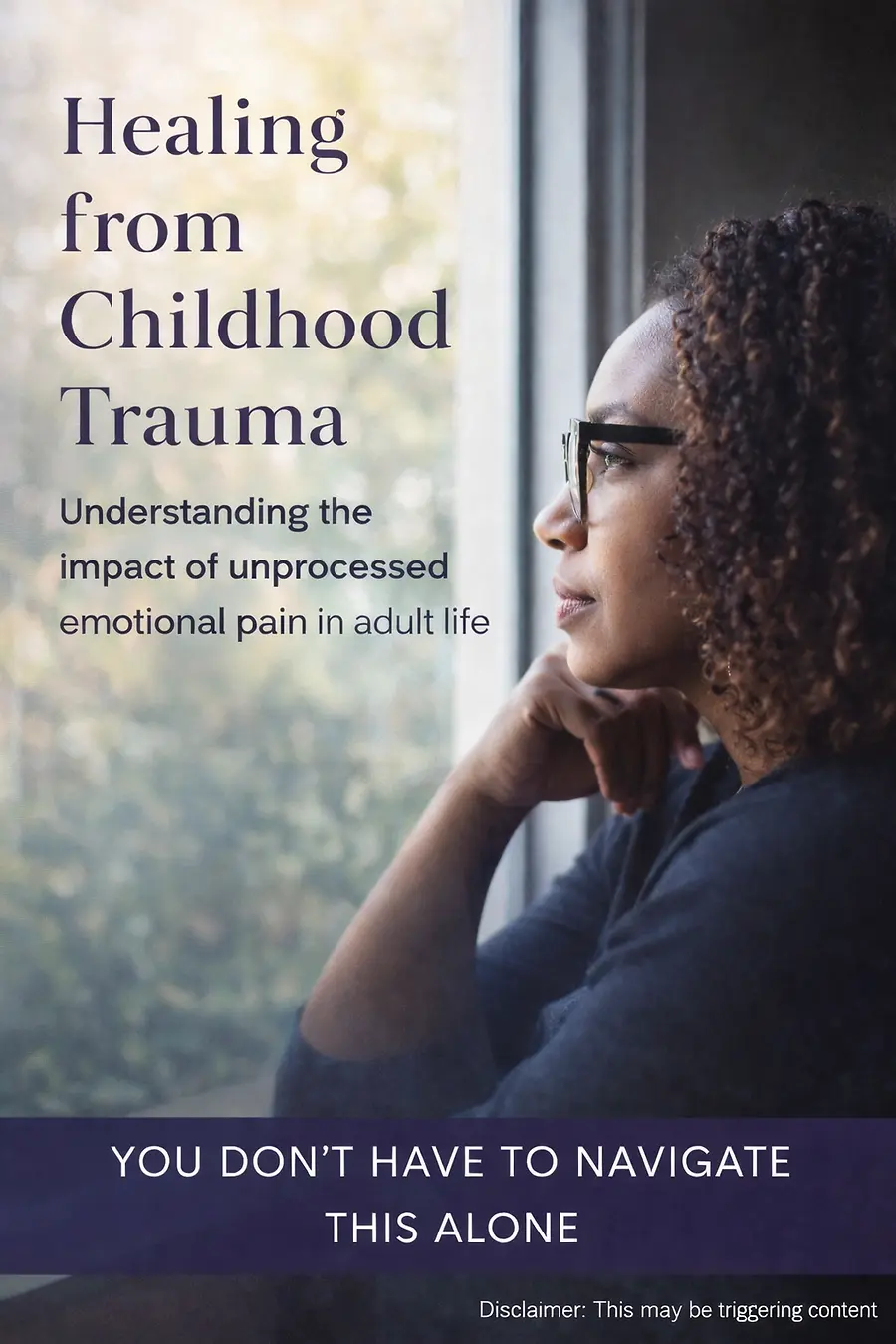
Understanding the Weight of Unprocessed Emotional Pain
Many adults carry stories within them that were never fully spoken, understood, or processed. Childhood experiences—particularly those involving trauma, instability, neglect, or emotional harm—can shape the way we view ourselves, the way we connect with others, and the way our bodies respond to stress throughout our lives.
For many people, childhood trauma does not simply disappear with time. In fact, when emotional pain remains unprocessed, it often follows individuals quietly into adulthood, influencing behaviors, relationships, physical health, and emotional well-being in ways that may not always be immediately recognized.
Understanding this connection is not about blaming the past. Rather, it is about recognizing how early experiences can affect us so that healing and growth become possible.
What Childhood Trauma Really Means
Childhood trauma can take many forms. While some people immediately think of extreme events, trauma is not limited to one type of experience. It may include:
Emotional neglect
Physical, emotional, or sexual abuse
Exposure to addiction or domestic conflict in the home
Loss of a caregiver
Chronic instability or insecurity
Living in environments where emotional needs were consistently unmet
For a child, the brain and nervous system are still developing. When a child experiences overwhelming stress without consistent safety or support, the body and mind learn to adapt in ways that help them survive in the moment.
Those adaptations—while protective in childhood—can sometimes become barriers to emotional well-being later in life.
The Consequences of Unprocessed Emotional Pain
When trauma remains unaddressed, it does not simply fade away. Instead, it often shows up in subtle and complex ways in adulthood.
Some individuals may struggle with:
Difficulty trusting others
Fear of abandonment or rejection
Chronic anxiety or hypervigilance
Emotional numbness or detachment
People-pleasing or difficulty setting boundaries
Intense reactions to stress or conflict
Others may experience recurring patterns in relationships or challenges in feeling emotionally safe even in supportive environments.
These reactions are not signs of weakness. They are often the nervous system’s attempt to protect itself based on experiences from the past.
The Connection Between Trauma and Physical Health
What many people do not realize is that trauma can also have a significant impact on physical health. Emotional pain does not exist only in the mind—it also affects the body.
Long-term exposure to stress and unresolved trauma can contribute to medical concerns such as:
Chronic fatigue
Sleep disturbances
Digestive issues
High blood pressure
Chronic pain or inflammation
Autoimmune conditions
Increased risk for heart disease
When the body remains in a prolonged state of stress response, it can begin to wear down systems that are designed to regulate health and balance.
This mind-body connection is why addressing trauma is not only important for emotional well-being but also for overall health.
The Courage Required to Begin Healing
Addressing trauma is not an easy journey. For many individuals, the idea of revisiting painful memories or experiences can feel overwhelming.
Healing often requires:
Patience with oneself
Emotional honesty
A willingness to explore difficult feelings
Support from trained professionals
It is important to acknowledge that healing does not happen overnight. It is a process that unfolds over time.
However, while the journey can be challenging, the reward on the other side is significant.
What Can Improve When Trauma Is Addressed
When individuals begin to process and understand their trauma, meaningful shifts often occur across many areas of life.
People frequently report improvements in:
Relationships
They feel safer connecting with others and building healthier emotional boundaries.
Emotional regulation
They develop stronger tools for managing stress, anger, sadness, and fear.
Self-esteem and identity
They begin to separate their sense of self from the pain of their past.
Physical health
As the nervous system becomes more regulated, the body often experiences relief from chronic stress patterns.
Decision-making and personal growth
Individuals begin to approach life with greater clarity and confidence.
Healing allows individuals to move from survival mode into a place of greater emotional stability and self-awareness.
Treatment Approaches That Support Trauma Healing
The encouraging news is that there are several effective, evidence-based approaches that can support trauma recovery. Mental health professionals are trained in various modalities designed to help individuals process traumatic experiences safely and constructively.
Some commonly used approaches include:
Trauma-Focused Cognitive Behavioral Therapy (TF-CBT)
Helps individuals understand how trauma affects thoughts and behaviors while building healthier coping skills.
Eye Movement Desensitization and Reprocessing (EMDR)
A structured therapy that helps the brain reprocess traumatic memories in a way that reduces emotional distress.
Brainspotting
Brainspotting is a brain-body therapy that identifies specific eye positions—called “brainspots”—that correspond with where trauma is stored in the brain and body. By focusing on these spots while processing emotions, individuals are able to access deeper areas of the brain where trauma responses are held. This approach can help release emotional and physiological distress that may be difficult to reach through traditional talk therapy alone.
Somatic and body-based therapies
These approaches focus on how trauma is stored in the body and help regulate the nervous system through awareness of physical sensations and body responses.
Narrative therapy
Encourages individuals to explore and reshape the story they carry about their experiences.
Mindfulness and regulation-based approaches
Support emotional awareness and help reduce the physiological effects of stress.
The most effective treatment approach often depends on the individual’s needs, experiences, and readiness for the work.
A Moment for Reflection
If you have ever noticed patterns in your life that seem difficult to explain—persistent anxiety, difficulty trusting others, or emotional responses that feel larger than the situation at hand—it may be worth gently asking yourself a question:
Could some of these responses be connected to experiences from earlier in life?
This is not a question meant to create blame or shame. It is simply an invitation to reflect.
Many people carry emotional pain quietly for years without realizing how much it has shaped their lives.
You Do Not Have to Navigate This Alone
Healing from trauma is not about erasing the past. It is about understanding it, processing it, and learning how to move forward without allowing it to control the present.
If you notice signs that unresolved trauma may be affecting your emotional well-being, relationships, or physical health, seeking support from a licensed mental health professional can be an important step.
A trained therapist can help create a safe space to explore these experiences and develop strategies that support healing and resilience.
The journey may require courage and patience, but it also offers something deeply meaningful: the opportunity to reclaim parts of yourself that may have been buried under years of unspoken pain.
And perhaps the most important reminder of all is this:
You do not have to carry your story alone.